
Explore the conversation.
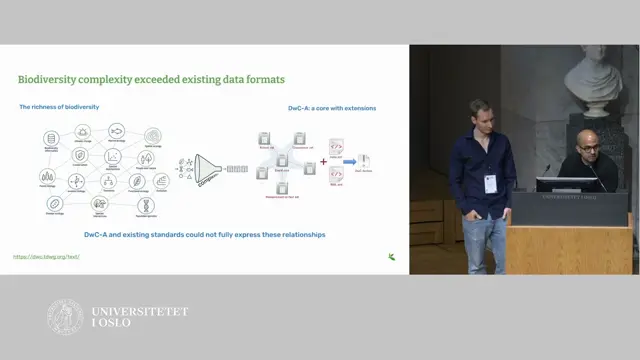
DwC-DP Integration at GBIF
GBIF is close to supporting Darwin Core Data Packages end to end, with typed and stricter validation, while keeping Darwin Core Archives fully supported.
Federico Mendez, Mikhail Podolskiy ↗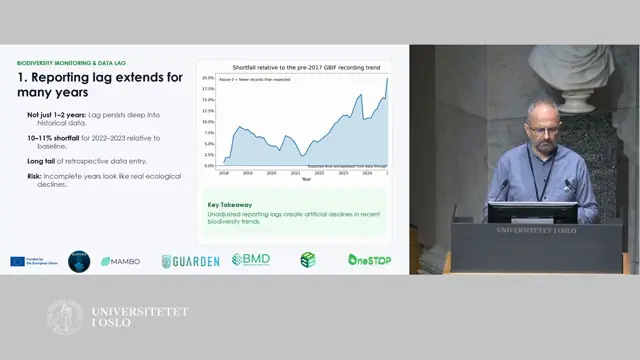
Reducing the lag from observation to action
Timeliness is a missing biodiversity knowledge shortfall: publish soon, publish often, and improve continuously.
Quentin Groom ↗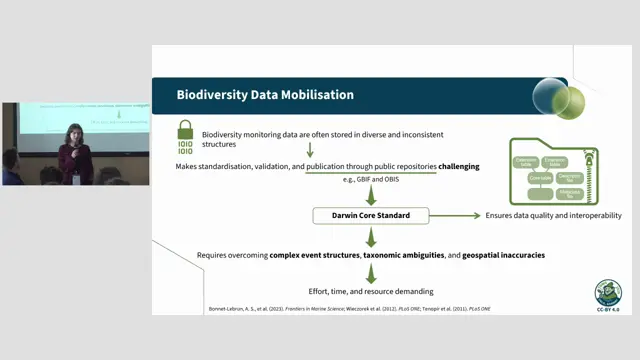
AURORA - A Shiny app designed to create Darwin Core Archives from messy biodiversity datasets
AURORA lowers the barrier to Darwin Core publication by guiding researchers step by step from messy tables to standard-compliant tables and metadata.
Sara Araújo ↗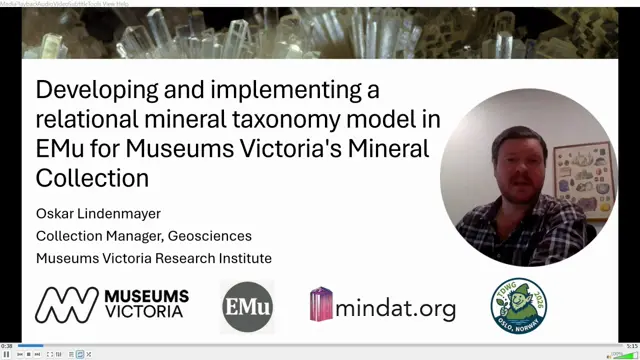
Developing and implementing a relational mineral taxonomy model in EMu for Museums Victoria's mineral collection
Linking catalogue records to shared, Mindat-populated mineral taxonomy records makes mineral identification data consistent and queryable.
Oskar Lindenmayer ↗
Experience of collaborative management of the World Auchenorrhyncha Database in TaxonWorks
TaxonWorks turned a personal taxonomic database into a collaborative, well-connected resource feeding Catalogue of Life, GBIF and iNaturalist.
Dmitry Dmitriev ↗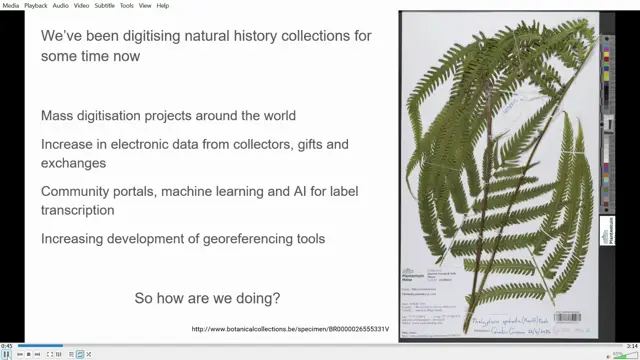
How is digitisation doing? Monitoring the increase in digitised collections using MIDS
MIDS can monitor global digitisation progress, and GBIF data show completeness improving unevenly and sometimes going backwards.
Elspeth Haston ↗
Trapper 2.0: scalable, open-source platform for managing camera trapping projects with integrated AI pipelines
Trapper 2.0 offers an open, model-agnostic, edge-deployable pipeline for camera trap photos and videos with expert review and Camtrap DP export.
Karolina Kuczkowska ↗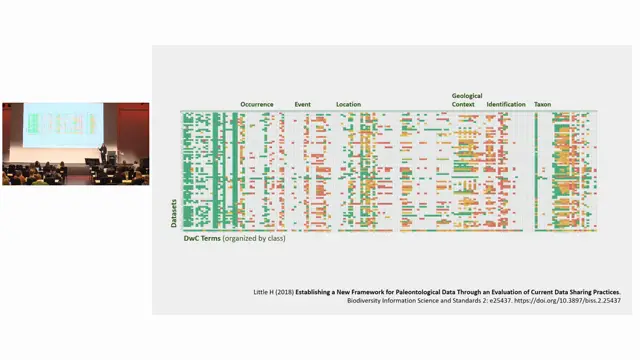
A framework for aligning collections data with the global data ecosystem from data creation to extension in the Smithsonian National Museum of Natural History Department of Paleobiology
Making paleo collections work in the global data ecosystem needs an iterative, full life-cycle framework, not one-off digitisation.
Holly Little ↗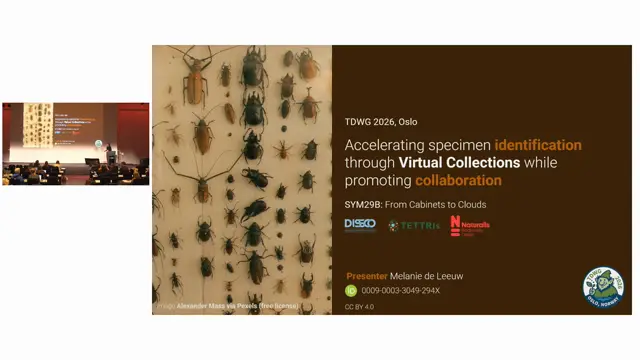
Accelerating specimen identification through Virtual Collections while promoting collaboration
Virtual reference collections with DOIs let experts identify and curate dispersed digital specimens remotely instead of shipping material or travelling.
Melanie de Leeuw ↗
Challenges and Opportunities for FAIR Marine eDNA Data Publication Workflows
Making marine eDNA data FAIR is as much about clear, practical, less manual publication processes as about technology.
Berenice Talamantes Becerra ↗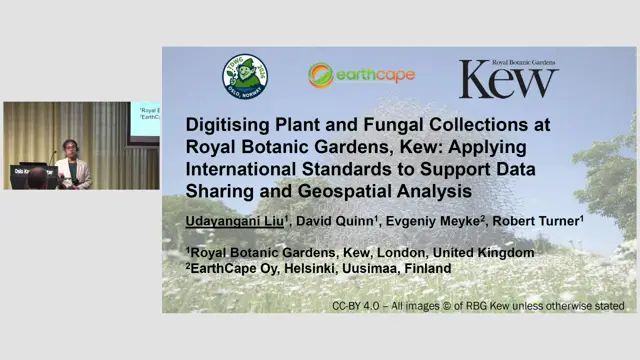
Digitising Plant and Fungal Collections at Royal Botanic Gardens, Kew: Applying International Standards to Support Data Sharing and Geospatial Analysis
WGSRPD enables cross-collection geospatial analysis at Kew, but historical, heterogeneous data leave half of records without fine-level assignment.
Udayangani Liu ↗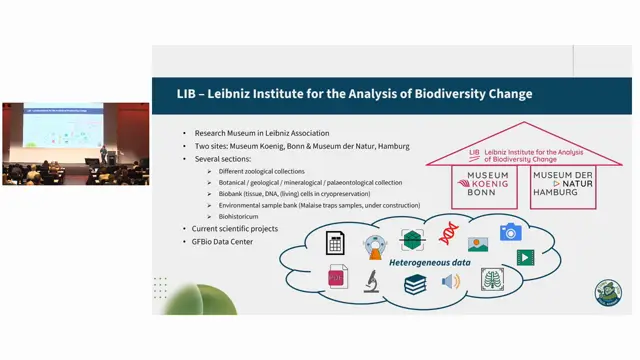
Diversity Workbench (DWB) as a Standards-Based Collection Management System for Heterogeneous Research Data and Biodiversity Data Mobilization
Diversity Workbench can hold very heterogeneous institutional data and publish it through standard pipelines, but its complexity pushes LIB to build web and API layers.
Birgit Rach ↗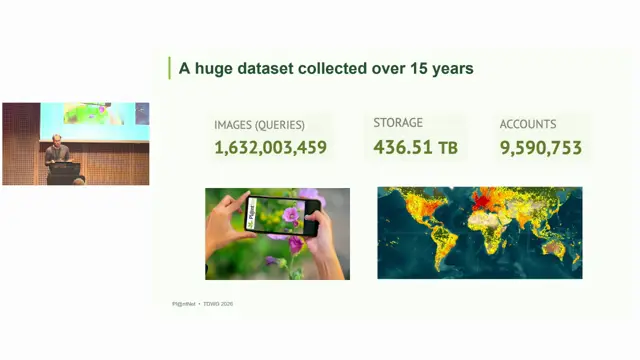
From 1.5 Billion Raw Queries to AI-Ready Biodiversity Data: Human-AI Collaborative Curation Pipelines in Pl@ntNet
Pl@ntNet's human–AI pipeline filters a vast, noisy stream into two GBIF datasets and training data, with separate branches for opted-in human-validated and automatic occurrence-only data.
Alexis Joly ↗
From Client to App: Extending Diversity Workbench with REST and graphical web interfaces
A concept-based REST API and search index let LIB build flexible web interfaces and ingest data on top of the complex Diversity Workbench database.
Björn Quast ↗
From Legacy Data to FAIR Workflows: Standardising Biodiversity Collections Using Specify
Standardised workflows, not just a new database, turned 11 differently managed collections into GBIF-ready data.
Siyabonga Zamisa ↗
Integrating Specify in broader Science infrastructure
Specify works best at RBG Victoria as one component of a wider hub-based science infrastructure, with custom tools filling its gaps.
Niels Klazenga ↗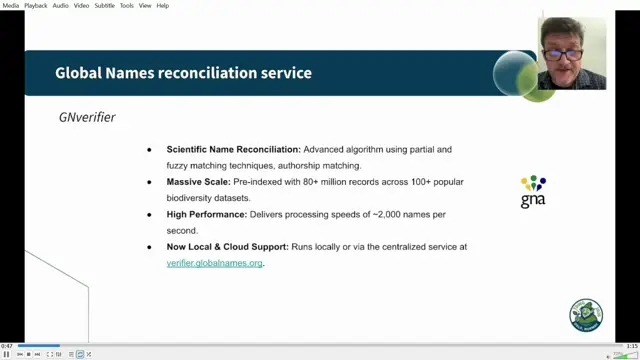
Local scientific name resolution using custom data sources
GNverifier can now be run locally over any custom or private name datasets, using the standardised SFGA format and GNdb, with the same API as the central service.
Dmitry Mozzherin ↗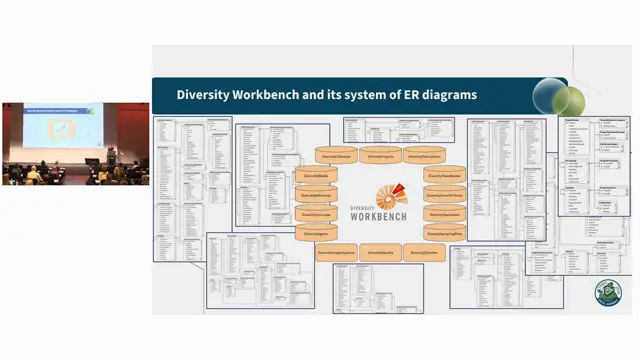
Mapping the Relational Data Schema of the Diversity Workbench (DWB) to the Darwin Core Data Package Data Model to fit better to GBIF´s New Data Model
DwC-DP promises to carry the relational richness that previously pushed GFBio centres to ABCD, and a first DWB-to-DwC-DP prototype via the test IPT works.
Tanja Melanie Weibulat ↗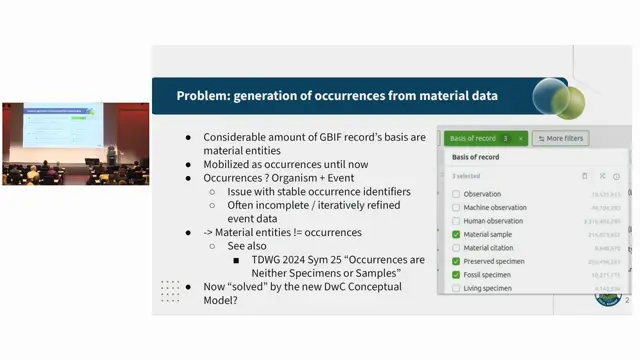
Material Samples and Occurrences in Darwin Core Data Packages: Practical Experiences from DINA
DINA's material-sample model maps well to DwC-DP, so DINA wants to publish without synthetic occurrences and needs community conventions for consumers to derive them.
Jonas Grieb ↗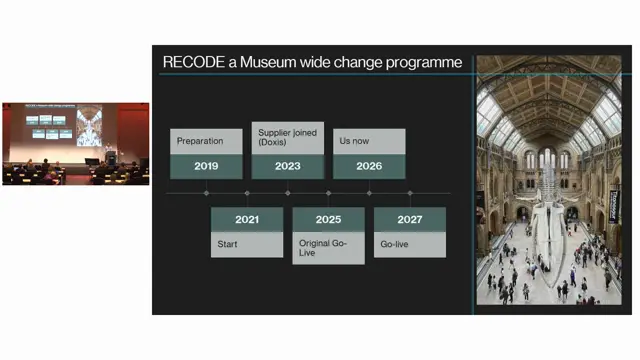
Old habits and new visions: Exploring the RECODE data model, future integration and data enhancement
Normalising decades of flat CMS data into relational entities and workflow-driven processes gives NHM a foundation for integrations and AI, but it needs institutional governance.
Steen Dupont ↗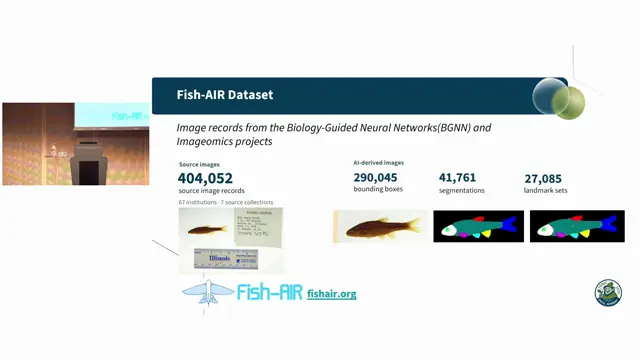
Provenance, Lineage, and Auditability in AI-Driven Biodiversity Image Workflows
Two persistent-identifier links per derived image, parent and batch, are enough to preserve auditable lineage and pipeline context for AI-processed biodiversity images, even outside the repository.
Xiaojun Wang ↗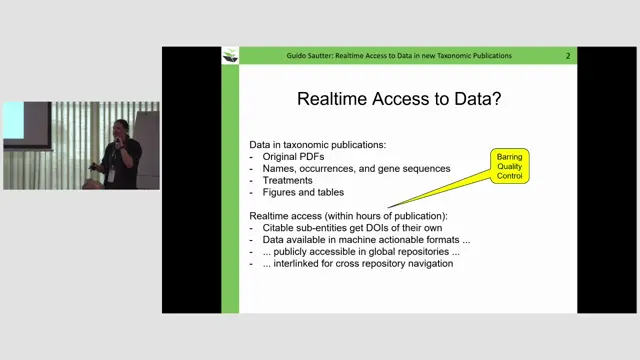
Realtime Access to Data in new Taxonomic Publications
Plazi can deliver interlinked, machine-actionable data from new taxonomic papers within hours, and XML-first publishing removes most of the costly effort.
Guido Sautter ↗
SpecifyaaS: Managing Ephemeral Repositories in Collections-Based Research
Giving researchers their own lightweight Specify instances early in the research process standardises data from the start and eases later exchange with the institutional collection.
Kevin Holston ↗
SYM29B panel discussion: publishing lot records and agile development
Lot-level records are worth publishing because they answer 'do you have this taxon?', but the definition of a lot differs between collections.
Caitlin Thorn, Myriam van Walsum, Nora Lentge-Maaß ↗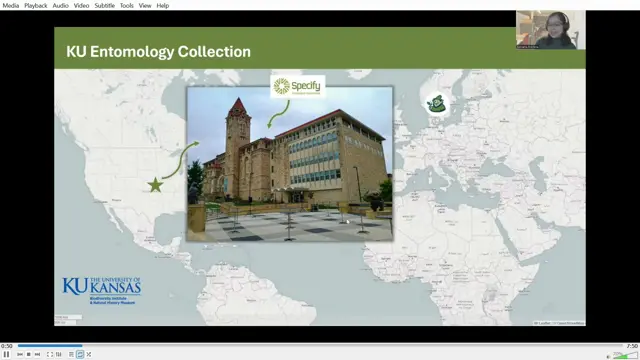
Updates on Data Mobilization in the KU Entomology Collection
Moving to Specify 7 with a nightly Darwin Core archive feed made KU Entomology's data and images continuously available to GBIF, Symbiota portals and students.
Samanta Orellana ↗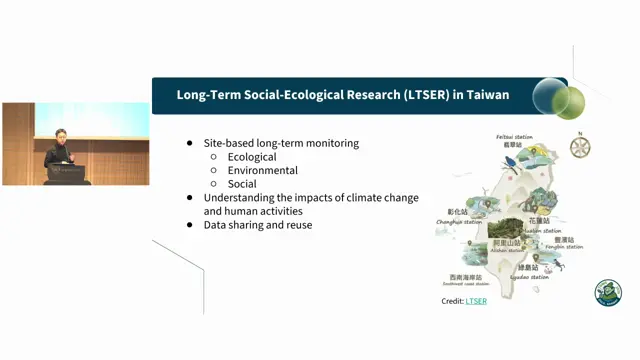
Building a Living Publication Workflow for Long-Term Social-Ecological Monitoring Data: The Taiwan LTSER Experience
Embedding Darwin Core alignment as automated checkpoints in a repository-based pipeline keeps continuously updated monitoring data flowing to GBIF.
Jhu-Jyun Jhang ↗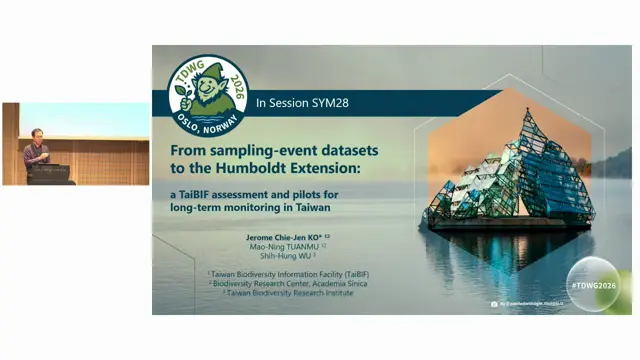
From sampling-event datasets to the Humboldt Extension: a TaiBIF assessment and pilots for long-term monitoring in Taiwan
Giving monitoring-data providers immediate site-level trend feedback, based on a minimal set of Humboldt terms, can motivate adoption better than asking for the full extension.
Jerome Chie-Jen Ko ↗