
What happened
at TDWG 2026?
Find the moments, ideas and unexpected connections in hundreds of talks and discussions. Start with a question and follow your curiosity.
Go wherever curiosity leads.
Explore by theme.
AI-ready data
Making biodiversity data and metadata fit for machine learning: readiness definitions and metrics, dataset documentation (e.g. Croissant, dataset cards) and FAIR-for-AI.
Persistent identifiers
Persistent and content-based identifiers for specimens, samples, media, names, literature and organisms, and their stability.
Specimen digitisation
Digitising natural history specimens and collections, from imaging workflows and stations to national and legacy digitisation programmes.
Data provenance
Recording where data came from and how they were processed, including versioning, paradata and auditability.
Knowledge graphs
Constructing and using RDF and property-graph knowledge graphs to connect biodiversity data, literature and knowledge.
Data quality assessment
Tests, flags, validation and cleaning that assess and improve the quality of biodiversity records (e.g. BDQ tests).
Pick a talk and dive in.
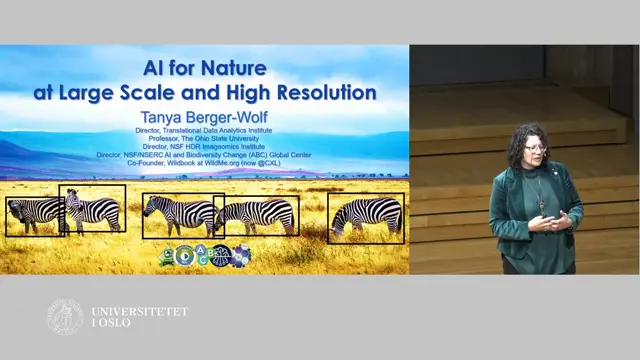
AI for Nature at Large Scale and High Resolution
AI can help fill biodiversity knowledge shortfalls only if biological knowledge is built into the models and the data infrastructure is FAIR for AI and returns value to primary data collectors, because 'there is no AI without data'.
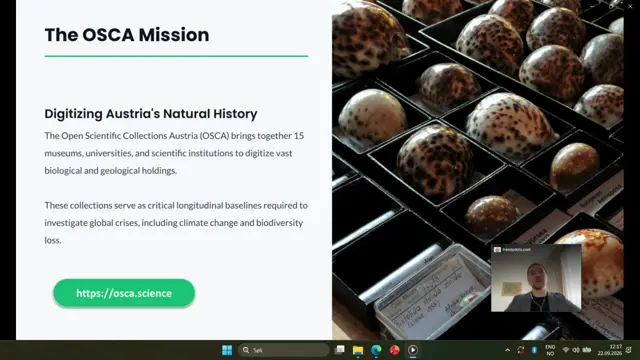
How Darwin Core enables harmonizing Biodiversity Data via the OSCA Consortium
A shared Darwin Core-based cloud pipeline lets 15 Austrian institutions of very different IT capacity publish harmonised specimen data.
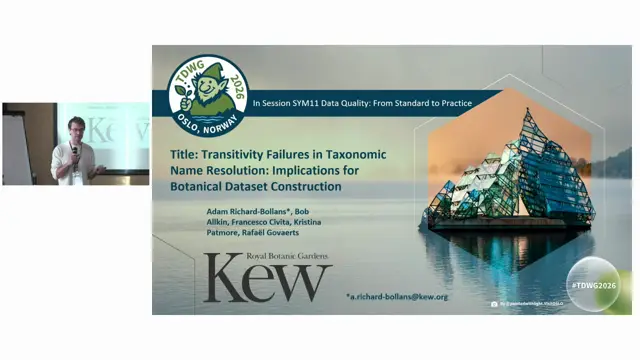
Transitivity Failures in Taxonomic Name Resolution: Implications for Botanical Dataset Construction
Always keep original verbatim names so datasets can be re-resolved against the latest taxonomy.