
Challenges and Opportunities for FAIR Marine eDNA Data Publication Workflows
Berenice Talamantes Becerra · FAIR data in practice - eDNA, modelling and biodiversity concepts
The short versionMaking marine eDNA data FAIR is as much about clear, practical, less manual publication processes as about technology.
What this was about
Berenice Talamantes Becerra presented preliminary results of a community survey on where marine eDNA data publication workflows get stuck, framed by CSIRO's Marine National Facility and the OBIS-AU node. Respondents most often cited data formatting (about 71%), differences in standards or protocols and metadata formats across repositories (about 58% each); 74% said publication involves too much manual effort and only about 27% found the steps clear. Preferred solutions were a web portal to prepare, validate and submit datasets, automated submission to NCBI, GBIF and OBIS, automated metadata checks and better repository interoperability.
Why it matters. It provides evidence on real bottlenecks in eDNA data publication to guide tool and guidance development, and invites community input.
In the room
- CSIRO operates Australia's Marine National Facility (RV Investigator) and runs the OBIS-AU node, including Australian Antarctic Program data.
- Keeping links between sample, sequencing information, metadata and final observations is essential for eDNA.
- Survey covered stakeholders and governance, metadata and standards, technologies, workflow management and capacity building.
- Top challenge: data formatting (~71%); then differences in standards/protocols and repository metadata formats (~58%).
- ~74% agreed publication involves too much manual effort; almost half disagreed QC procedures are clearly defined; ~27% found steps clear; ~36% had technical support when needed.
- Priorities: reduce manual work, better validation and guidance, and test interoperable workflow components with users.
Notable moments
Transcript
Automatically generated captions can contain mistakes, especially in names and technical terms. Times are relative to the room recording.
Read the transcript ↓
Related talks.
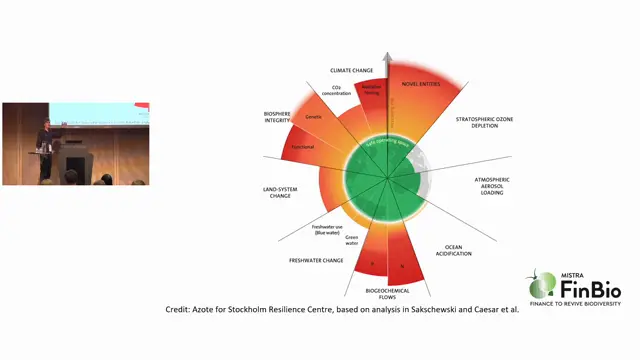
Data Quality in Focus: Bridging the Biodiversity Data Gap for Sustainable Finance
Biodiversity assessments for finance need local data; a tiered data-quality hierarchy like carbon accounting could make them credible.
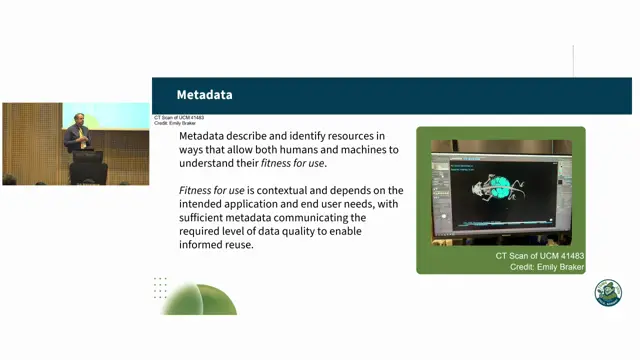
Metadata matters: perceptions on the implementation of Darwin Core in the biocollections cyberinfrastructure
Standardisation through Darwin Core can mask nuance, and practitioners report complex data, missing guidelines and limited capacity as the main implementation barriers.
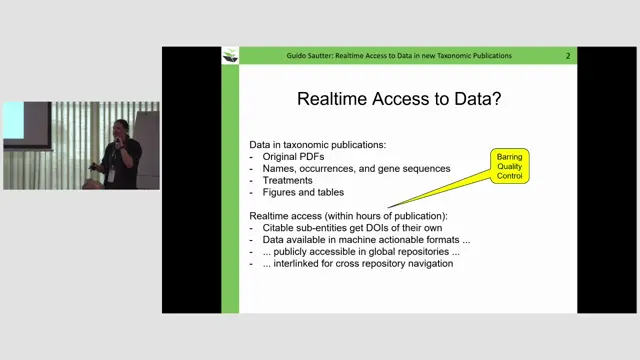
Realtime Access to Data in new Taxonomic Publications
Plazi can deliver interlinked, machine-actionable data from new taxonomic papers within hours, and XML-first publishing removes most of the costly effort.