
Updates on Data Mobilization in the KU Entomology Collection
Samanta Orellana · Meeting Biodiversity Data Standards Using Specify Software
The short versionMoving to Specify 7 with a nightly Darwin Core archive feed made KU Entomology's data and images continuously available to GBIF, Symbiota portals and students.
What this was about
Samanta Orellana reported on the KU Snow Entomological Museum Collection. It holds over five million specimens, of which about 1.4 million (about 28%) have been digitised over two decades, making it the largest insect specimen dataset in the US. In 2025 it migrated from a local Specify 6 to online Specify 7 after updating field and multimedia mappings. Benefits include wider user access, inline data entry across tables, a taxon tree that several users can edit at once, and multi-file media with controlled creator metadata. Data and images are packaged as a Darwin Core archive on a nightly-updated RSS feed that feeds the Specify portal, GBIF and multiple Symbiota portals, and supports a new BID project for Central American data.
Why it matters. Continuous, automated publishing of both specimen data and images from the CMS removes a major bottleneck for large entomology collections and widens use by students and international partners.
In the room
- KU SEMC holds over five million specimens; about 1.4 million (~28%) have been digitised in about two decades, still the largest insect specimen dataset in the US.
- Specify 6 was due to be decommissioned, so the collection migrated to online Specify 7 in 2025 after updating mappings, including multimedia fields.
- Specify 7 allows access from outside the building, adding related records from the data entry form, multiple browser tabs, and simultaneous taxon-tree editing.
- Multiple media files can be attached with controlled vocabulary and creator information, so image authors are credited.
- A Darwin Core archive with data and images is exposed on an RSS feed with nightly updates, feeding the Specify portal and keeping the GBIF dataset current.
- Data are also mobilised to several Symbiota portals, where students build resources such as interactive checklists and type-specimen pages.
- A new BID project will mobilise Central American species data to GBIF.
Notable moments
Transcript
Automatically generated captions can contain mistakes, especially in names and technical terms. Times are relative to the room recording.
Read the transcript ↓
Related talks.
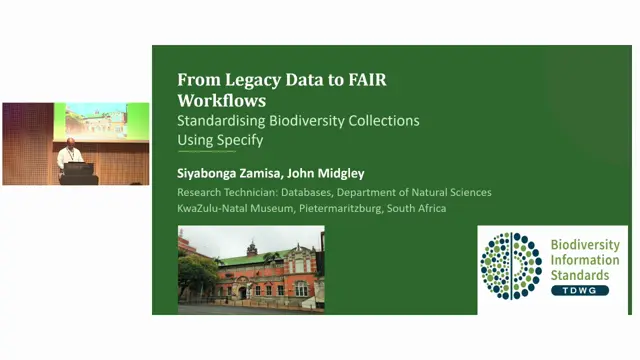
From Legacy Data to FAIR Workflows: Standardising Biodiversity Collections Using Specify
Standardised workflows, not just a new database, turned 11 differently managed collections into GBIF-ready data.
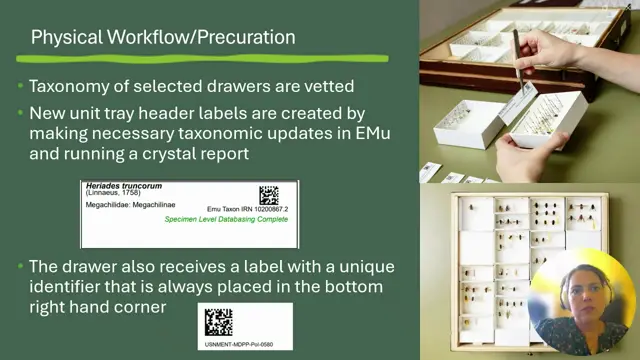
Pinned insect digitization conveyor: image and data transcription workflows
An industrial conveyor workflow with QR-encoded metadata and automated skeletal records makes mass digitisation of pinned insects feasible.
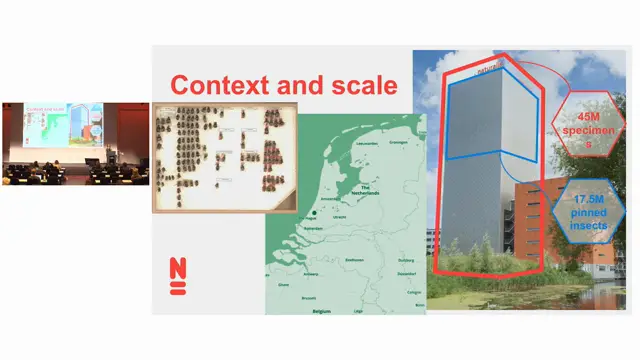
Managing high-volume specimen movements in the entomological collection of Naturalis with a new type of record
A 'lot' record linking taxa to storage units makes high-volume physical moves cheap to record and tells staff where each taxon is.