
Explore the conversation.
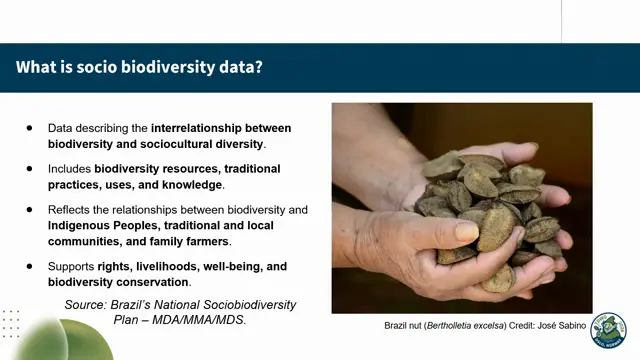
Extending Darwin Core to Represent Sociobiodiversity and Traditional Knowledge
Representing traditional knowledge in biodiversity standards needs new terms, knowledge-centred (not species-centred) models, and careful governance of who holds and publishes the data.
Clara Baringo Fonseca ↗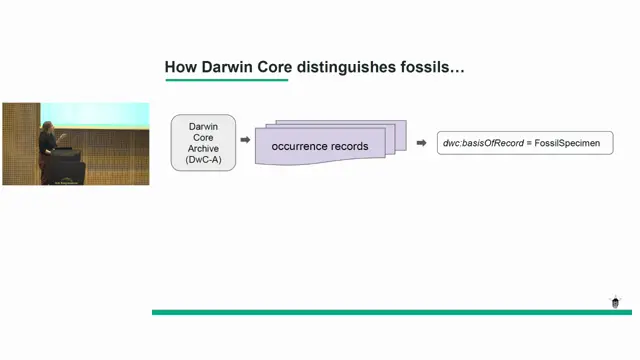
A community-curated controlled vocabulary for fossil collections using dwc:materialEntityType
A granular, community-derived vocabulary for dwc:materialEntityType would let users filter fossil records by what the material actually is, which basisOfRecord cannot do.
Holly Little ↗
Developing and implementing a relational mineral taxonomy model in EMu for Museums Victoria's mineral collection
Linking catalogue records to shared, Mindat-populated mineral taxonomy records makes mineral identification data consistent and queryable.
Oskar Lindenmayer ↗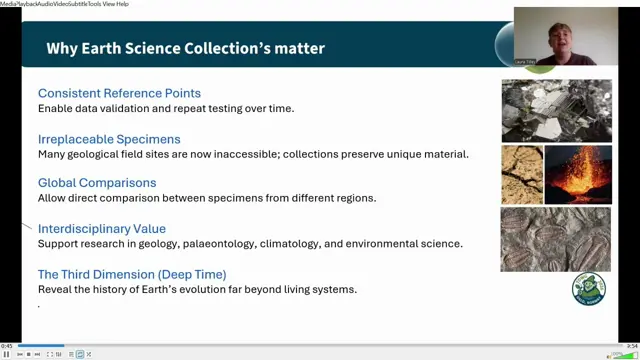
Improving access to Earth science collections data via GeoCASe and the European Open Science Cloud (GeoDARA)
Linking specimen-rich GeoCASe records to dataset-level DCAT descriptions could let deep-time collection data feed modern environmental observation infrastructures.
Laura Tilley ↗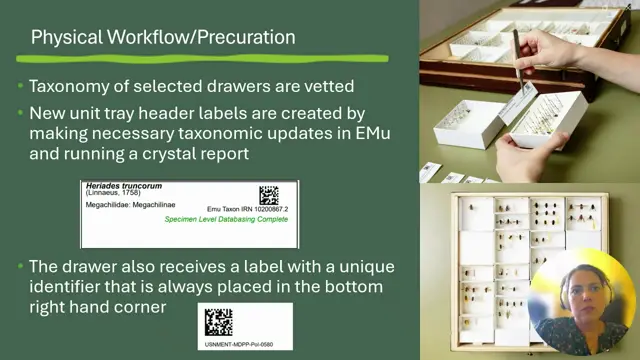
Pinned insect digitization conveyor: image and data transcription workflows
An industrial conveyor workflow with QR-encoded metadata and automated skeletal records makes mass digitisation of pinned insects feasible.
Jessica Bird, Sylvia Orli ↗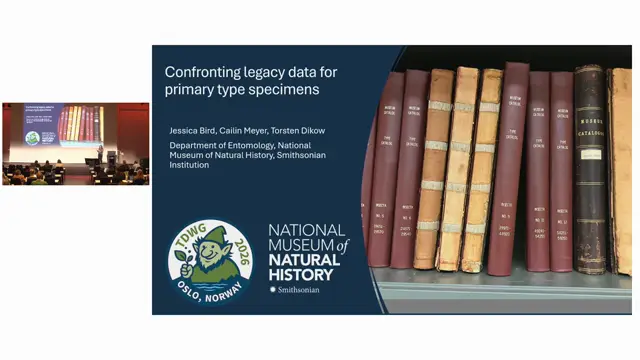
Confronting legacy data for primary type specimens
Decades of database migrations left the second-largest insect collection's type catalogue unreliable, and only a full physical inventory is fixing it.
Cailin Meyer ↗
From Legacy Data to FAIR Workflows: Standardising Biodiversity Collections Using Specify
Standardised workflows, not just a new database, turned 11 differently managed collections into GBIF-ready data.
Siyabonga Zamisa ↗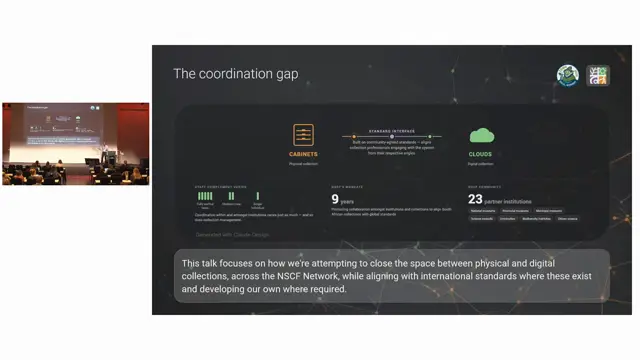
From Silos to Standards - Advancing Standardised Collection State Documentation for Institutional Continuity and Coordination
Standardising how collection state (readiness, risk, conditions) is recorded turns tacit curatorial knowledge into shared, comparable institutional memory.
Jacobus Christiaan Steenkamp ↗
From Specimens to Networks: Darwin Core Data Packages in Practice
The Darwin Core conceptual model and Data Package give material entities a rich, relational context that flat Darwin Core Archives could not express.
John Wieczorek ↗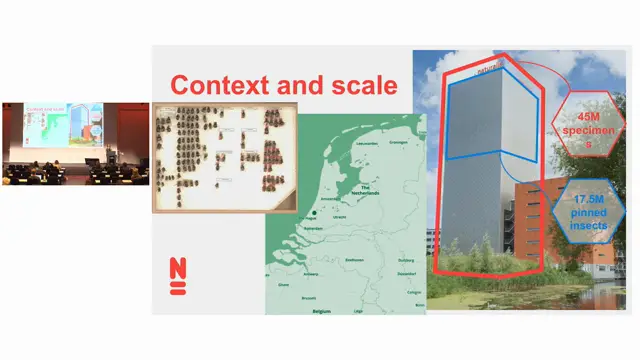
Managing high-volume specimen movements in the entomological collection of Naturalis with a new type of record
A 'lot' record linking taxa to storage units makes high-volume physical moves cheap to record and tells staff where each taxon is.
Myriam van Walsum ↗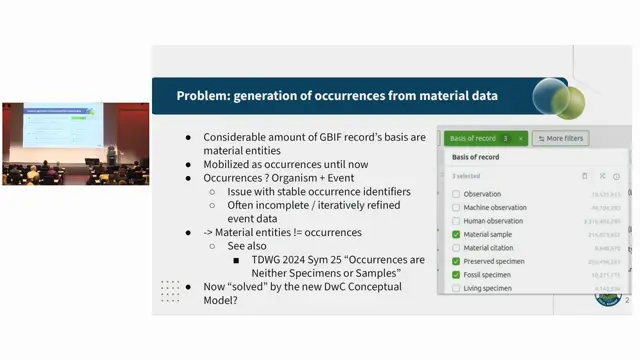
Material Samples and Occurrences in Darwin Core Data Packages: Practical Experiences from DINA
DINA's material-sample model maps well to DwC-DP, so DINA wants to publish without synthetic occurrences and needs community conventions for consumers to derive them.
Jonas Grieb ↗
SYM29B panel discussion: publishing lot records and agile development
Lot-level records are worth publishing because they answer 'do you have this taxon?', but the definition of a lot differs between collections.
Caitlin Thorn, Myriam van Walsum, Nora Lentge-Maaß ↗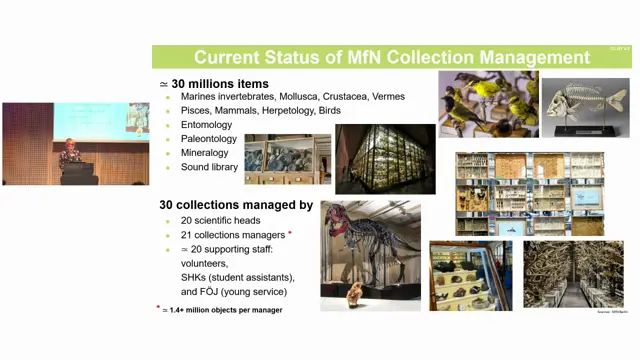
The Good, the Bad, and the Standardised: A Specify Journey Through 200 Years of the MfN Berlin's Biological Collections
Specify's flexibility lets MfN consolidate 30 historically complex collections into one database while starting to reconstruct colonial and wartime history, but geography and historical events remain unsolved.
Marion Depraetere ↗