
Explore the conversation.
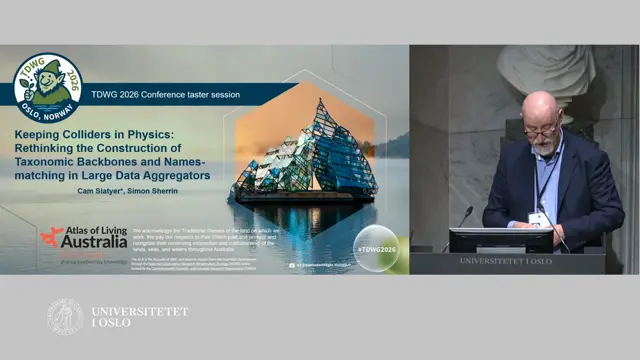
Keeping Colliders in Physics: Rebuilding the ALA taxonomic backbone
Taxonomic checklists are not backbones: data aggregators need a curated single hierarchy with quality-control feedback loops, not automated merging of checklists.
Cameron Slatyer ↗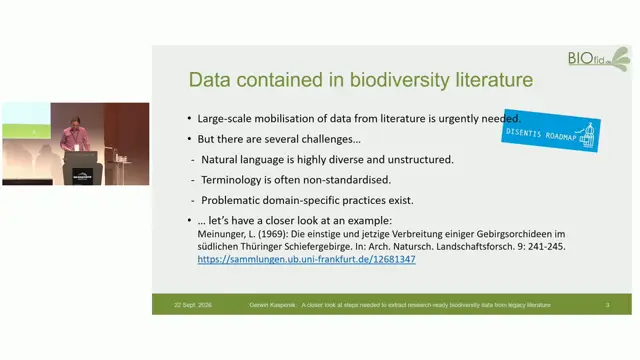
A closer look at steps needed to extract research-ready biodiversity data from legacy literature
Legacy literature data can only be unlocked by combining better OCR/NLP with taxonomic rigour that accounts for synonymy, shifting concepts, coreference and mixed languages.
Gerwin Kasperek ↗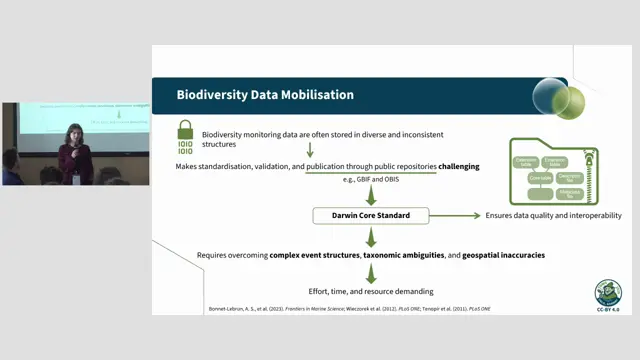
AURORA - A Shiny app designed to create Darwin Core Archives from messy biodiversity datasets
AURORA lowers the barrier to Darwin Core publication by guiding researchers step by step from messy tables to standard-compliant tables and metadata.
Sara Araújo ↗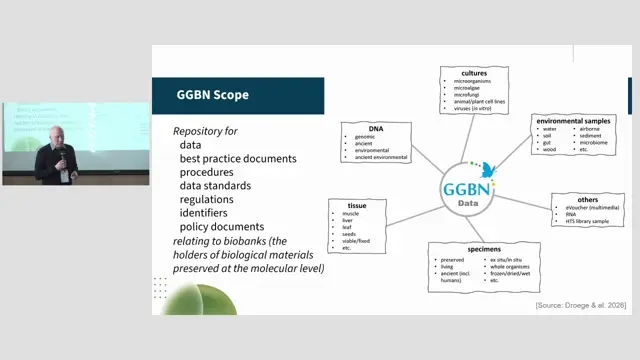
Rebuilding core functionalities of the GGBN system: taxonomic alignment with international research infrastructures
GGBN is rebuilding transparent automated name parsing and matching on GBIF parsing and ChecklistBank/Catalogue of Life XR to improve sample discovery.
Walter Berendsohn ↗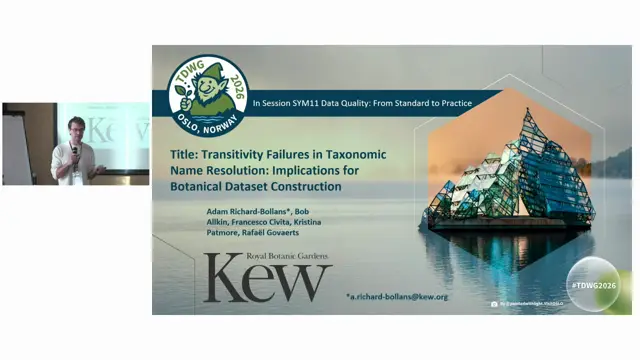
Transitivity Failures in Taxonomic Name Resolution: Implications for Botanical Dataset Construction
Always keep original verbatim names so datasets can be re-resolved against the latest taxonomy.
Adam Richard-Bollans ↗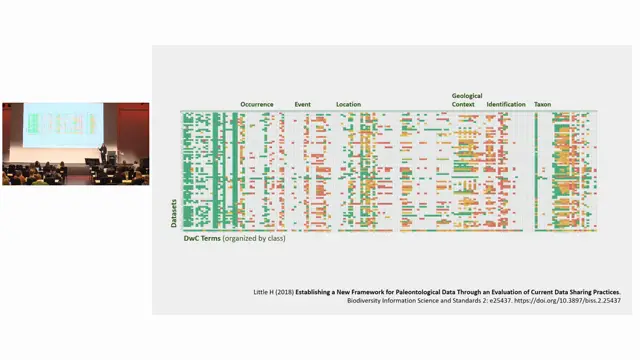
A framework for aligning collections data with the global data ecosystem from data creation to extension in the Smithsonian National Museum of Natural History Department of Paleobiology
Making paleo collections work in the global data ecosystem needs an iterative, full life-cycle framework, not one-off digitisation.
Holly Little ↗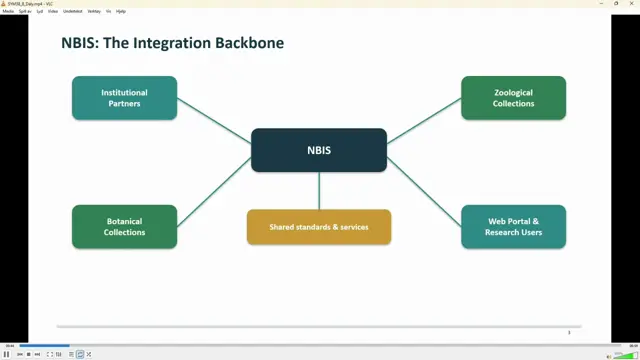
Architecting the National Biodiversity Information System: Standards-Driven Workflows for South Africa’s Botanical and Zoological Data
SANBI sustains NBIS through a statutory mandate plus a roadmap of diversified funding, partnerships and demonstrated return on investment.
Fhatani Ranwashe ↗
Bridging the Gap: Strategies for Integrating Person Identifiers into Collection Databases
Wikidata's community-built person data can be used to pre-structure candidate matches, but expert judgement and institutional priorities remain essential for identifying collectors.
Frederik Berger ↗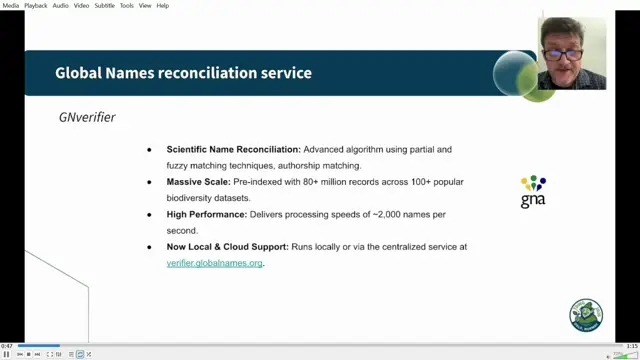
Local scientific name resolution using custom data sources
GNverifier can now be run locally over any custom or private name datasets, using the standardised SFGA format and GNdb, with the same API as the central service.
Dmitry Mozzherin ↗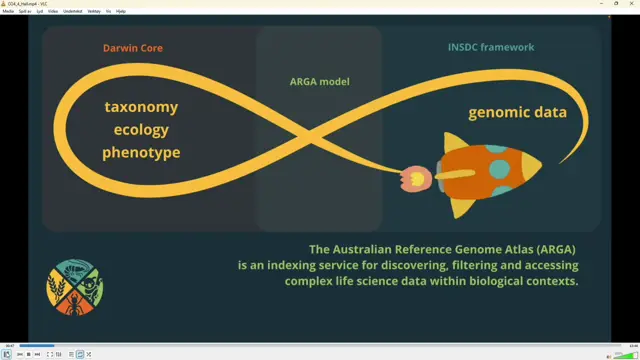
Visualising specimens as event chains on the Australian Reference Genome Atlas
Modelling genomic data as event chains from organism to data product preserves context and provenance that flat records collapse.
Kathryn Hall ↗