
SYM29B panel discussion: publishing lot records and agile development
Caitlin Thorn, Myriam van Walsum, Nora Lentge-Maaß, Franziska Schuster · From Cabinets to Clouds - Bridging the gap between collection- and database management
The short versionLot-level records are worth publishing because they answer 'do you have this taxon?', but the definition of a lot differs between collections.
What this was about
An audience member asked whether lot or drawer numbers should go to GBIF and DiSSCo, distinguishing asset information from collecting metadata. Myriam van Walsum answered that the key researcher question is whether a taxon is held at all, so lot-level records are valuable, while exact storage details stay internal. Nora Lentge-Maaß noted that in malacology the lot is the catalogue unit, and individuals get identifiers related to it. Franziska Schuster explained Scrum: a prioritised backlog with must/should/could/won't labels, three-week sprints, and feedback after each feature.
Why it matters. It clarifies why partially digitised collections may still want aggregators to index lot or storage-level records.
In the room
- Researchers' main question is often whether a collection holds a taxon, which lot records can answer.
- Where exactly a lot is stored stays internal to collection managers.
- In malacology the lot number is the catalogue number and manageable unit; individuals get identifiers related to the lot.
- Scrum: backlog prioritisation with must/should/could/won't, three-week sprints and stakeholder feedback.
Notable moments
Transcript
Automatically generated captions can contain mistakes, especially in names and technical terms. Times are relative to the room recording.
Read the transcript ↓
Related talks.
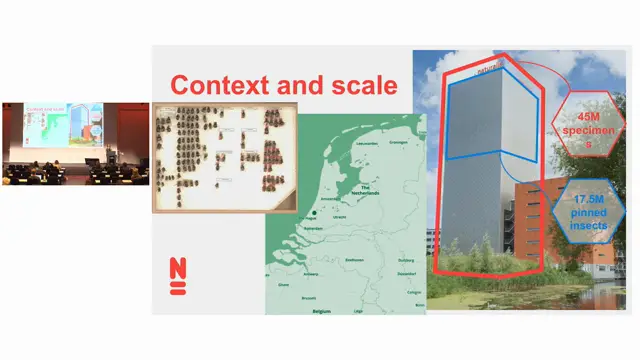
Managing high-volume specimen movements in the entomological collection of Naturalis with a new type of record
A 'lot' record linking taxa to storage units makes high-volume physical moves cheap to record and tells staff where each taxon is.
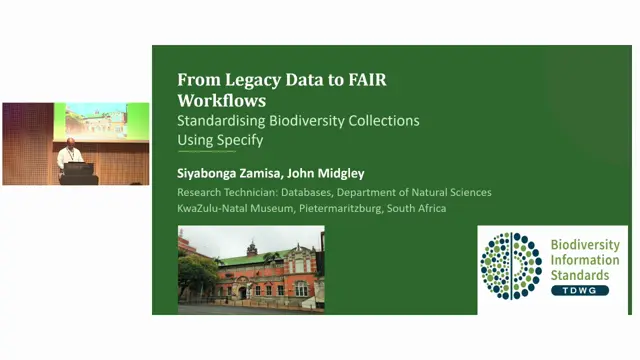
From Legacy Data to FAIR Workflows: Standardising Biodiversity Collections Using Specify
Standardised workflows, not just a new database, turned 11 differently managed collections into GBIF-ready data.
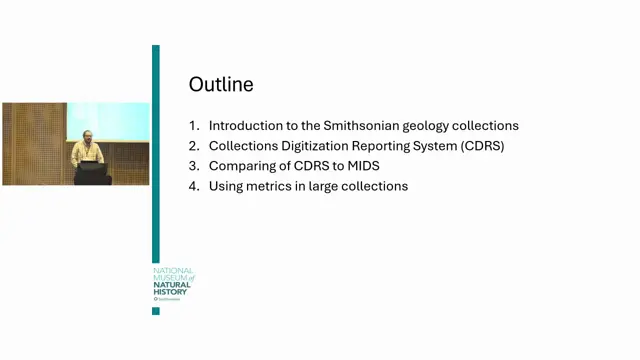
Assessing record quality and completeness in geoscience collections
Element-level views of MIDS information elements are more useful than raw scores for targeting data improvement in large geoscience collections.