
Explore the conversation.
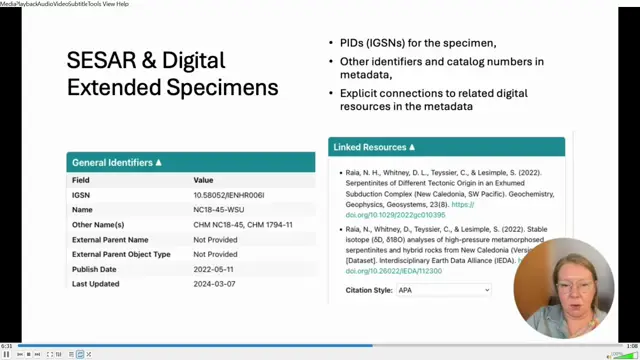
Bridging domains: how SESAR supports Earth and biodiversity digital extended specimens
Persistent sample identifiers plus linked metadata propagated to DataCite let samples be connected to their derived research products across Earth and biodiversity domains.
Andrea Thomer ↗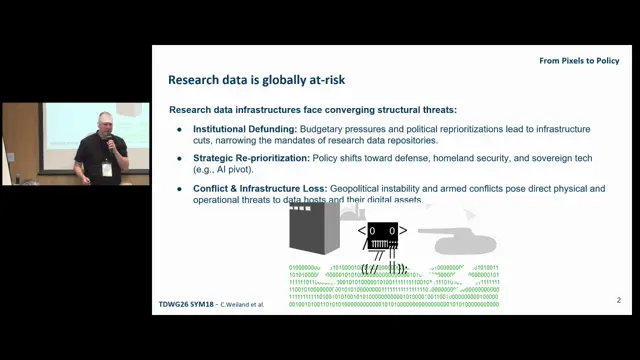
From Pixels to Policy: Closing the Gap between In Situ Monitoring, Earth Observation, and Policy Actionability
Packaging data with its semantics, provenance and machine-readable policy as FAIR Digital Objects makes it rescue-ready and redeployable elsewhere.
Claus Weiland ↗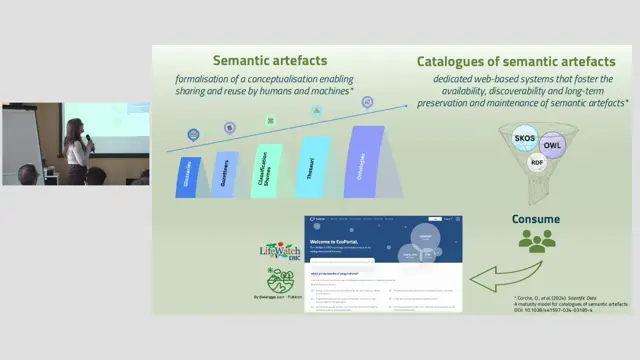
Infrastructure-driven solutions to strengthen semantic interoperability in ecology
A federated terminology service over 28 catalogs plus community alignments tackles the fragmentation of ecological vocabularies.
Cristina Di Muri ↗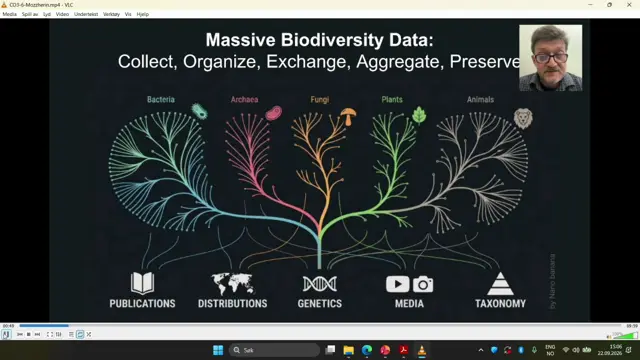
SFBorg: a frictionless biodiversity data exchange
Using an SQLite schema as the exchange format lets biodiversity datasets be used instantly by applications without import.
Dmitry Mozzherin ↗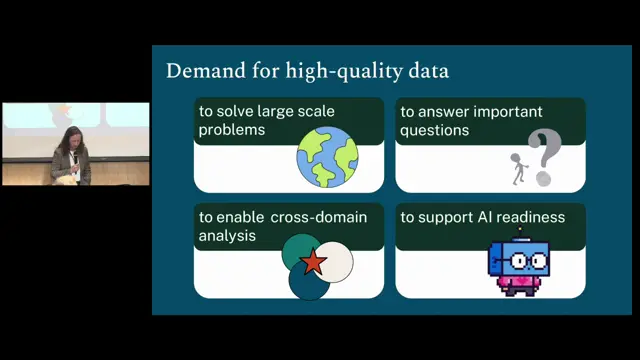
Supporting resilient data infrastructure in a changing environment
Technical copies are not enough: durable data infrastructure depends on preserved human expertise, messy maintenance work and data standardized close to collection.
Rachael Blake ↗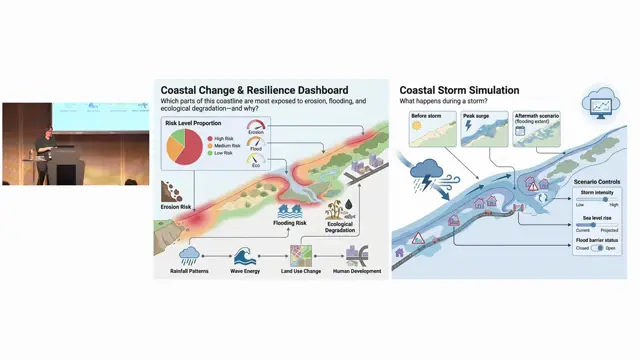
Beyond Data Integration: Ecological and Semantic Interoperability in Coastal Digital Twins
Coastal digital twins expose a long list of unresolved land-sea interoperability gaps, from vertical datums and shifting shorelines to missing cross-domain ontologies.
Laura Slaughter ↗
Challenges and Opportunities for FAIR Marine eDNA Data Publication Workflows
Making marine eDNA data FAIR is as much about clear, practical, less manual publication processes as about technology.
Berenice Talamantes Becerra ↗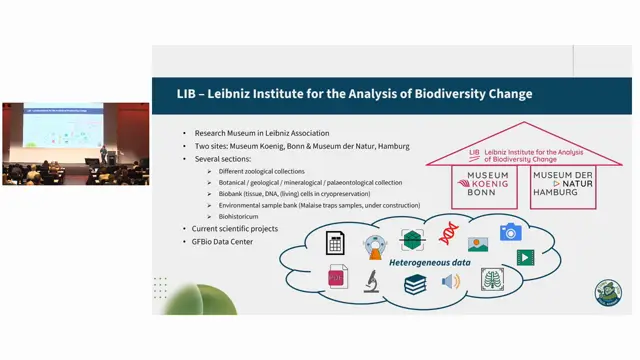
Diversity Workbench (DWB) as a Standards-Based Collection Management System for Heterogeneous Research Data and Biodiversity Data Mobilization
Diversity Workbench can hold very heterogeneous institutional data and publish it through standard pipelines, but its complexity pushes LIB to build web and API layers.
Birgit Rach ↗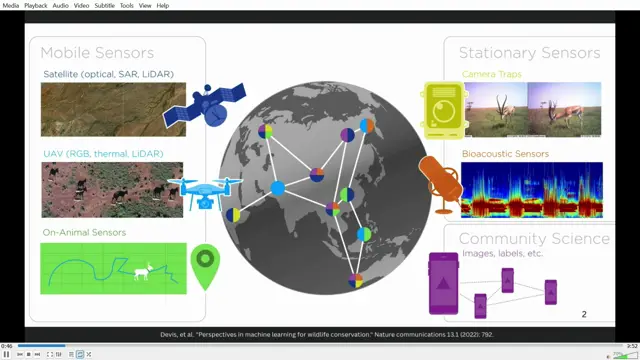
FAIR² Drones: An AI-Ready Standard for Cross-Domain Wildlife Drone Dataset
A shared dataset card that captures ecological, robotic and computer vision metadata makes costly drone datasets reusable across disciplines.
Jenna Kline ↗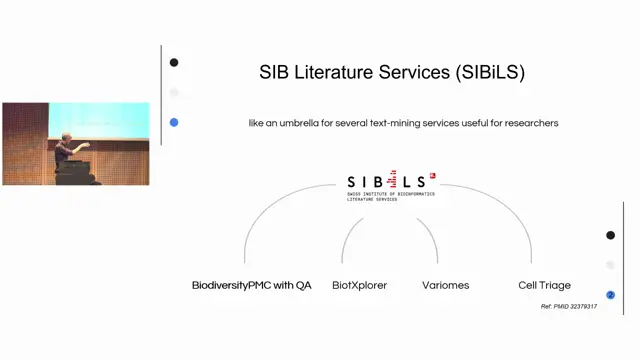
How Literature Services can Support & Benefit from Biodiversity Publication and Data Standards?
Standards-based concept annotation of biodiversity literature enables focused, evidence-grounded question answering that is more precise than general chatbots.
Patrick Ruch ↗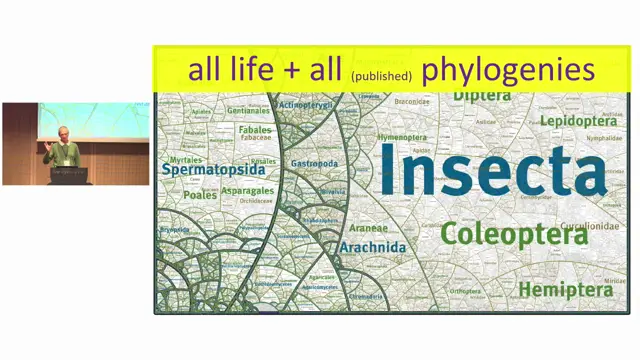
LifeGate: Extending a Global Visual PhyloMap into a Structured Biodiversity Knowledge System
LifeGate's visual map of all described species will become an open, connected knowledge system with trait-based faceted search built from AI-assisted literature extraction.
Martin Freiberg, Birgitta König-Ries ↗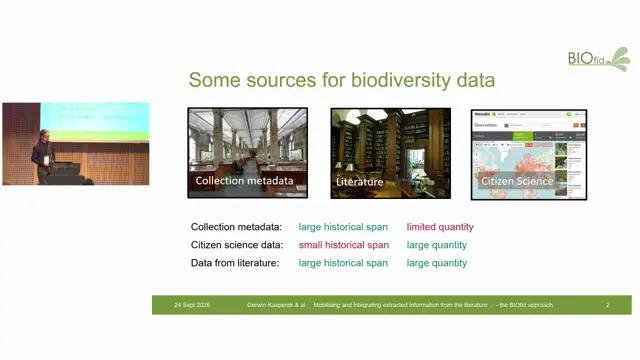
Mobilising and integrating extracted information from the literature into a biodiversity data ecosystem - the BIOfid approach
BIOfid mobilises Central European biodiversity literature with NLP, ontologies and standards, because raw LLM extraction still hallucinates identifiers and needs verification.
Gerwin Kasperek ↗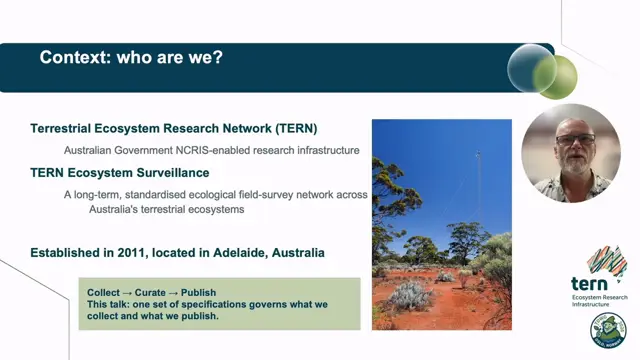
Robot-ready by construction: an ontology-driven, SHACL-validated submission pipeline for national ecological monitoring data
Driving both field data capture and RDF export from one semantically annotated specification makes monitoring data standards-compliant and machine-ready from the start.
Andrew Tokmakoff ↗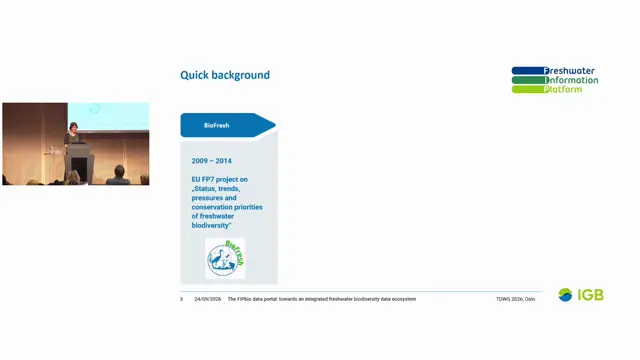
The FIPbio data portal: towards an integrated freshwater biodiversity data ecosystem
FIPbio aims to make freshwater data publishing and analysis easier by combining FADA taxonomy, GBIF occurrences, site context, abiotic and remote-sensing data, and automated catchment annotation.
Vanessa Bremerich ↗
The More Extended, The More Open: Semantic Integration of 3D Natural Heritage Data into Biodiversity CMS
Treating 3D specimen models as entry points in a knowledge graph that includes heritage context and digitisation paradata makes them reusable knowledge assets.
Yeeun Lee ↗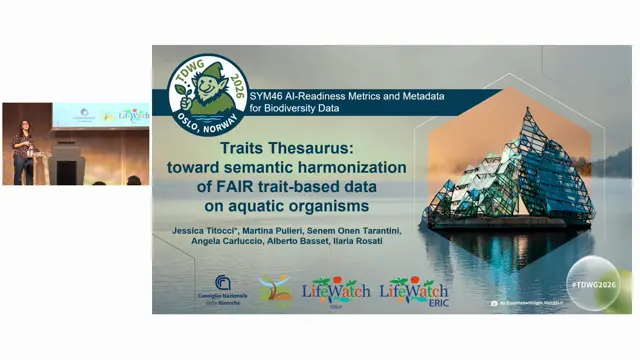
Traits Thesaurus: toward semantic harmonization of FAIR trait-based data on aquatic organisms
A community-validated SKOS thesaurus of aquatic trait terms and units can make open trait data genuinely interoperable across taxa.
Jessica Titocci ↗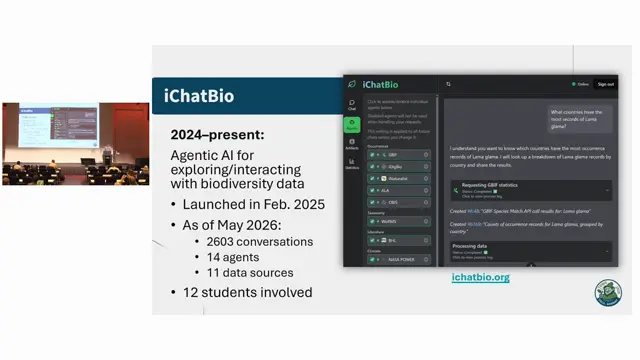
Integrating Many Data Sources in iChatBio Enables Emergent Scientific Use Cases
iChatBio's specialised agents let a conversational interface combine many biodiversity data sources, with traceable, non-hallucinated data artefacts.
Michael Elliott ↗