
The FIPbio data portal: towards an integrated freshwater biodiversity data ecosystem
Vanessa Bremerich · A consensus taxonomic reference for improved freshwater biodiversity data and knowledge
The short versionFIPbio aims to make freshwater data publishing and analysis easier by combining FADA taxonomy, GBIF occurrences, site context, abiotic and remote-sensing data, and automated catchment annotation.
What this was about
Vanessa Bremerich presented the renewed Freshwater Biodiversity Data Portal (FIPbio) of the Freshwater Information Platform, rebuilt on the BIMS engine behind FBIS with funding linked to IGB's investigation of the Oder fish-kill disaster and relying on the InfraFADA taxonomic backbone. The portal will show GBIF freshwater occurrences, Red List status and data gaps per FADA group, implement the GBIF freshwater data publishing guide (including broader 'meta groups'), and link sampling sites to habitat, method, life stage, abiotic sensor and water quality data and remote-sensing time series. Sites are automatically annotated from reference layers and catchment tools (e.g. hydrographr, GeoFRESH, AquaINFRA), with rule-based quality flagging using FADA biogeographic realms.
Why it matters. Freshwater analyses depend on catchment connectivity and sampling context that generic portals ignore; FIPbio tries to encode those freshwater specifics while staying interoperable with GBIF.
In the room
- History: BioFresh (2009-2014) led to the Freshwater Information Platform and a first data portal that became hard to maintain.
- InfraFADA's renewed taxonomic backbone is central; funds from IGB's Oder fish-kill investigation programme were used to renew the portal with the Freshwater Research Centre and Kartoza.
- Built on BIMS (the FBIS engine); serves FIP partners, FADA and Freshwater BON (GEO BON) data mobilisation, e.g. freshwater EBVs.
- It will show all GBIF freshwater occurrences, IUCN Red List status, and data gaps per FADA organism group.
- What it is not: not (yet) an OBIS for freshwaters, which lacks a funded global community; not for national/regional assessments; not yet fully in production.
- Implements the GBIF freshwater data publishing guide, e.g. 'meta groups' such as macrophytes, macroinvertebrates, fish; freshwater fungi, benthic algae and phytoplankton are not covered by FADA and need other checklists.
- Sites carry habitat, ecosystem type, sampling method, life stage and timing, plus abiotic sensor data, water quality and remote sensing (chlorophyll-a, water colour, land use).
Notable moments
Transcript
Automatically generated captions can contain mistakes, especially in names and technical terms. Times are relative to the room recording.
Read the transcript ↓
Related talks.
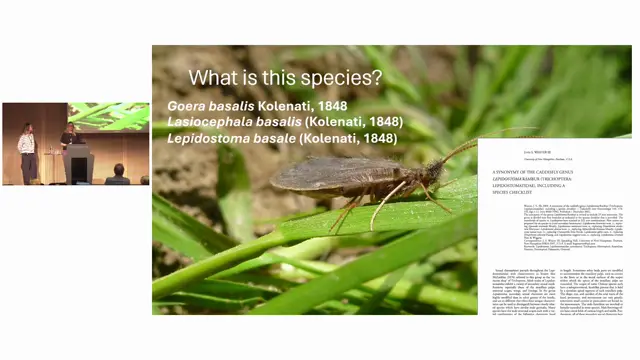
Not just another database: building the future of freshwater taxonomy with FADAtims
FADAtims turns the dormant FADA checklists into a living, expert-curated and interoperable freshwater taxonomic infrastructure, but its future depends on sustaining experts and systems.
Freshwater data platforms: acronym soup, abundance, classifications and data quality
The freshwater community prefers connected, specialised platforms feeding GBIF over one system, but must address abundance data, classification consistency and trust in data from diverse providers.
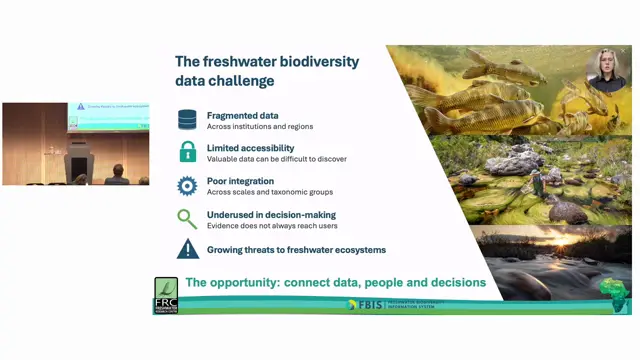
Biodiversity data at your fingertips: open-access freshwater biodiversity information systems for South Africa and Africa
Co-designed, open and interoperable freshwater information systems like FBIS turn fragmented records into decision-ready information, and multi-tenancy helps keep them sustainable.