
Explore the conversation.
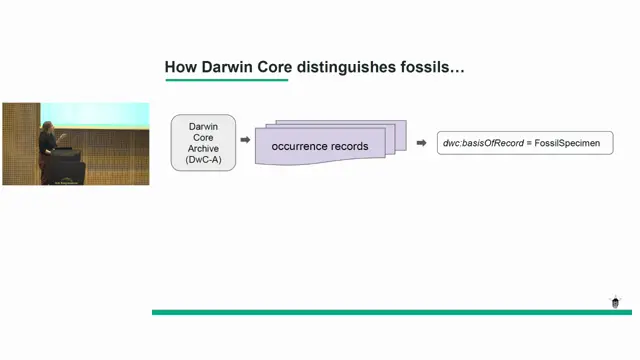
A community-curated controlled vocabulary for fossil collections using dwc:materialEntityType
A granular, community-derived vocabulary for dwc:materialEntityType would let users filter fossil records by what the material actually is, which basisOfRecord cannot do.
Holly Little ↗
A new standard for restricted access (sensitive) species data
A proposed Darwin Core extension would record why data were restricted and what treatment was applied, in a one-to-many way similar to MeasurementOrFact.
Tania Laity ↗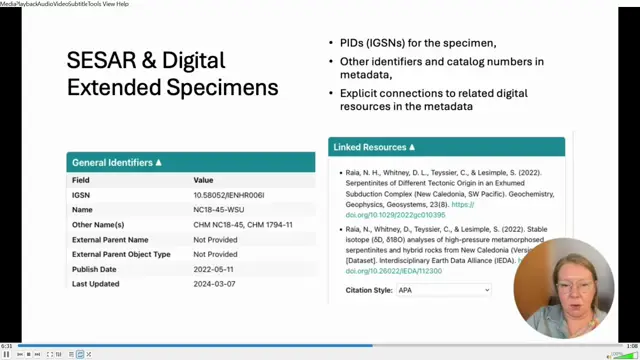
Bridging domains: how SESAR supports Earth and biodiversity digital extended specimens
Persistent sample identifiers plus linked metadata propagated to DataCite let samples be connected to their derived research products across Earth and biodiversity domains.
Andrea Thomer ↗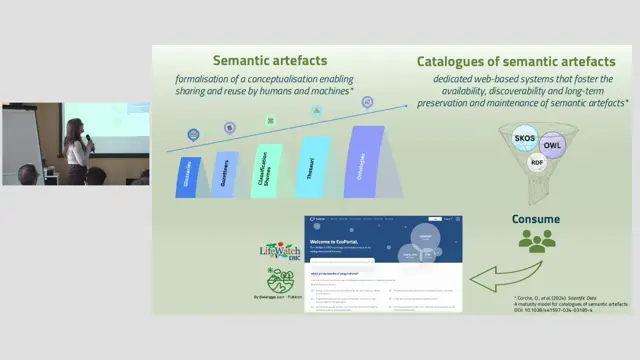
Infrastructure-driven solutions to strengthen semantic interoperability in ecology
A federated terminology service over 28 catalogs plus community alignments tackles the fragmentation of ecological vocabularies.
Cristina Di Muri ↗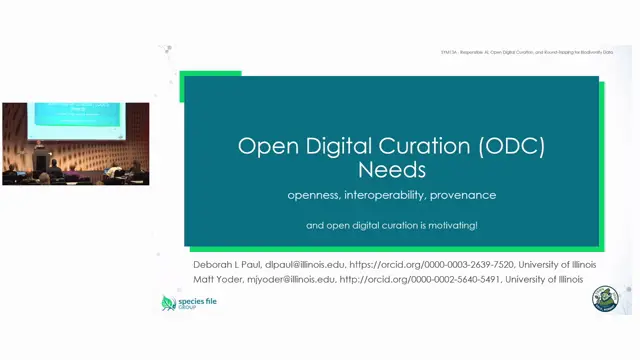
Open Digital Curation Needs: openness, interoperability, provenance
Open digital curation increases transparency, agency and trust and reduces latency, but needs new provenance practices for AI.
Deborah Paul ↗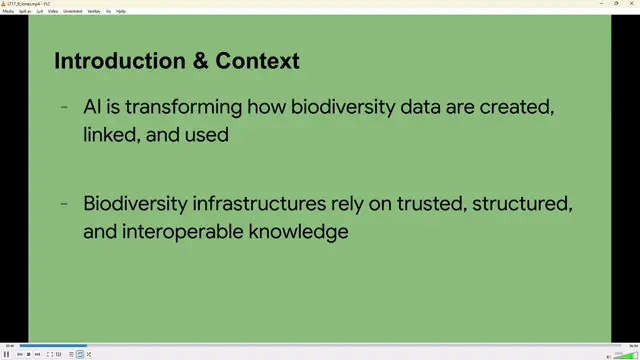
Semantic Governance and Knowledge Organization in AI-Augmented Biodiversity Infrastructures
AI-generated biodiversity knowledge must be provenance-aware and anchored in shared vocabularies, making AI-assisted rather than AI-directed curation.
Andrew Jones ↗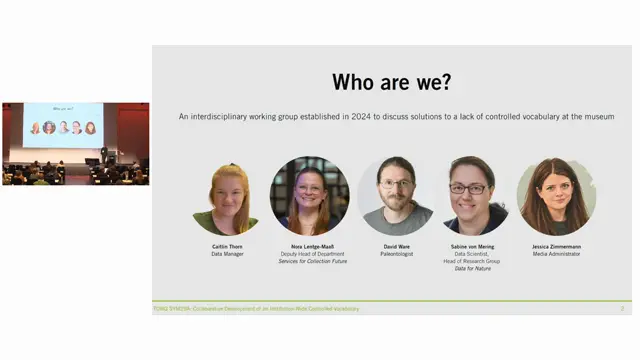
Collaborative Development of an Institution-Wide Controlled Vocabulary
A shared vocabulary across a large museum depends as much on familiar tools, trusted forums and ongoing governance as on the terms themselves.
Caitlin Thorn ↗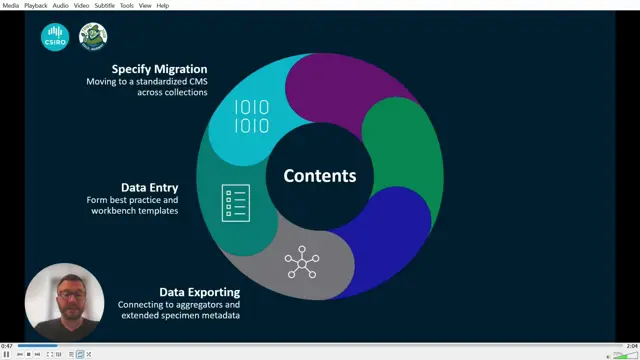
From Data Entry to Distribution: Streamlining Biodiversity Workflows with Specify at CSIRO
Layered standards in templates, roles and training let CSIRO keep five Specify instances consistent while each collection keeps its own outputs.
Dan Baker ↗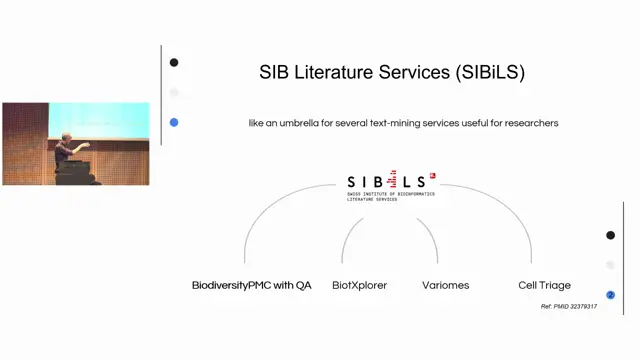
How Literature Services can Support & Benefit from Biodiversity Publication and Data Standards?
Standards-based concept annotation of biodiversity literature enables focused, evidence-grounded question answering that is more precise than general chatbots.
Patrick Ruch ↗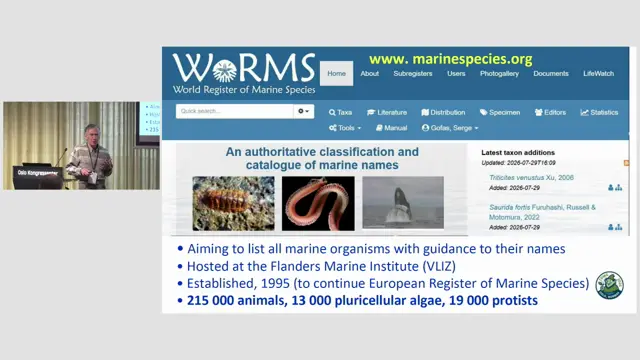
Mapping geographical distributions in the World Register of Marine Species
A country-aware, hierarchical marine geoscheme will let WoRMS and others record and query distributions consistently, pending a solution for defining spatial units in a TDWG standard.
Serge Gofas ↗
Rethinking “absence” in biodiversity data collection and modeling
Separating observation from inference means recording 'detected' and 'not detected' rather than presence and absence.
Rob Stevenson ↗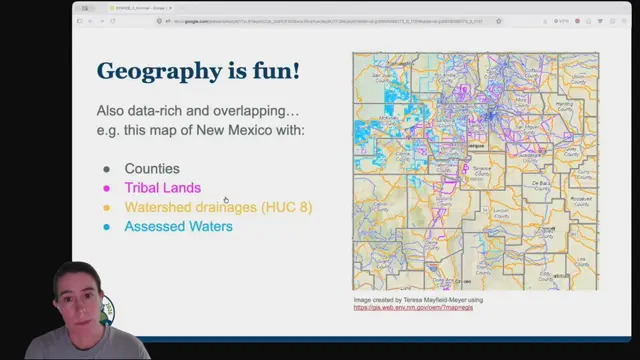
The Unruliness of Higher Geography: What is it doing for us?
Darwin Core needs more explicit, time-aware ways to share human and physical geography so data without coordinates can still be discovered and used.
Erica Krimmel ↗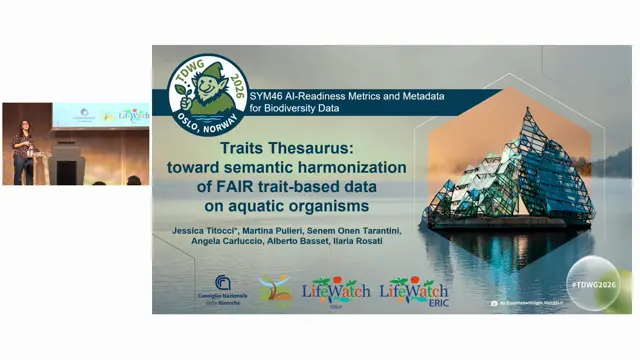
Traits Thesaurus: toward semantic harmonization of FAIR trait-based data on aquatic organisms
A community-validated SKOS thesaurus of aquatic trait terms and units can make open trait data genuinely interoperable across taxa.
Jessica Titocci ↗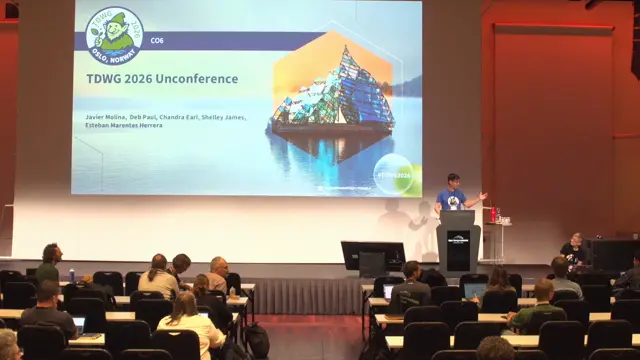
TDWG 2026 Unconference: pitches, topic voting and breakout report-backs
The Unconference showed the community's priorities (controlled vocabularies, AI readiness, project sustainability, Wikidata, Darwin Core data packages) and started several follow-up groups.
Javier Molina, Nicky Nicolson, Deb Paul ↗