
Explore the conversation.
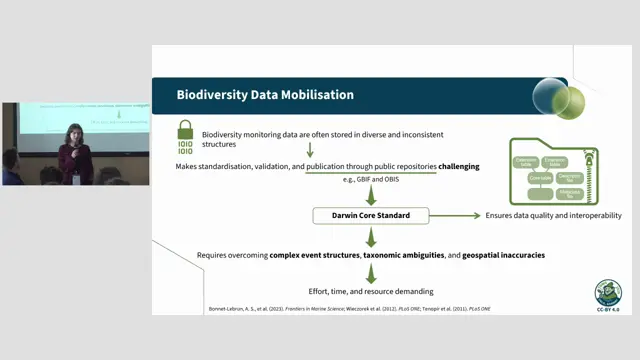
AURORA - A Shiny app designed to create Darwin Core Archives from messy biodiversity datasets
AURORA lowers the barrier to Darwin Core publication by guiding researchers step by step from messy tables to standard-compliant tables and metadata.
Sara Araújo ↗
Biological occurrence data from historic scientific correspondence: enabling automated approaches for structured data extraction from body text
A Darwin Core-aligned annotated corpus from MfN journals provides a reference for evaluating automated occurrence extraction from historical texts.
Christian Bölling ↗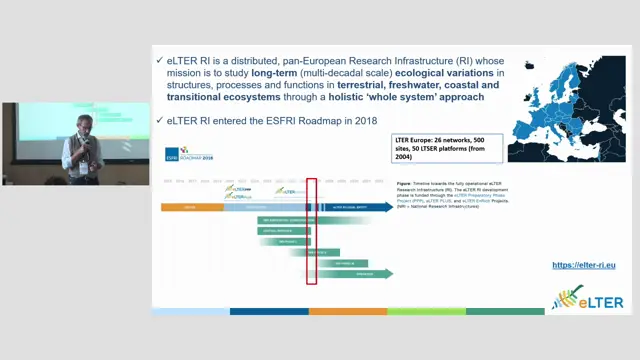
Bridging eLTER Data Reporting Format: enabling interoperable biodiversity and ecological data publication across research infrastructures
eLTER is aligning its CSV-based data reporting format with Darwin Core and Frictionless data packages to make long-term ecological data more FAIR.
Alessandro Oggioni ↗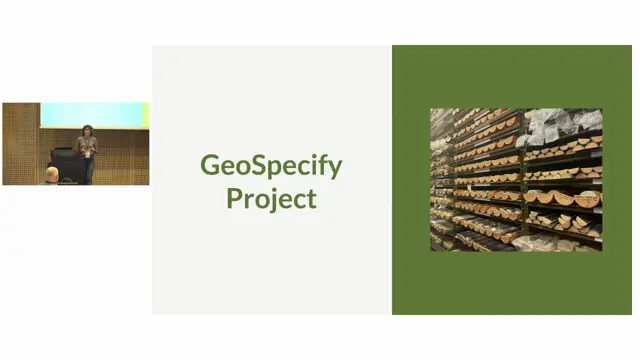
Extending Specify 7 for geological collections (GeoSpecify)
GeoSpecify brings geology into the same Specify data model as biological collections, with purpose-built age, stratigraphy and composite-object features.
Theresa Miller ↗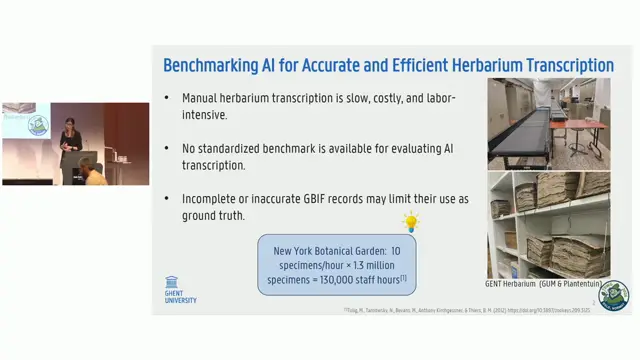
HerbAudit: Validating AI-Driven Herbarium Transcriptions
HerbAudit shows AI herbarium transcription reaching ~94% accuracy and provides a fair, field-aware way to benchmark it.
Dilara Ağacık ↗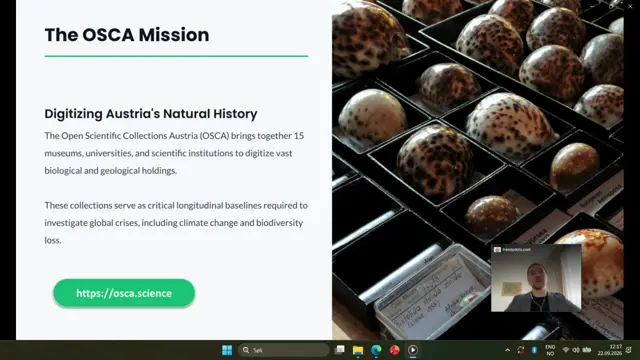
How Darwin Core enables harmonizing Biodiversity Data via the OSCA Consortium
A shared Darwin Core-based cloud pipeline lets 15 Austrian institutions of very different IT capacity publish harmonised specimen data.
Cristian-Dan Bara ↗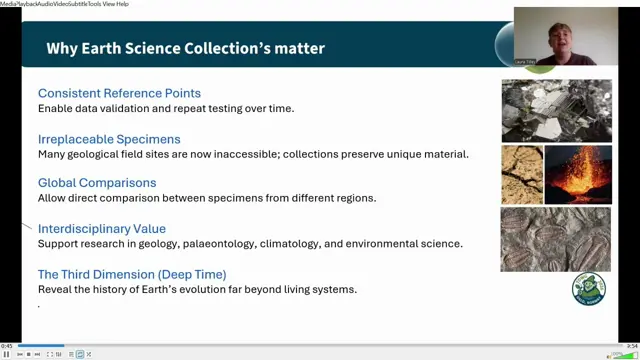
Improving access to Earth science collections data via GeoCASe and the European Open Science Cloud (GeoDARA)
Linking specimen-rich GeoCASe records to dataset-level DCAT descriptions could let deep-time collection data feed modern environmental observation infrastructures.
Laura Tilley ↗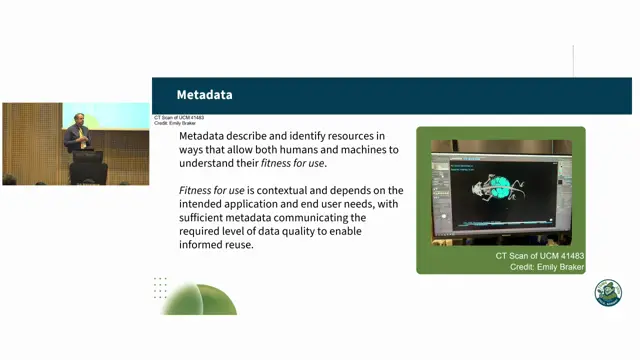
Metadata matters: perceptions on the implementation of Darwin Core in the biocollections cyberinfrastructure
Standardisation through Darwin Core can mask nuance, and practitioners report complex data, missing guidelines and limited capacity as the main implementation barriers.
Bradley Wade Bishop ↗
Type specimens in Wikidata
A consistent Wikidata type specimen model lets anyone link type specimens to collectors, publications, taxa and identifiers as a transparent finding aid.
Siobhan Leachman ↗
AI Ready Standards with Croissant for Type Specimens Catalog Datasets
Combining LLM extraction, Darwin Core and Croissant metadata offers a route from historical specimen catalogues to FAIR, ML-ready datasets.
Sefika Efeoglu ↗
Aligning An Evolving Global Data Model To Software With Global Ambitions: GBIF x TaxonWorks
TaxonWorks and DwC-DP have converged conceptually, but exchange between rich models will always be lossy, so mappings should be recorded explicitly.
Matthew Yoder ↗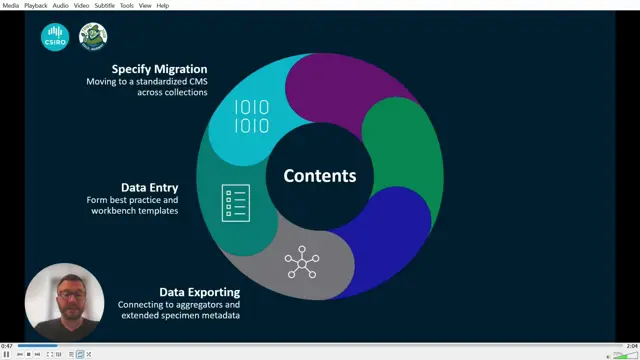
From Data Entry to Distribution: Streamlining Biodiversity Workflows with Specify at CSIRO
Layered standards in templates, roles and training let CSIRO keep five Specify instances consistent while each collection keeps its own outputs.
Dan Baker ↗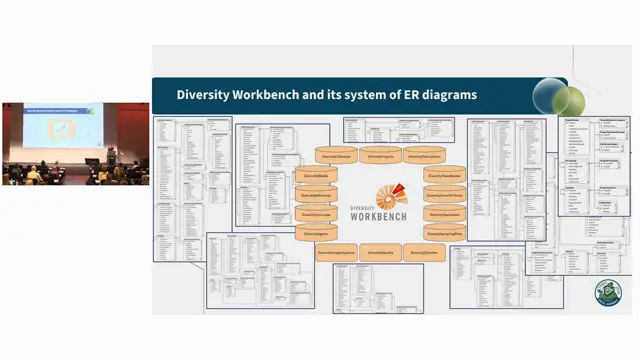
Mapping the Relational Data Schema of the Diversity Workbench (DWB) to the Darwin Core Data Package Data Model to fit better to GBIF´s New Data Model
DwC-DP promises to carry the relational richness that previously pushed GFBio centres to ABCD, and a first DWB-to-DwC-DP prototype via the test IPT works.
Tanja Melanie Weibulat ↗
Meeting Biodiversity Standards with Specify 7
Specify's new built-in Darwin Core mapping tool aims to make publishing from highly customised databases straightforward without giving up local flexibility.
Grant Fitzsimmons ↗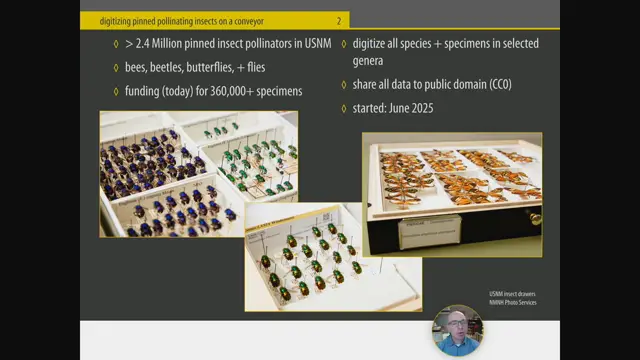
Automated data transcription and Darwin Core field itemization from insect specimen labels using machine learning
Labellum goes beyond label OCR to itemise insect-label text into Darwin Core fields, with high accuracy for most fields but problems with catalogue numbers.
Torsten Dikow ↗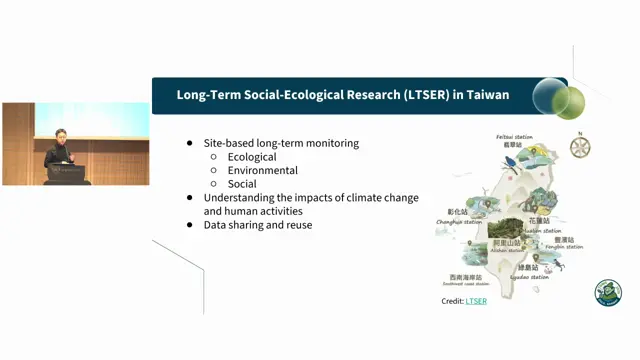
Building a Living Publication Workflow for Long-Term Social-Ecological Monitoring Data: The Taiwan LTSER Experience
Embedding Darwin Core alignment as automated checkpoints in a repository-based pipeline keeps continuously updated monitoring data flowing to GBIF.
Jhu-Jyun Jhang ↗
Prototype: The Semantic Units Framework and Rosetta Statements for Knowledge Graph Construction Workflows
Rosetta-statement templates compiled into RML and SHACL make semantic-unit knowledge graphs much easier to author, at the cost of larger graphs.
Tarek Al Mustafa ↗