
Explore the conversation.
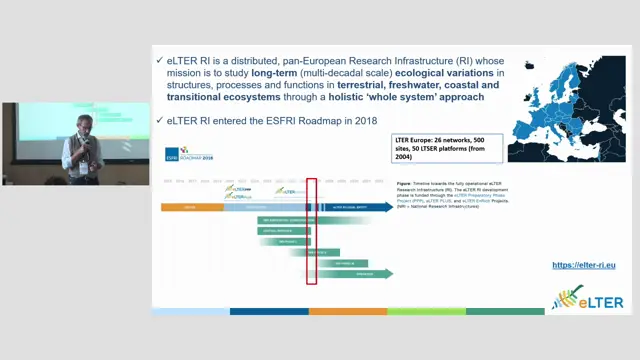
Bridging eLTER Data Reporting Format: enabling interoperable biodiversity and ecological data publication across research infrastructures
eLTER is aligning its CSV-based data reporting format with Darwin Core and Frictionless data packages to make long-term ecological data more FAIR.
Alessandro Oggioni ↗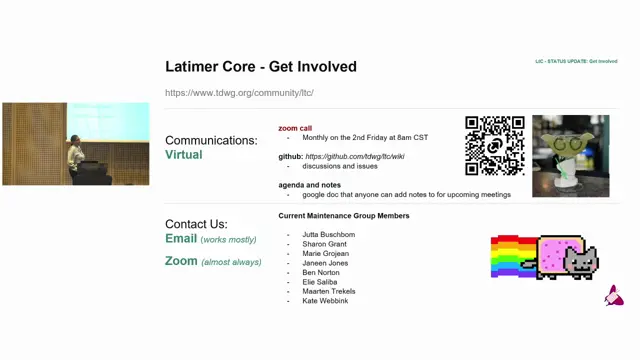
Once and future Latimer Core: status update and open conversation
Latimer Core is being restructured as a data package with unique term IRIs, enabled by TDWG now accepting standards with formal structure.
Sharon Grant ↗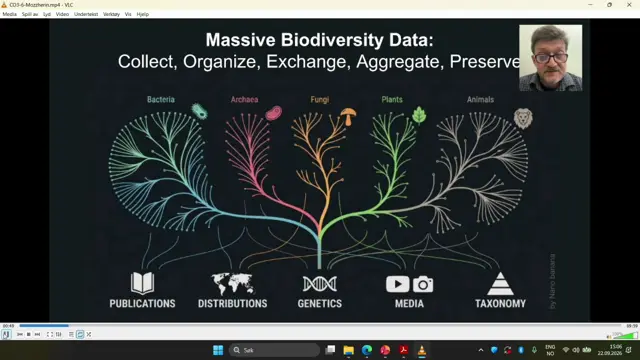
SFBorg: a frictionless biodiversity data exchange
Using an SQLite schema as the exchange format lets biodiversity datasets be used instantly by applications without import.
Dmitry Mozzherin ↗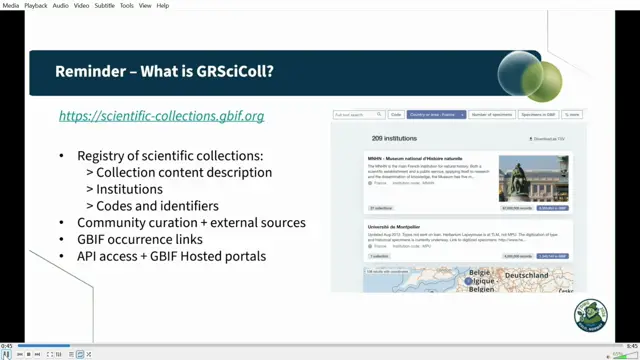
The Latimer Core standard and the Global Registry of Scientific Collections
Latimer Core gives GRSciColl a common language and exchange format for describing collections between free text and specimen records.
Marie Grosjean ↗
Aligning An Evolving Global Data Model To Software With Global Ambitions: GBIF x TaxonWorks
TaxonWorks and DwC-DP have converged conceptually, but exchange between rich models will always be lossy, so mappings should be recorded explicitly.
Matthew Yoder ↗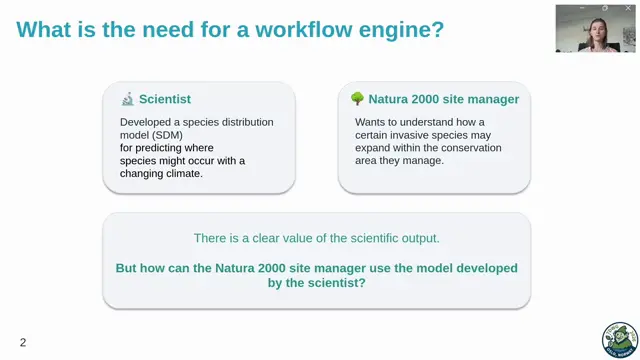
BMD workflow engine: FAIR workflows, RO-Crate and FAIR Signposting for a European biodiversity data space
Packaging containerised workflows and their runs as RO-Crates with FAIR Signposting lets non-technical users run models remotely and get machine-actionable, citable results.
Lena Perzlmaier ↗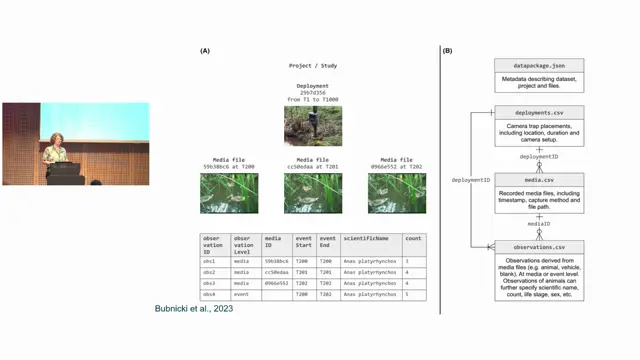
Camtrap DP: extending data standard designed for camera trapping research to support AI workflows and new data sources
Camtrap DP fits data from any stationary sensor, and converging community feedback shows how to extend it for AI provenance and multimodal monitoring.
Karolina Kuczkowska ↗