
Explore the conversation.

Keeping Colliders in Physics: Rebuilding the ALA taxonomic backbone
Taxonomic checklists are not backbones: data aggregators need a curated single hierarchy with quality-control feedback loops, not automated merging of checklists.
Cameron Slatyer ↗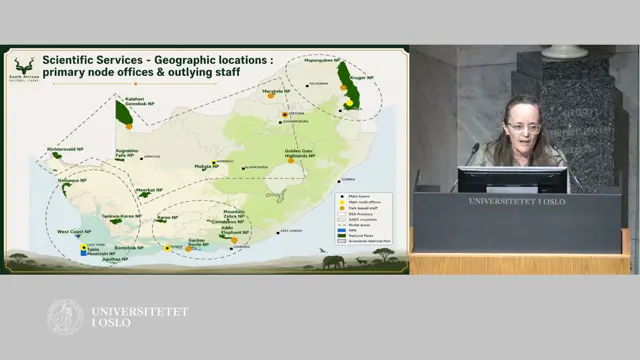
Using automation to consolidate biodiversity occurrence data in South African National Parks
Automating the harvest, integration and summary of biodiversity data lets park staff get evidence-based species lists and dashboards without laborious manual compilation.
Judith Botha ↗
A knowledge organisation system for taxonomic data
Separating taxon data into layers with immutable taxon concepts at the centre gives a practical path to implementing TCS and fixing checklist quality problems.
Niels Klazenga ↗
Building a taxonomic reference authority for conservation: the Digital Catalogue of Biodiversity of Poland
Poland now has an expert-maintained, fully referenced national checklist published through GBIF and ChecklistBank.
Piotr Tykarski ↗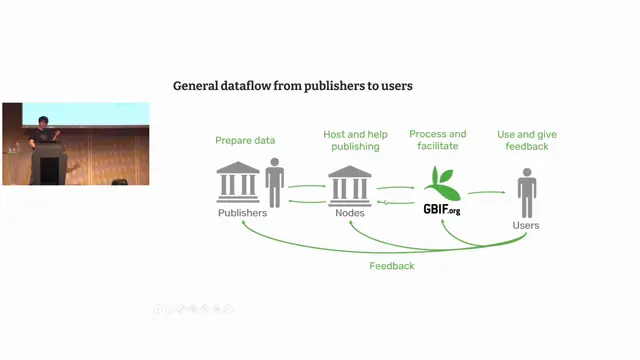
Digital curation across the biodiversity data lifecycle, at the node level (SiB Colombia), aggregator level (GBIF) and how to incorporate user feedback
Curation feedback works at every stage of the data lifecycle, and about a third or more of reported issues do get fixed; AI is used cautiously to summarise feedback.
Esteban Marentes Herrera ↗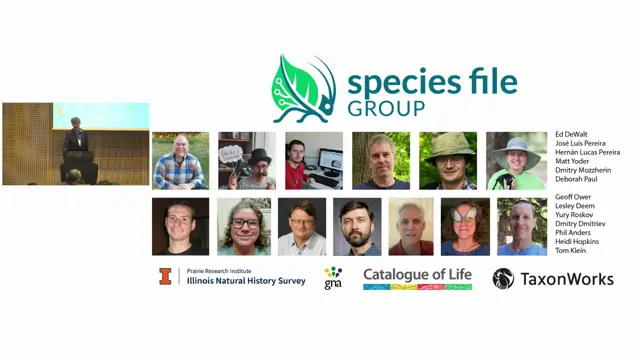
Experience of collaborative management of the World Auchenorrhyncha Database in TaxonWorks
TaxonWorks turned a personal taxonomic database into a collaborative, well-connected resource feeding Catalogue of Life, GBIF and iNaturalist.
Dmitry Dmitriev ↗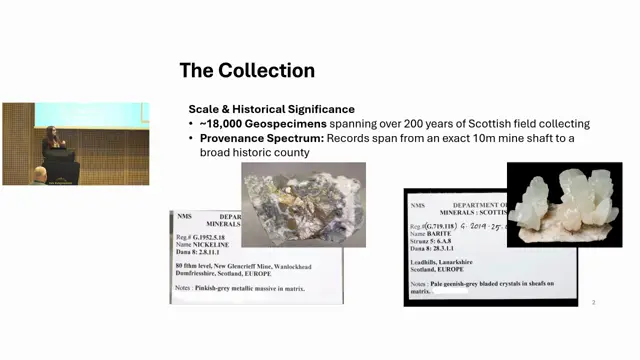
Improving geospecimen provenance and findability in the National Museums Scotland Scottish mineral collection
A scripted, reviewable workflow can quickly reconcile legacy mineral records and enrich them with Mindat coordinates, while giving data back to the community resource.
Sarah Stewart ↗
Managing observations when taxonomy changes: the case of Artportalen and Dyntaxa
Concept-based taxon IDs with traceable history let a large observation system absorb taxonomic change pragmatically.
Johan Liljeblad ↗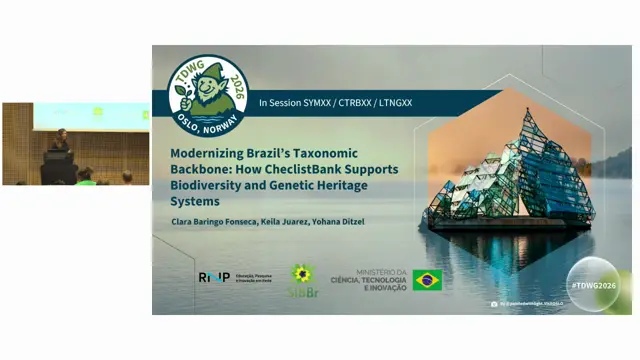
Modernizing Brazil's taxonomic backbone: how ChecklistBank supports biodiversity and genetic heritage systems
ChecklistBank lets a small national node assemble one consistent taxonomic backbone for legal, portal and permitting systems.
Clara Baringo Fonseca ↗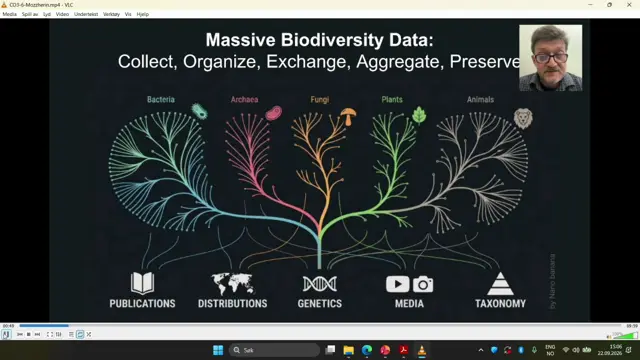
SFBorg: a frictionless biodiversity data exchange
Using an SQLite schema as the exchange format lets biodiversity datasets be used instantly by applications without import.
Dmitry Mozzherin ↗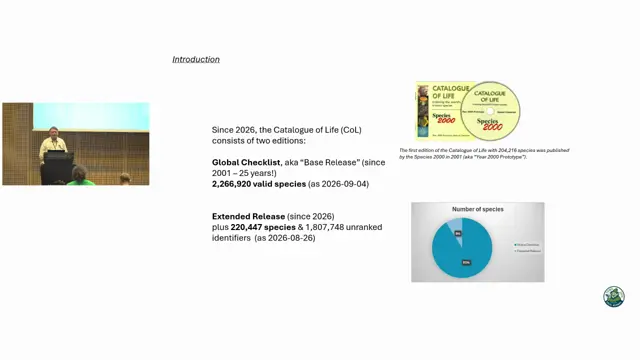
The United States contribution to the global taxonomy of the Catalogue of Life in the first quarter of the 21st century
US experts and platforms supply over a third of the Catalogue of Life, and the next step is an identifier-based infrastructure passing unchanged IDs between databases.
Yury Roskov ↗
Transitivity Failures in Taxonomic Name Resolution: Implications for Botanical Dataset Construction
Always keep original verbatim names so datasets can be re-resolved against the latest taxonomy.
Adam Richard-Bollans ↗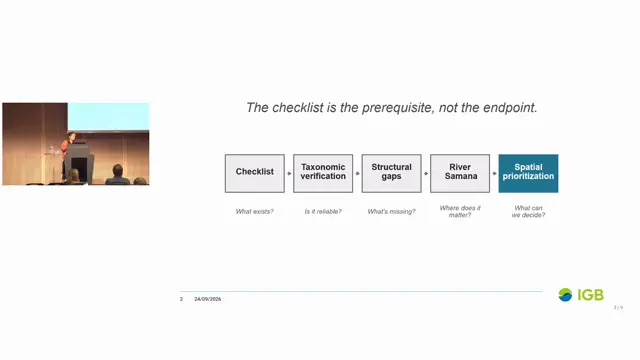
A species-level taxonomic catalog of Neotropical freshwater insects: building a consensus reference for occurrence data integration and conservation planning
Without a reliable species-level checklist, Neotropical freshwater insect occurrences, distribution models and conservation arguments cannot be built.
Alejandra Correa-Bedoya ↗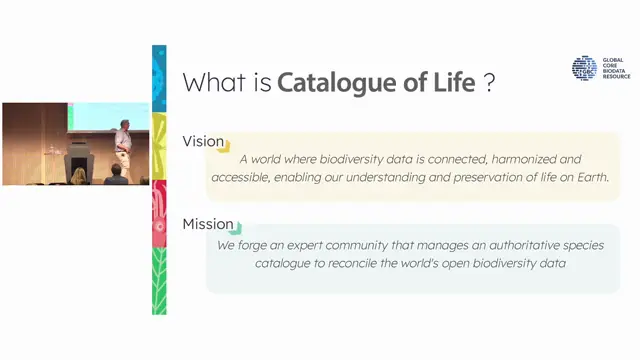
Catalogue of Life and Freshwater species data
Catalogue of Life pledges to model and expose freshwater designations within a year, fed by FADAtims and WoRMS, finally allowing freshwater species and occurrences to be identified via GBIF.
Olaf Banki ↗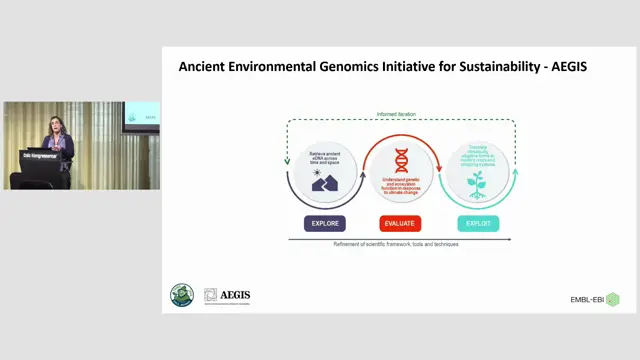
FAIR ancient environmental DNA data in practice: developing and implementing interoperable metadata standards in AEGIS
Community-driven ancient DNA metadata standards, now in MIxS, can make paleogenomic data FAIR and reusable across biodiversity infrastructures.
Joana Pauperio ↗
Freshwater data platforms: acronym soup, abundance, classifications and data quality
The freshwater community prefers connected, specialised platforms feeding GBIF over one system, but must address abundance data, classification consistency and trust in data from diverse providers.
Koen Martens, Anne Lyche Solheim, Olaf Banki ↗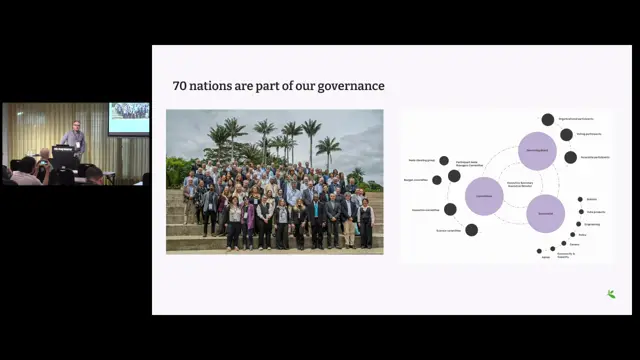
GBIF after 25 years
GBIF sustains itself by leveraging stable national contributions into additional funding and by embedding itself in the biodiversity policy and funding architecture.
Joe Miller ↗
Integrating Specify in broader Science infrastructure
Specify works best at RBG Victoria as one component of a wider hub-based science infrastructure, with custom tools filling its gaps.
Niels Klazenga ↗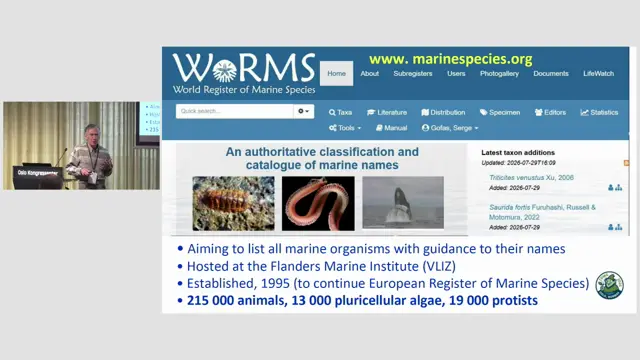
Mapping geographical distributions in the World Register of Marine Species
A country-aware, hierarchical marine geoscheme will let WoRMS and others record and query distributions consistently, pending a solution for defining spatial units in a TDWG standard.
Serge Gofas ↗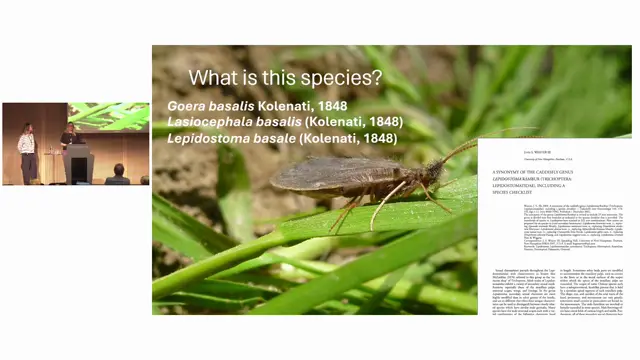
Not just another database: building the future of freshwater taxonomy with FADAtims
FADAtims turns the dormant FADA checklists into a living, expert-curated and interoperable freshwater taxonomic infrastructure, but its future depends on sustaining experts and systems.
Astrid Schmidt-Kloiber, Geraldine Mertens ↗