
Explore the conversation.
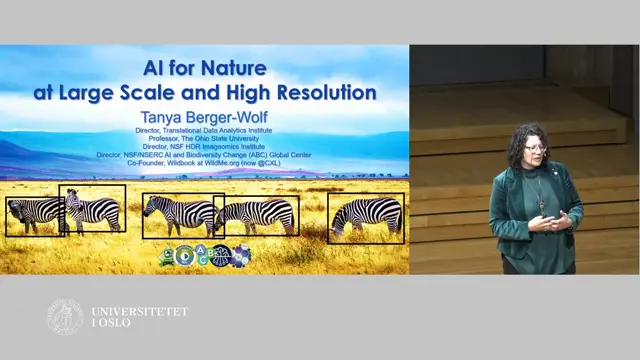
AI for Nature at Large Scale and High Resolution
AI can help fill biodiversity knowledge shortfalls only if biological knowledge is built into the models and the data infrastructure is FAIR for AI and returns value to primary data collectors, because 'there is no AI without data'.
Tanya Berger-Wolf ↗
Keeping Colliders in Physics: Rebuilding the ALA taxonomic backbone
Taxonomic checklists are not backbones: data aggregators need a curated single hierarchy with quality-control feedback loops, not automated merging of checklists.
Cameron Slatyer ↗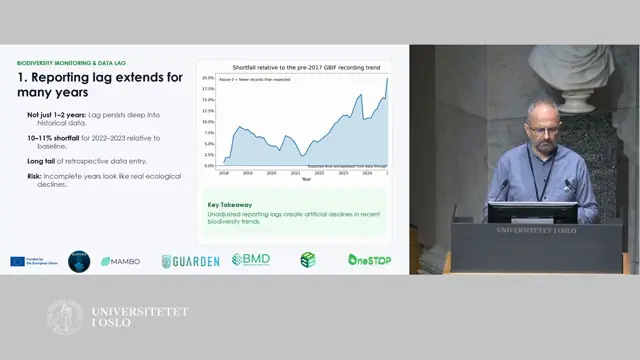
Reducing the lag from observation to action
Timeliness is a missing biodiversity knowledge shortfall: publish soon, publish often, and improve continuously.
Quentin Groom ↗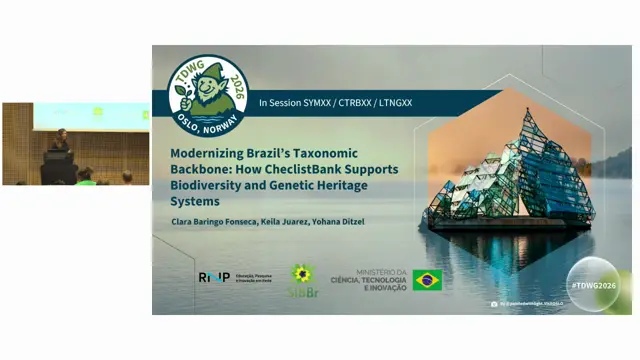
Modernizing Brazil's taxonomic backbone: how ChecklistBank supports biodiversity and genetic heritage systems
ChecklistBank lets a small national node assemble one consistent taxonomic backbone for legal, portal and permitting systems.
Clara Baringo Fonseca ↗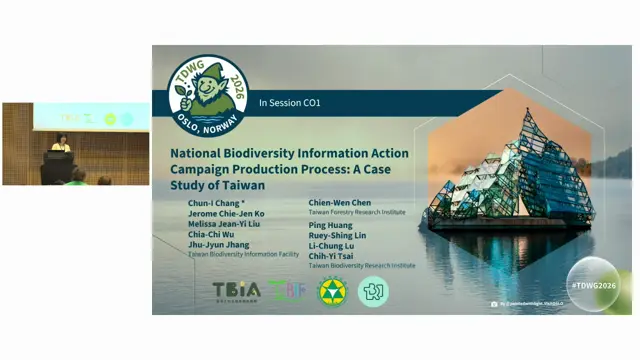
National Biodiversity Information Action Campaign production process: a case study of Taiwan
Taiwan's second national plan reframes biodiversity information infrastructure around resilience, with shared taxonomic references as a cornerstone of interoperability.
Chun-I Chang, Jerome ↗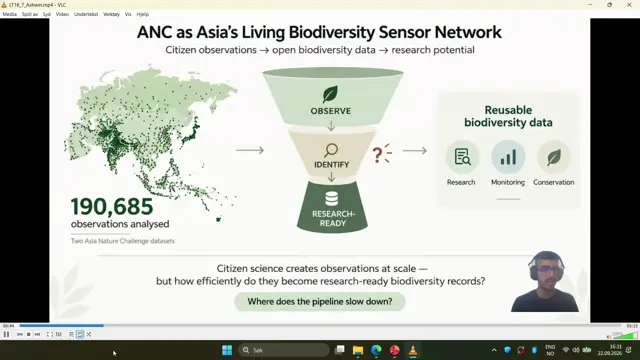
The Asian Nature Challenge as a Beacon of Citizen Science: Regional Contributions, Macroecological Data Networks, and Strategies for Optimizing Taxonomic Identification Efficiency in India
More observations do not mean more usable data; identification capacity is the bottleneck for India's citizen science.
Ashwin A ↗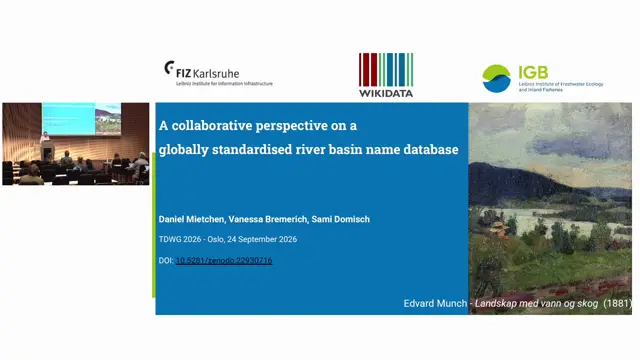
A collaborative perspective on a globally standardised river basin name database
Freshwater biodiversity data need a global, multilingual, collaboratively maintained river basin naming system, and TDWG, Wikidata and OpenStreetMap could build it together.
Daniel Mietchen ↗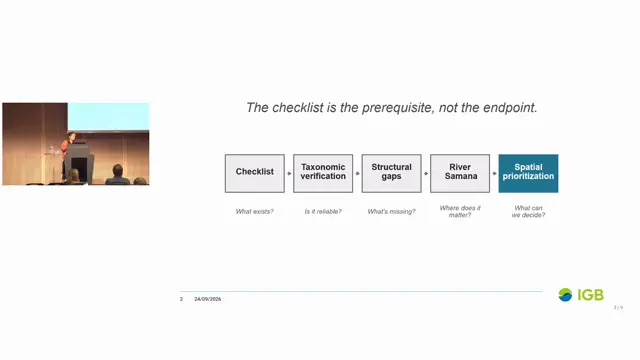
A species-level taxonomic catalog of Neotropical freshwater insects: building a consensus reference for occurrence data integration and conservation planning
Without a reliable species-level checklist, Neotropical freshwater insect occurrences, distribution models and conservation arguments cannot be built.
Alejandra Correa-Bedoya ↗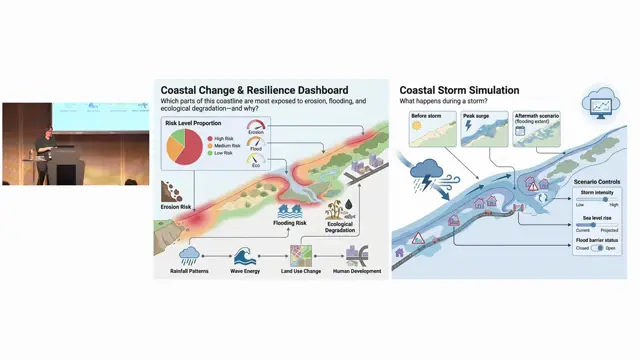
Beyond Data Integration: Ecological and Semantic Interoperability in Coastal Digital Twins
Coastal digital twins expose a long list of unresolved land-sea interoperability gaps, from vertical datums and shifting shorelines to missing cross-domain ontologies.
Laura Slaughter ↗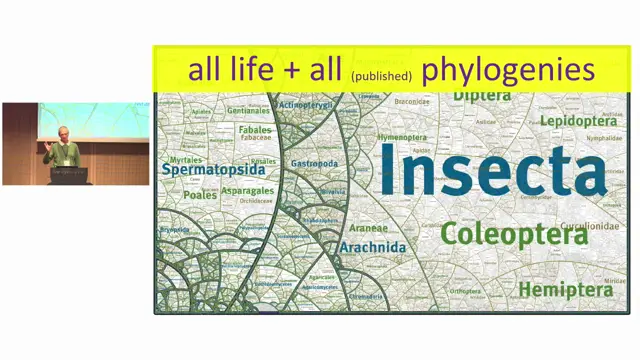
LifeGate: Extending a Global Visual PhyloMap into a Structured Biodiversity Knowledge System
LifeGate's visual map of all described species will become an open, connected knowledge system with trait-based faceted search built from AI-assisted literature extraction.
Martin Freiberg, Birgitta König-Ries ↗
Phenobase: a harmonized, AI-ready knowledge base of global plant phenology
Combining ontologies with machine learning lets Phenobase close global phenology data gaps, but making the result AI-ready requires per-record model provenance, quality and citation.
Robert Guralnick ↗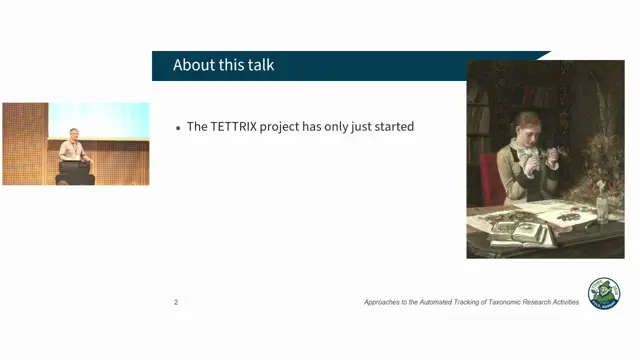
Approaches to the Automated Tracking of Taxonomic Research Activities
TETTRIX aims to build a machine-run, regularly updated picture of who is doing taxonomy on what and where, and is asking the community which sources it is missing.
David Fichtmueller ↗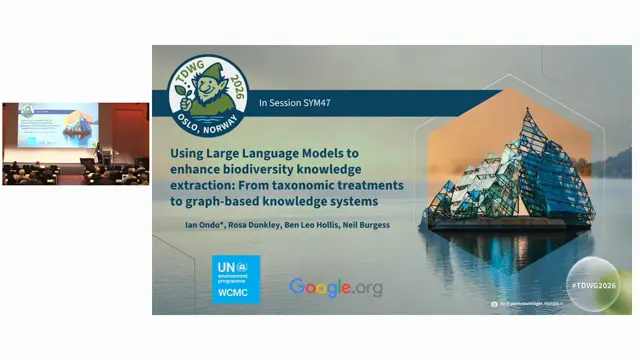
Using Large Language Models to enhance biodiversity knowledge extraction: From taxonomic treatments to graph-based knowledge systems
Taxonomic treatments hold underused habitat knowledge that LLMs and a provenance-preserving knowledge graph can structure and link to ecoregions, helping map data-poor species.
Ian Ondo ↗