
Explore the conversation.
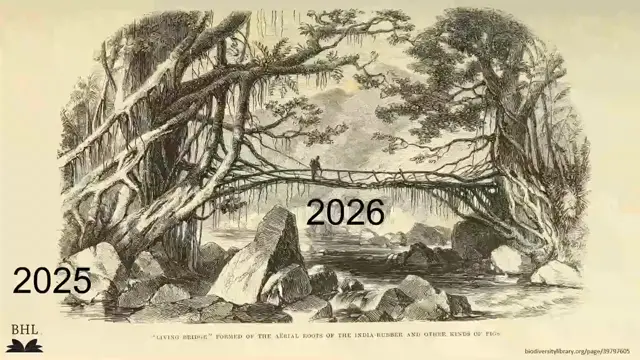
Building a New Foundation for the Biodiversity Heritage Library
BHL has survived losing its Smithsonian home by becoming an independent, globally governed consortium, but its future is still not secure and it needs community support.
Nicole Kearney ↗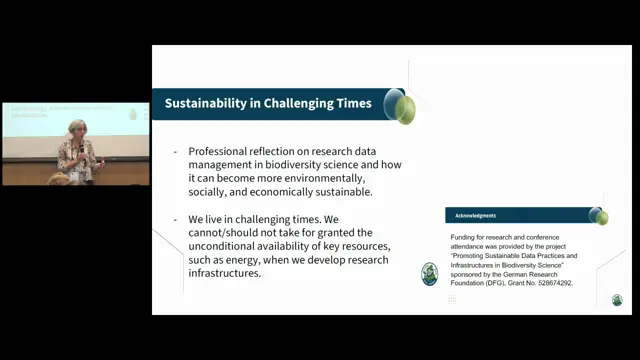
Adopting Environmental Sustainability as a Strategy to Build Resilient Data Infrastructures in Biodiversity Science
Building frugal, environmentally sustainable data infrastructures is a practical risk-management strategy for resilience.
Giuditta Parolini ↗
For the Birds: Adapting Archives and Extracting Data for the Biodiversity Heritage Library
USF is strengthening BHL's infrastructure via a redundant Macaw ingest instance while working to bring vulnerable Florida environmental archives and their data into BHL.
Amanda Boczar, Sydney Jordan ↗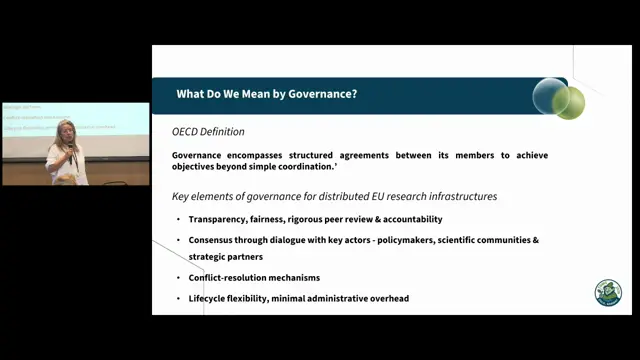
Governance as a Foundation for Resilient Biodiversity Data Infrastructures: Lessons from DiSSCo
Inclusive, funder-connected governance designed into a research infrastructure from day one is a core ingredient of its resilience.
Eva Alonso ↗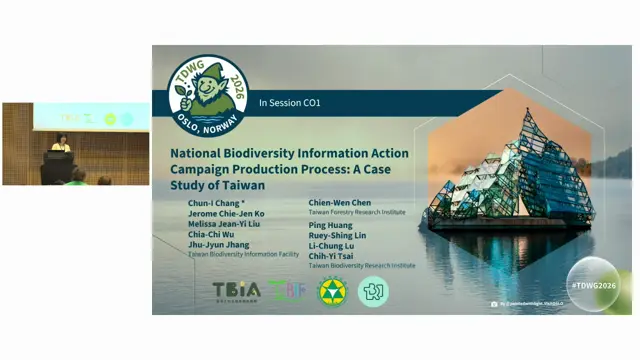
National Biodiversity Information Action Campaign production process: a case study of Taiwan
Taiwan's second national plan reframes biodiversity information infrastructure around resilience, with shared taxonomic references as a cornerstone of interoperability.
Chun-I Chang, Jerome ↗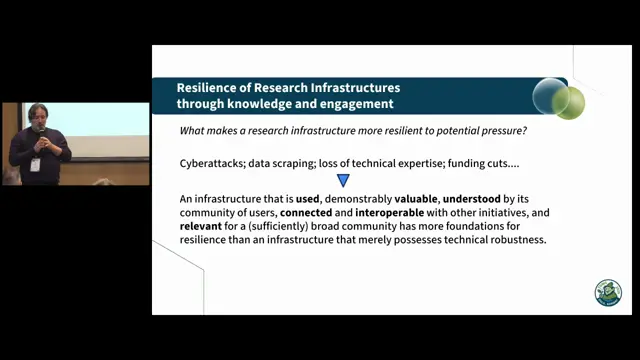
Resilience of Research Infrastructures through knowledge and engagement
Communication, engagement and continuous user training make an infrastructure relevant enough that a community will want it to survive.
Jose, Mareike Petersen ↗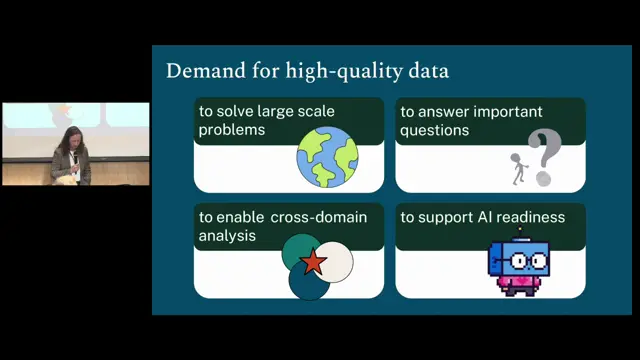
Supporting resilient data infrastructure in a changing environment
Technical copies are not enough: durable data infrastructure depends on preserved human expertise, messy maintenance work and data standardized close to collection.
Rachael Blake ↗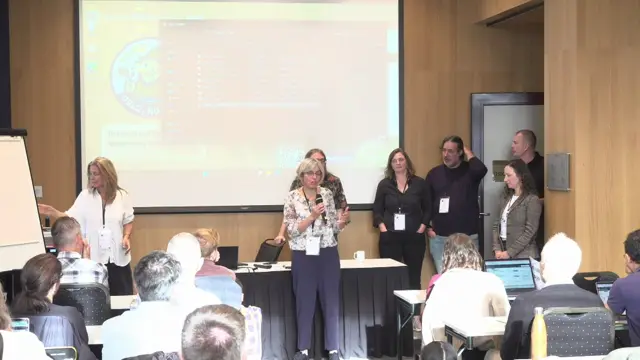
SYM18 discussion: who sustains biodiversity data infrastructures?
Volunteer and single-developer infrastructures deliver proven value, but the community lacks mechanisms and funding to protect them.
Eva Alonso, Giuditta Parolini, Mareike Petersen ↗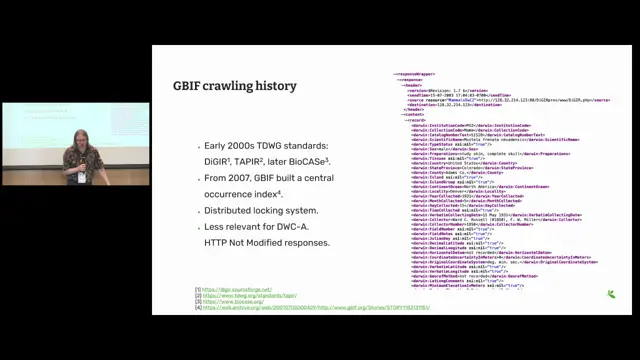
The GBIF data index: crawling and crawled
AI-era crawling through residential proxies is a new, hard-to-block load that is forcing open biodiversity infrastructures and their publishers to spend effort on defence.
Matthew Blissett ↗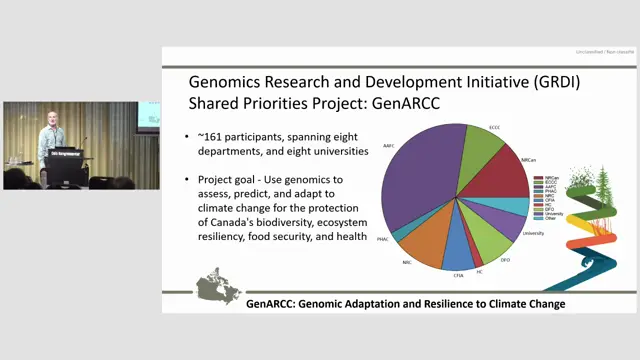
Canada’s need for synthesis for Adaptation and Resilience to Climate Change
Genomic data can only support climate adaptation synthesis if metadata are captured with standards from the start and linked to discoverable infrastructures like GBIF.
James Macklin ↗
Drawers in the dark harboring data that could spark - finding the sweet spot in collection digitization and mobilizing metadata from museum's collections
Plan digitisation for the easy 95%, capture a minimal dataset, and decide when good enough beats perfection.
Nora Lentge-Maaß ↗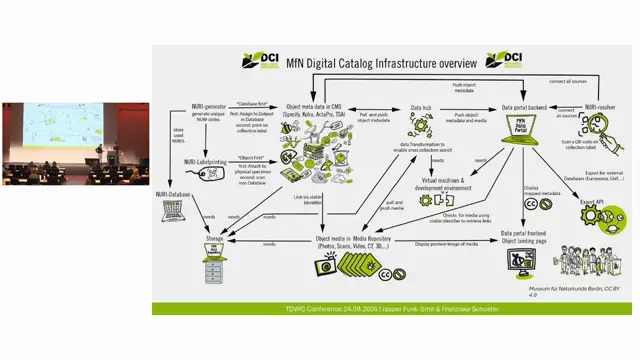
Everything is coded: How to prevent a game of telephone in a system full of interfaces
Shared understanding of what data means must be established at the start of a pipeline; standard formats alone won't stop meaning drifting between people.
Franziska Schuster, Jasper ↗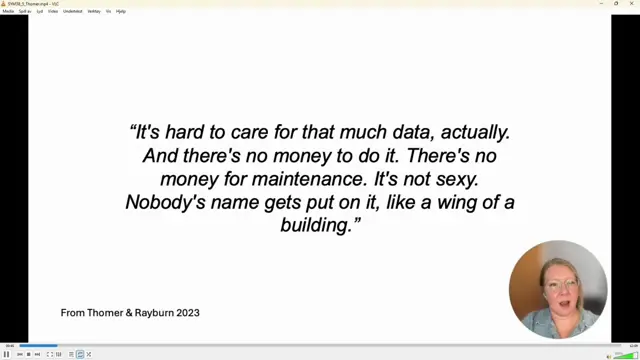
From preservation to perseverance: bridging disciplines for data resilience
Data resilience in a crisis is about prioritisation and mutual aid rather than perfection, and infrastructures need to be kept appropriately visible to be funded.
Andrea Thomer ↗
Post-BioDT lessons and next-generation biodiversity digital twins
BioDT delivered pilots and, above all, mutual understanding between modellers and data people; the next generation must find real users and real conservation impact rather than chase the digital twin label.
Claus Weiland, Dimitri, Sharif Islam ↗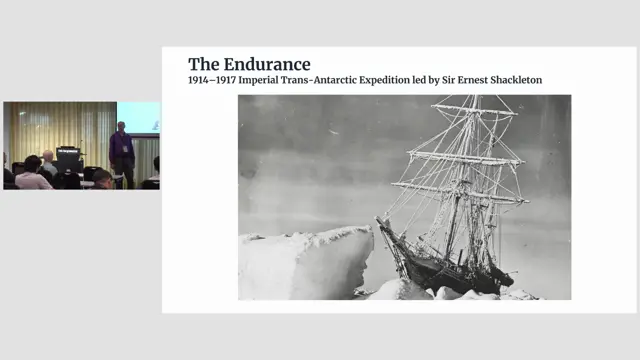
Unifying Natural Heritage for a Resilient Future
DiSSCo's ERIC model and FAIR digital specimen objects are intended to make Europe's specimen data resilient beyond short-term project funding.
Wouter Addink ↗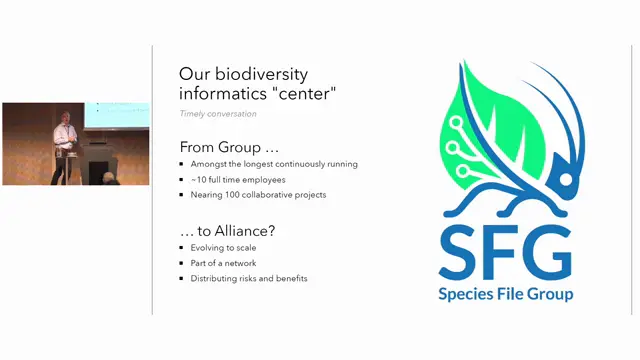
What is the Role of "AI" in the Centers for Biodiversity Informatics of the Future?
Biodiversity informatics centres are about people. AI raises the importance of standards, storage, openness and distributed risk, and centres should fuel researchers' curiosity rather than be driven by the technology.
Matthew Yoder ↗