
Explore the conversation.
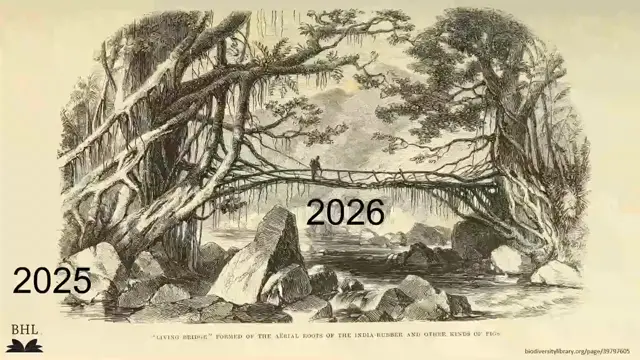
Building a New Foundation for the Biodiversity Heritage Library
BHL has survived losing its Smithsonian home by becoming an independent, globally governed consortium, but its future is still not secure and it needs community support.
Nicole Kearney ↗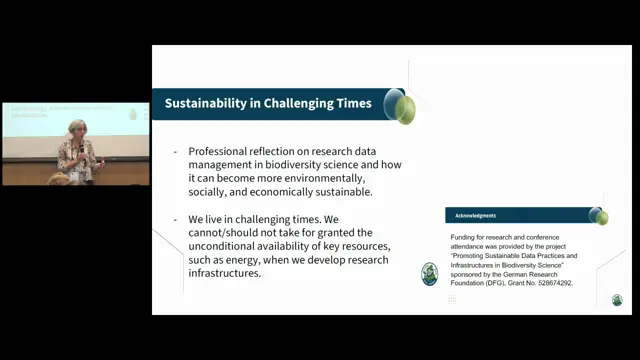
Adopting Environmental Sustainability as a Strategy to Build Resilient Data Infrastructures in Biodiversity Science
Building frugal, environmentally sustainable data infrastructures is a practical risk-management strategy for resilience.
Giuditta Parolini ↗
Introduction: Reimagining BHL
BHL at 20 has a new independent foundation but an unsecured future, and the symposium seeks ideas to shape what comes next.
Nicole Kearney ↗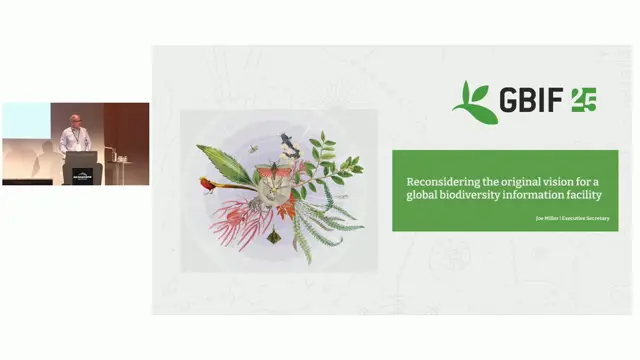
Reconsidering the original vision for a global biodiversity information facility
GBIF achieved its 1999 vision only partially and through a network of collaborating infrastructures; the community must decide whether that is enough and articulate the next vision.
Joe Miller ↗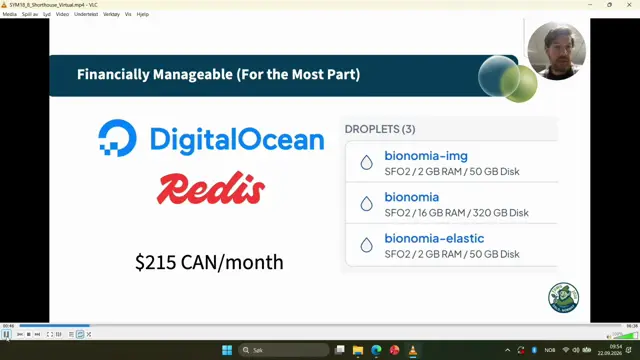
Resilient Attribution Infrastructures for Biodiversity Science: Archiving and Risk Mitigation in Bionomia
Small niche infrastructures can be resilient by planning for their own end: keep things simple and push versioned data and reusable code outward.
David Shorthouse ↗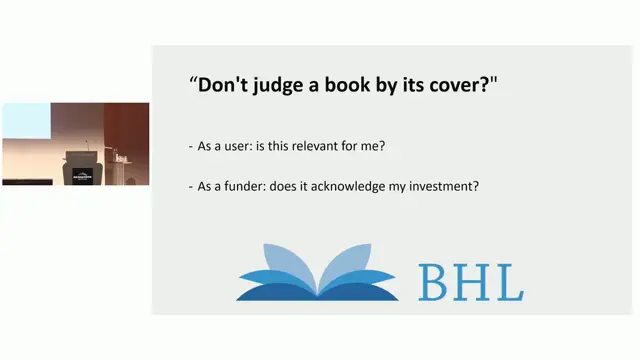
SYM08A closing discussion: sustaining and connecting the BHL ecosystem
Focusing on core functions made GBIF and BHL successful; sustaining the connected ecosystem now requires clear value statements and machine interfaces such as MCP servers.
Nicole Kearney ↗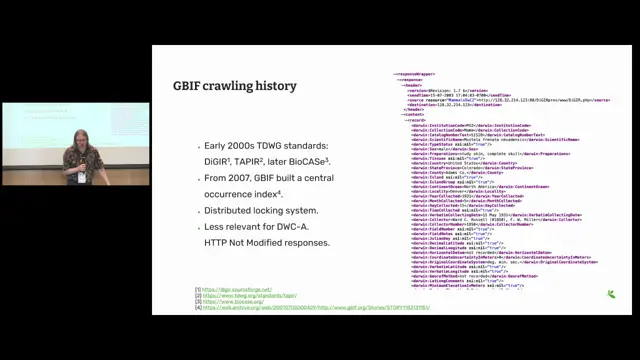
The GBIF data index: crawling and crawled
AI-era crawling through residential proxies is a new, hard-to-block load that is forcing open biodiversity infrastructures and their publishers to spend effort on defence.
Matthew Blissett ↗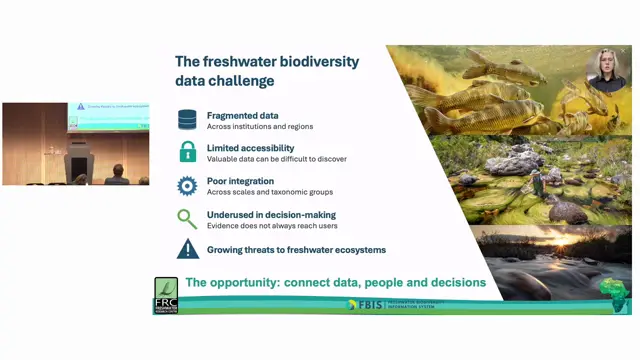
Biodiversity data at your fingertips: open-access freshwater biodiversity information systems for South Africa and Africa
Co-designed, open and interoperable freshwater information systems like FBIS turn fragmented records into decision-ready information, and multi-tenancy helps keep them sustainable.
Helen Dallas ↗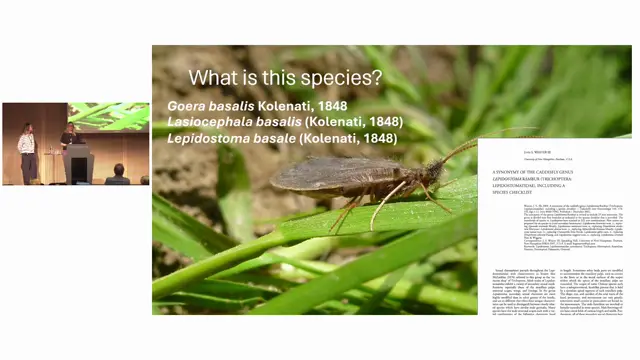
Not just another database: building the future of freshwater taxonomy with FADAtims
FADAtims turns the dormant FADA checklists into a living, expert-curated and interoperable freshwater taxonomic infrastructure, but its future depends on sustaining experts and systems.
Astrid Schmidt-Kloiber, Geraldine Mertens ↗
Operationalising biodiversity DT ecosystems through assessment-driven service mapping and reusable tools and workflow integration
A simple, purpose-first assessment that maps a team's needs and capabilities to an inventory of existing tools helps digital twin projects reuse rather than rebuild.
Syrine Ben Aziza ↗
Requirements of Sustainability Models for Geo-Biodiversity Data Cyberinfrastructure
Cyberinfrastructure sustainability and ecosystem sustainability go hand in hand, so infrastructure must be designed from the start to track use and support economic orchestration.
José Fortes ↗
SpecifyaaS: Managing Ephemeral Repositories in Collections-Based Research
Giving researchers their own lightweight Specify instances early in the research process standardises data from the start and eases later exchange with the institutional collection.
Kevin Holston ↗
Sustainability and collaboration in a time of uncertainty
Sustaining biodiversity data infrastructure requires treating technology, people and a diversified funding portfolio as one interconnected system.
Libby Ellwood ↗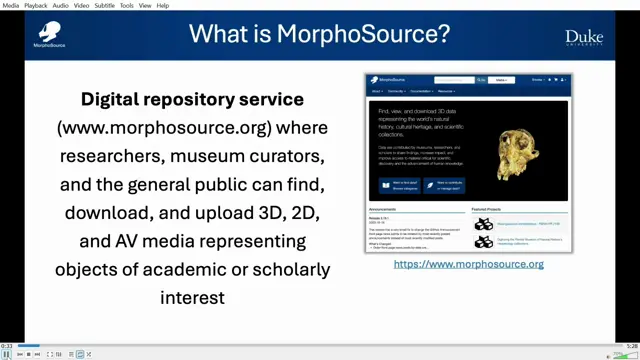
A Network That Is Social: A Community-Based Model and Plan for Sustaining MorphoSource, a Scholarly 3D Data Repository
MorphoSource will sustain open access to 3D data by charging museums, journals, societies and depositors, never downloaders, as NSF funding ends.
Julie Winchester ↗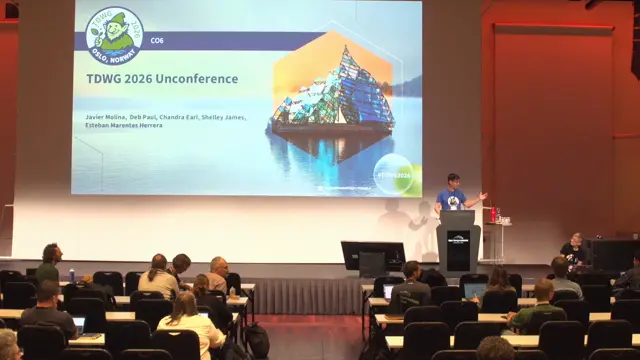
TDWG 2026 Unconference: pitches, topic voting and breakout report-backs
The Unconference showed the community's priorities (controlled vocabularies, AI readiness, project sustainability, Wikidata, Darwin Core data packages) and started several follow-up groups.
Javier Molina, Nicky Nicolson, Deb Paul ↗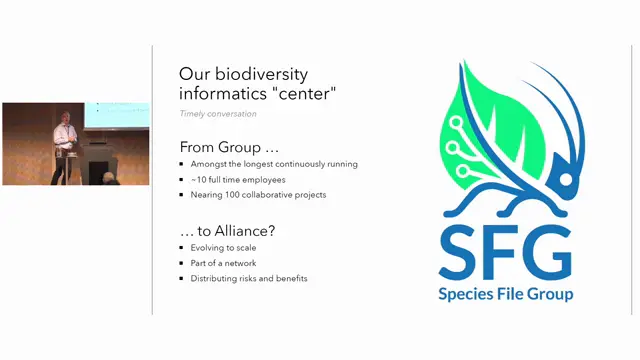
What is the Role of "AI" in the Centers for Biodiversity Informatics of the Future?
Biodiversity informatics centres are about people. AI raises the importance of standards, storage, openness and distributed risk, and centres should fuel researchers' curiosity rather than be driven by the technology.
Matthew Yoder ↗