
Explore the conversation.
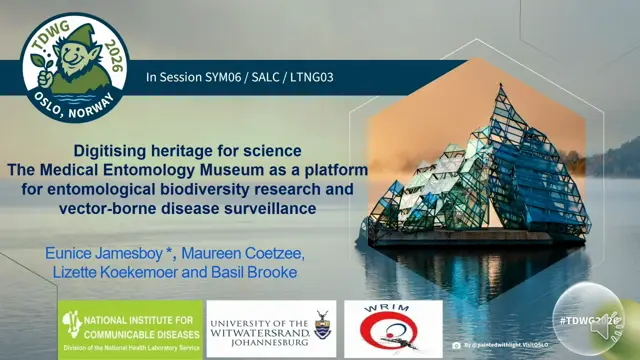
Digitising heritage for science: the Medical Entomology Museum as a platform for entomological biodiversity research and vector-borne disease surveillance
Digitised historical mosquito vouchers become reusable evidence that gives context to current vector surveillance.
Eunice Jamesboy ↗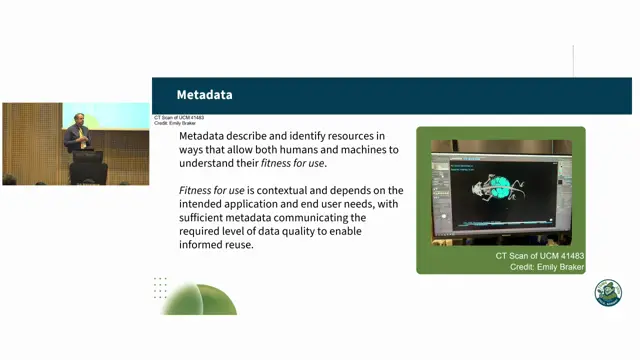
Metadata matters: perceptions on the implementation of Darwin Core in the biocollections cyberinfrastructure
Standardisation through Darwin Core can mask nuance, and practitioners report complex data, missing guidelines and limited capacity as the main implementation barriers.
Bradley Wade Bishop ↗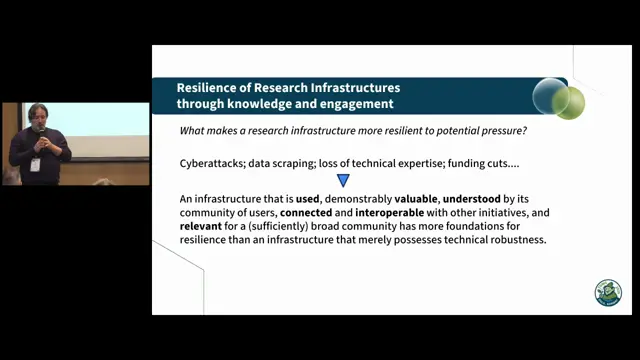
Resilience of Research Infrastructures through knowledge and engagement
Communication, engagement and continuous user training make an infrastructure relevant enough that a community will want it to survive.
Jose, Mareike Petersen ↗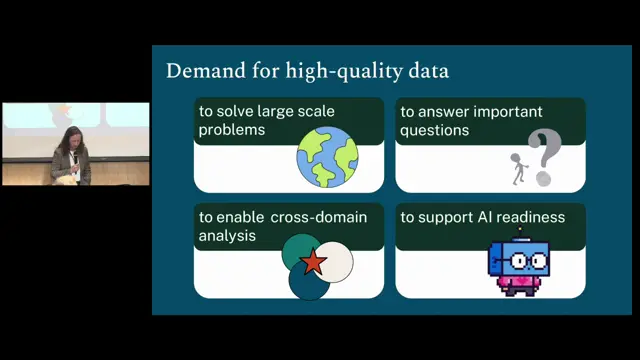
Supporting resilient data infrastructure in a changing environment
Technical copies are not enough: durable data infrastructure depends on preserved human expertise, messy maintenance work and data standardized close to collection.
Rachael Blake ↗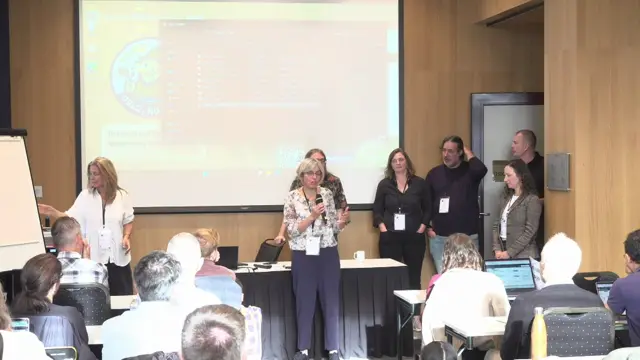
SYM18 discussion: who sustains biodiversity data infrastructures?
Volunteer and single-developer infrastructures deliver proven value, but the community lacks mechanisms and funding to protect them.
Eva Alonso, Giuditta Parolini, Mareike Petersen ↗
From Data Entry to Distribution: Streamlining Biodiversity Workflows with Specify at CSIRO
Layered standards in templates, roles and training let CSIRO keep five Specify instances consistent while each collection keeps its own outputs.
Dan Baker ↗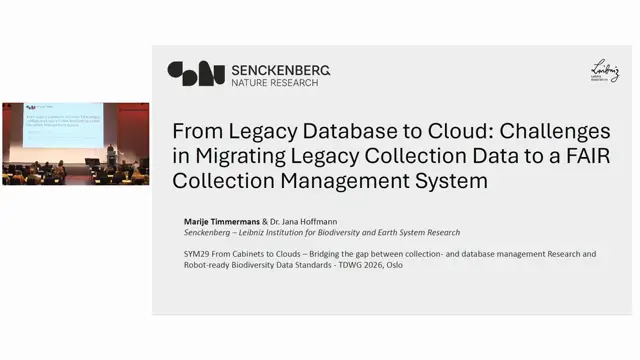
From Legacy Database to Cloud: Challenges in Migrating Legacy Collection Data to a FAIR Collection Management System
A dedicated data manager who acts as liaison and uses iterative prototypes can make a small institute's move to a shared CMS workable despite fragmented legacy practices.
Marije Timmermans ↗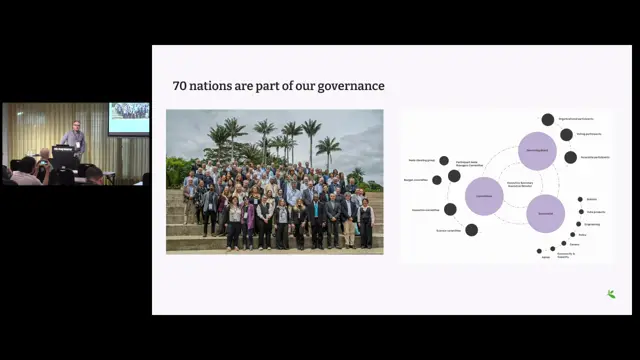
GBIF after 25 years
GBIF sustains itself by leveraging stable national contributions into additional funding and by embedding itself in the biodiversity policy and funding architecture.
Joe Miller ↗
Sustainability and collaboration in a time of uncertainty
Sustaining biodiversity data infrastructure requires treating technology, people and a diversified funding portfolio as one interconnected system.
Libby Ellwood ↗
SYM29A panel discussion: working with collection managers, documentation and institutional strategy
Bridging cabinets and clouds depends on people: engaging collection managers, making data work visible, institutional strategy and durable documentation.
Caitlin Thorn, Jacobus Christiaan Steenkamp, Cailin Meyer ↗
Discussion: designing institutional biodiversity knowledge and data science centres
Interoperable institutional knowledge spaces depend less on technology than on people, shared storage and semantics, incentives and governance.
Unidentified session chair, Lars Vogt, Tarek Al Mustafa ↗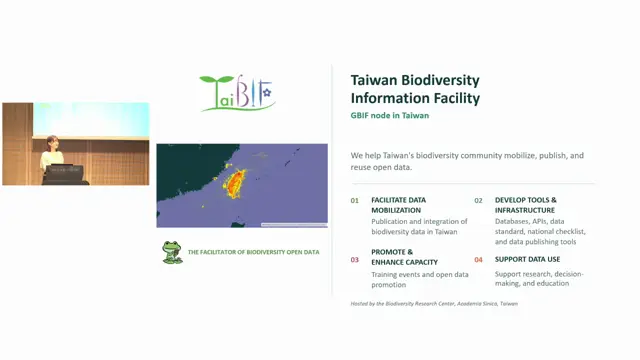
Empowering and Expanding Communities from Knowledge to Best Practices in Data Mobilization: The TaiBIF Collaborator Training System
A tiered, role-based certification pathway linked to paid assignments lets a small GBIF node multiply its support capacity.
Melissa Chin-Yi Lu ↗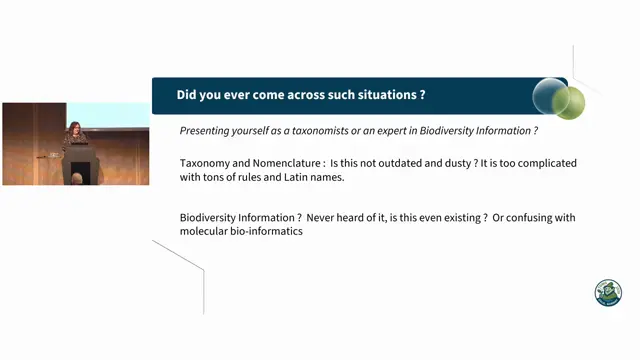
Strengthening Taxonomic capacity and Biodiversity Information in Education
Taxonomy and biodiversity informatics need to be visible, modern parts of curricula, and TDWG should revive its curriculum interest group to secure training and knowledge transfer.
Patricia Mergen ↗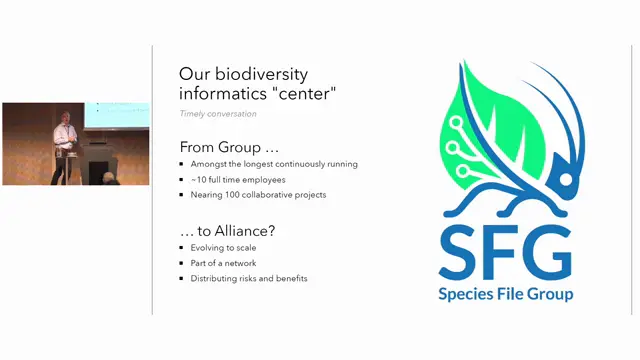
What is the Role of "AI" in the Centers for Biodiversity Informatics of the Future?
Biodiversity informatics centres are about people. AI raises the importance of standards, storage, openness and distributed risk, and centres should fuel researchers' curiosity rather than be driven by the technology.
Matthew Yoder ↗