
Resilience of Research Infrastructures through knowledge and engagement
Jose, Mareike Petersen · Building resilient data infrastructures for biodiversity science
The short versionCommunication, engagement and continuous user training make an infrastructure relevant enough that a community will want it to survive.
What this was about
The talk argues that resilience is not only a technical reaction to disruption but a pre-emptive strength that comes from being used, valued, understood, connected and relevant to a broad community. Jose describes a communication loop (visibility turned into understanding, use and reported impact, which builds community support) and an engagement loop (dialogue with other initiatives leading to alignment and expanded relevance). Mareike Petersen adds that infrastructures need sustained, user-centred training adapted to how users want to learn, and should treat training of end users as reinvestment in the infrastructure.
Why it matters. It gives technically minded infrastructure teams a concrete model for how outreach and training contribute to resilience, and argues that investment in people and users should match investment in servers.
In the room
- Two kinds of resilience: reactive/technical (respond to disruption) and pre-emptive, community-based resilience built on solid foundations.
- A resilient infrastructure is technically robust but also used, valuable (with demonstrable value), understood, connected/interoperable and relevant to a broad community.
- Communication loop: make work visible, turn visibility into understanding of why it matters, drive use, then report impact so a community supports you.
- Engagement loop: communications staff can initiate dialogue with other initiatives, enabling technical alignment that expands the infrastructure into new ecosystems.
- Training must be user-centred: know who users are, how they want to be trained (week-long workshop vs. scattered sessions), and which skills suit self-paced courses vs. interactive workshops.
- Infrastructures need not train in everything (e.g. general research data management) that other parties already cover.
- Past training mostly targeted infrastructure builders or single tool launches; continuous end-user training is needed for sustainability.
Notable moments
Transcript
Automatically generated captions can contain mistakes, especially in names and technical terms. Times are relative to the room recording.
Read the transcript ↓
Related talks.
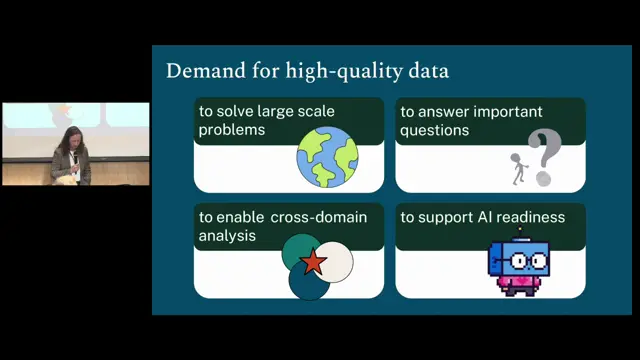
Supporting resilient data infrastructure in a changing environment
Technical copies are not enough: durable data infrastructure depends on preserved human expertise, messy maintenance work and data standardized close to collection.
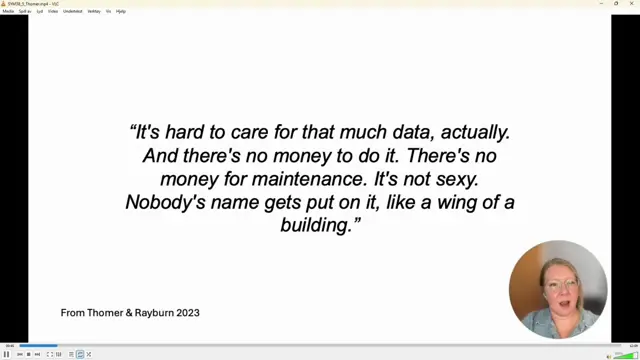
From preservation to perseverance: bridging disciplines for data resilience
Data resilience in a crisis is about prioritisation and mutual aid rather than perfection, and infrastructures need to be kept appropriately visible to be funded.
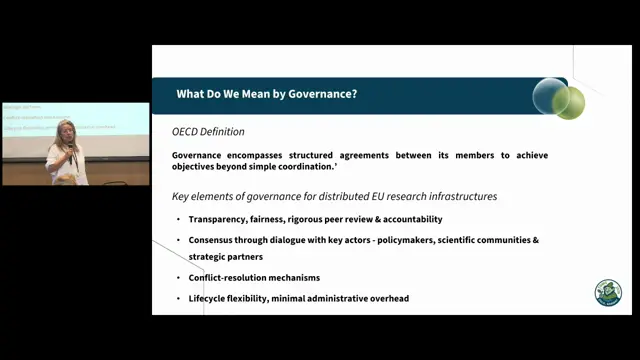
Governance as a Foundation for Resilient Biodiversity Data Infrastructures: Lessons from DiSSCo
Inclusive, funder-connected governance designed into a research infrastructure from day one is a core ingredient of its resilience.