
Explore the conversation.
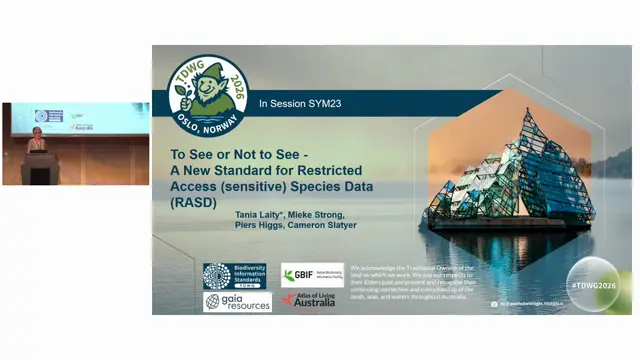
A new standard for restricted access (sensitive) species data
A proposed Darwin Core extension would record why data were restricted and what treatment was applied, in a one-to-many way similar to MeasurementOrFact.
Tania Laity ↗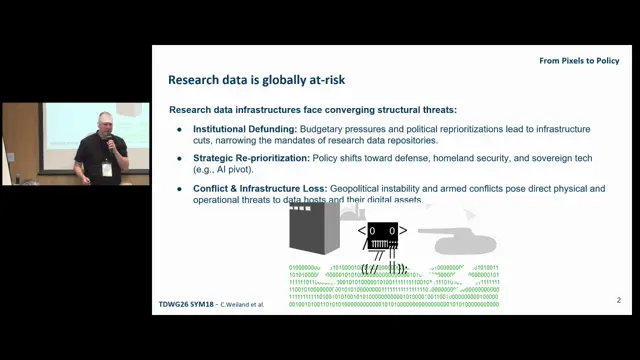
From Pixels to Policy: Closing the Gap between In Situ Monitoring, Earth Observation, and Policy Actionability
Packaging data with its semantics, provenance and machine-readable policy as FAIR Digital Objects makes it rescue-ready and redeployable elsewhere.
Claus Weiland ↗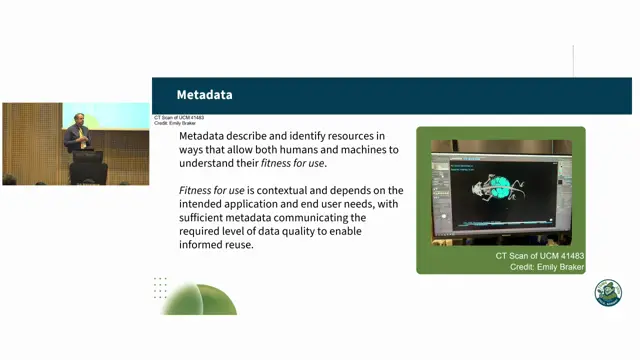
Metadata matters: perceptions on the implementation of Darwin Core in the biocollections cyberinfrastructure
Standardisation through Darwin Core can mask nuance, and practitioners report complex data, missing guidelines and limited capacity as the main implementation barriers.
Bradley Wade Bishop ↗
Open Digital Curation Needs: openness, interoperability, provenance
Open digital curation increases transparency, agency and trust and reduces latency, but needs new provenance practices for AI.
Deborah Paul ↗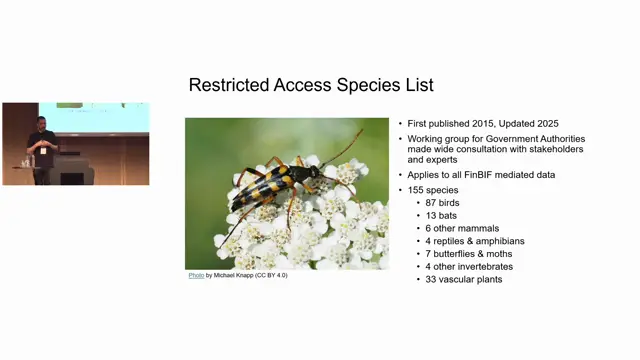
Restricted access species data in Finland
FinBIF applies an authority-maintained restricted species list to all mediated data, but lacks a standard way to share what it restricted and why.
Will Morris ↗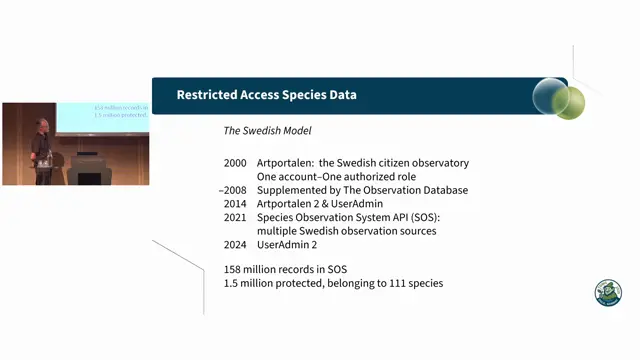
Restricted Access Species Data: The Swedish Model
Sweden combines a long-running role system, diffusion classes and a yes/no 'signal search' to manage 1.5 million protected records while gradually restricting fewer species.
Johan Liljeblad ↗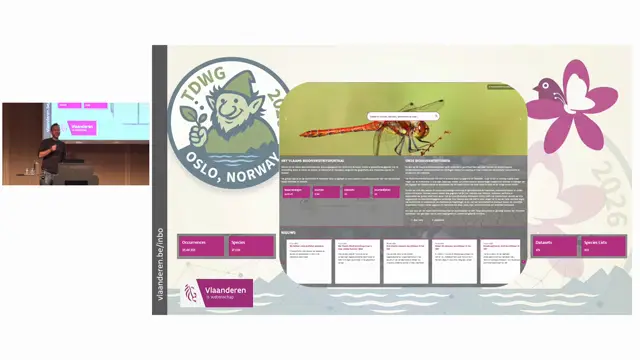
Role-Based Access Control (RBAC) for RASD: The Flemish Biodiversity Portal Approach
The Flemish portal implements restricted access through role-based access control, with institutions rather than the portal team deciding who may see high-resolution data.
Dimitri Brosens ↗
SYM23 panel discussion on restricted access species data
Restricting data is costly and imperfect; panellists argued for targeted, 'shrink-wrapped', well-justified restrictions handled centrally rather than blanket redaction.
Cameron Slatyer, Dimitri Brosens, Will Morris ↗
X-raying wild plant seeds: preparing images for future AI-driven global biodiversity research
Adding scale and linking legacy seed X-rays to collection records turns an inaccessible archive into AI-ready research data.
Robert Turner ↗
Artificial Intelligence Amplifies Paleontology's Reproducibility Problem
AI can make uncertain paleontological data look clean and authoritative, so AI-ready data must also be verifiable back to evidence and interpretation.
Brooke Long-Fox ↗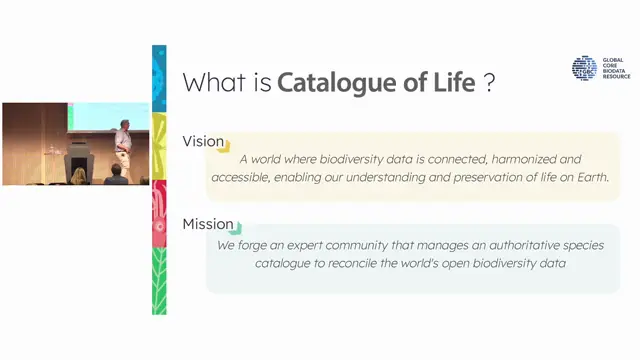
Catalogue of Life and Freshwater species data
Catalogue of Life pledges to model and expose freshwater designations within a year, fed by FADAtims and WoRMS, finally allowing freshwater species and occurrences to be identified via GBIF.
Olaf Banki ↗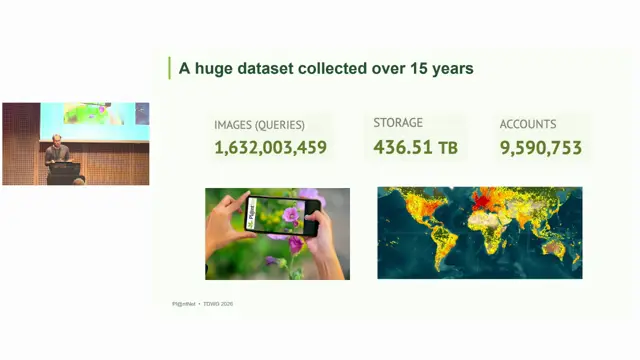
From 1.5 Billion Raw Queries to AI-Ready Biodiversity Data: Human-AI Collaborative Curation Pipelines in Pl@ntNet
Pl@ntNet's human–AI pipeline filters a vast, noisy stream into two GBIF datasets and training data, with separate branches for opted-in human-validated and automatic occurrence-only data.
Alexis Joly ↗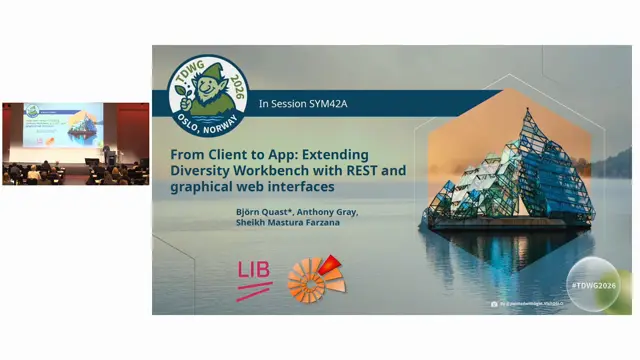
From Client to App: Extending Diversity Workbench with REST and graphical web interfaces
A concept-based REST API and search index let LIB build flexible web interfaces and ingest data on top of the complex Diversity Workbench database.
Björn Quast ↗