
Explore the conversation.
Building a taxonomic reference authority for conservation: the Digital Catalogue of Biodiversity of Poland
Poland now has an expert-maintained, fully referenced national checklist published through GBIF and ChecklistBank.
Piotr Tykarski ↗
Closing Gaps in Specimen Metadata: A Collaborative Annotation and Feedback Platform for Natural History Collections
A national collaborative annotation platform with AI-assisted transcription can close metadata gaps across many Taiwanese collections.
Szu-Hsien Lee ↗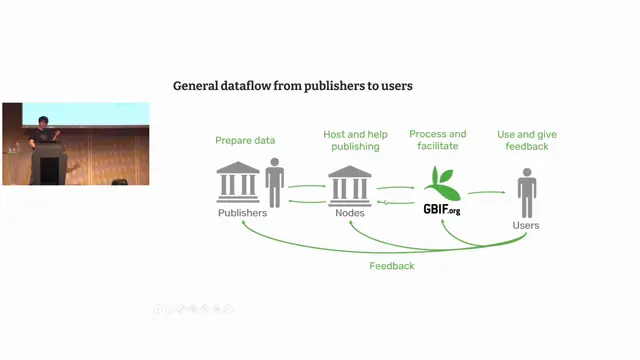
Digital curation across the biodiversity data lifecycle, at the node level (SiB Colombia), aggregator level (GBIF) and how to incorporate user feedback
Curation feedback works at every stage of the data lifecycle, and about a third or more of reported issues do get fixed; AI is used cautiously to summarise feedback.
Esteban Marentes Herrera ↗
How Darwin Core enables harmonizing Biodiversity Data via the OSCA Consortium
A shared Darwin Core-based cloud pipeline lets 15 Austrian institutions of very different IT capacity publish harmonised specimen data.
Cristian-Dan Bara ↗
National Biodiversity Information Action Campaign production process: a case study of Taiwan
Taiwan's second national plan reframes biodiversity information infrastructure around resilience, with shared taxonomic references as a cornerstone of interoperability.
Chun-I Chang, Jerome ↗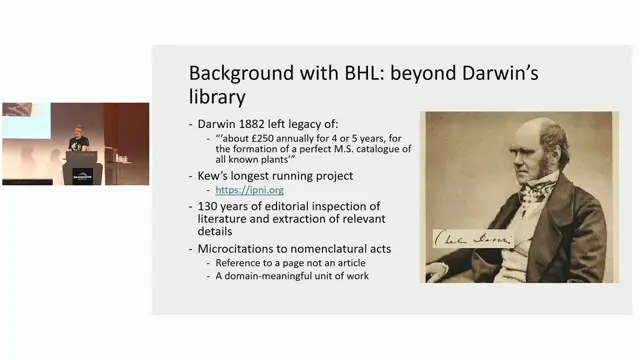
Possibilities to enhance the semantic navigation of BHL: further developing the 'unit of work'
Letting user communities carve BHL into branded, pre-filtered 'hosted portals' could serve diverse needs, satisfy funders and drive innovation.
Nicky Nicolson ↗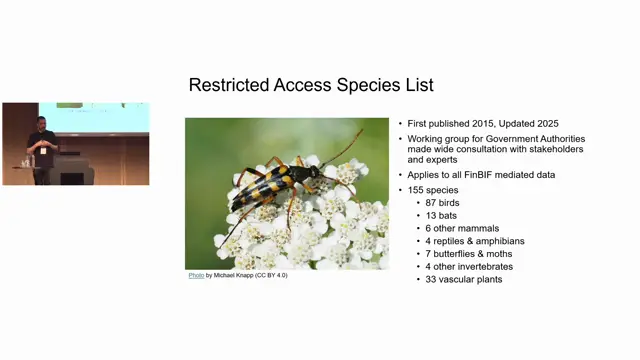
Restricted access species data in Finland
FinBIF applies an authority-maintained restricted species list to all mediated data, but lacks a standard way to share what it restricted and why.
Will Morris ↗
Role-Based Access Control (RBAC) for RASD: The Flemish Biodiversity Portal Approach
The Flemish portal implements restricted access through role-based access control, with institutions rather than the portal team deciding who may see high-resolution data.
Dimitri Brosens ↗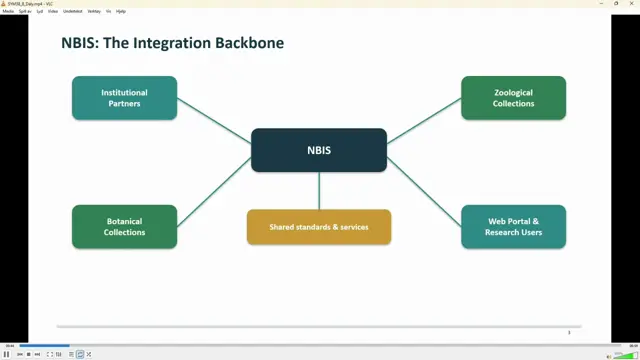
Architecting the National Biodiversity Information System: Standards-Driven Workflows for South Africa’s Botanical and Zoological Data
SANBI sustains NBIS through a statutory mandate plus a roadmap of diversified funding, partnerships and demonstrated return on investment.
Fhatani Ranwashe ↗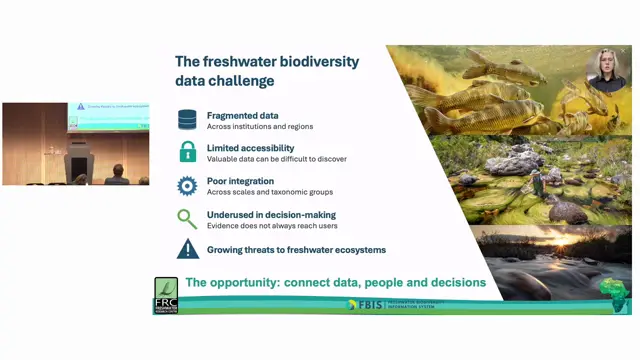
Biodiversity data at your fingertips: open-access freshwater biodiversity information systems for South Africa and Africa
Co-designed, open and interoperable freshwater information systems like FBIS turn fragmented records into decision-ready information, and multi-tenancy helps keep them sustainable.
Helen Dallas ↗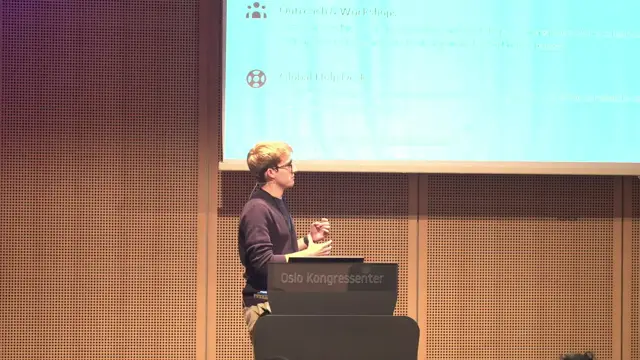
Meeting Biodiversity Standards with Specify 7
Specify's new built-in Darwin Core mapping tool aims to make publishing from highly customised databases straightforward without giving up local flexibility.
Grant Fitzsimmons ↗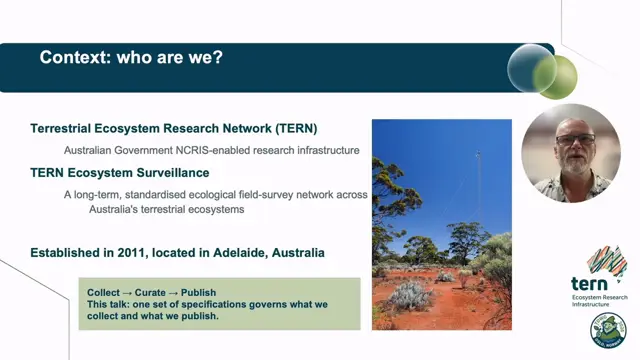
Robot-ready by construction: an ontology-driven, SHACL-validated submission pipeline for national ecological monitoring data
Driving both field data capture and RDF export from one semantically annotated specification makes monitoring data standards-compliant and machine-ready from the start.
Andrew Tokmakoff ↗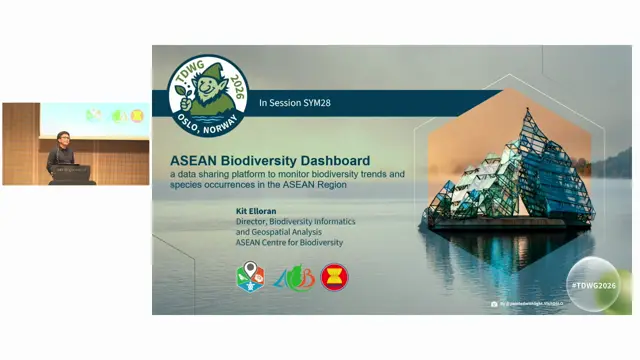
ASEAN Biodiversity Dashboard as a data sharing platform to monitor biodiversity trends and species occurrences in the ASEAN Region
Interoperable, GBIF-hosted regional infrastructure lets ACB turn occurrence data into indicators and dashboards for ASEAN policy reporting.
Christian Elloran ↗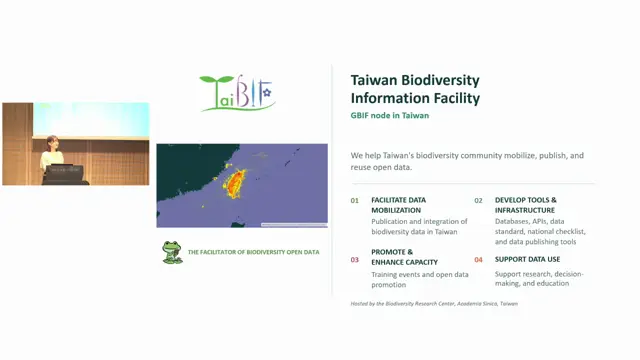
Empowering and Expanding Communities from Knowledge to Best Practices in Data Mobilization: The TaiBIF Collaborator Training System
A tiered, role-based certification pathway linked to paid assignments lets a small GBIF node multiply its support capacity.
Melissa Chin-Yi Lu ↗