
Role-Based Access Control (RBAC) for RASD: The Flemish Biodiversity Portal Approach
Dimitri Brosens · To see or not to see - that is the question. Managing restricted access data (RASD)
The short versionThe Flemish portal implements restricted access through role-based access control, with institutions rather than the portal team deciding who may see high-resolution data.
What this was about
Dimitri Brosens described how the Flemish Biodiversity Portal, an adaptation of the Atlas of Living Australia's Living Atlas software, gives different users different views of the same data. Access is not managed by the two-person portal team: users log in through the Flemish government's access-management gateway, and each institution decides which of its employees get the 'high resolution' role. He compared the portal as seen by an anonymous citizen (1 km gridded data) and by a user with high-resolution rights (exact locations), and showed that the flags are carried in dataset dynamic properties. Only the first five minutes or so of the talk were recorded because of the sound failure.
Why it matters. Shows a lightweight way for a small regional portal to serve both open and restricted data by delegating identity and role management to an existing government authentication service.
In the room
- The Flemish Living Atlas (adapted from the ALA Living Atlas) holds about 38 million occurrences, information on about 27,000 species, about 320 occurrence datasets and about 100 species lists.
- The original driver was not sensitive species but a data provider that wanted its data shown publicly only as gridded data, which led to two versions of the data.
- Login uses the Flemish government's central access-management gateway (eID or itsme token); institutions manage access rights for their own staff, so the two-person portal team does not have to.
- Anonymous users see a generalised dataset on 1 km grid squares; users with the high-resolution role additionally see a separate high-resolution dataset with exact locations.
- Role-based access flags (for example 'RBAC allowed is high resolution') are recorded in the dataset's dynamic properties.
- Species pages likewise differ depending on the user's role.
Notable moments
Transcript
Automatically generated captions can contain mistakes, especially in names and technical terms. Times are relative to the room recording.
Read the transcript ↓
Related talks.
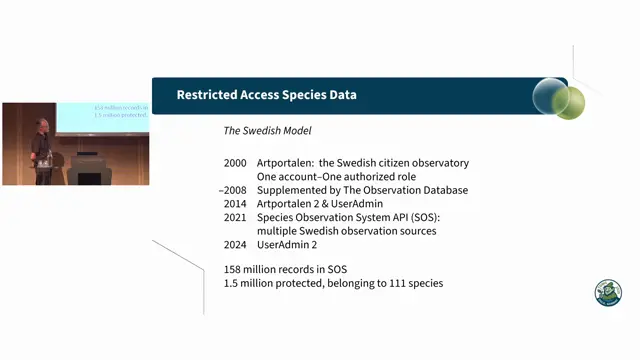
Restricted Access Species Data: The Swedish Model
Sweden combines a long-running role system, diffusion classes and a yes/no 'signal search' to manage 1.5 million protected records while gradually restricting fewer species.
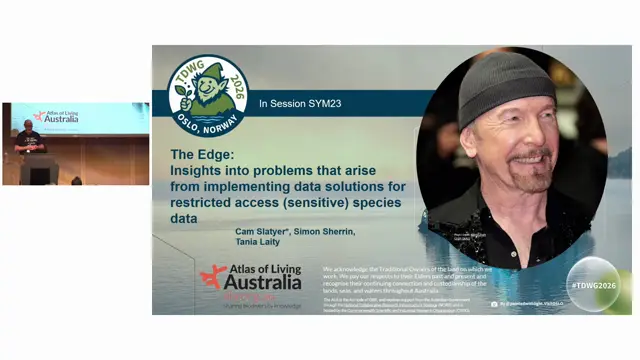
The Edge: Insights into problems that arise from implementing data solutions for restricted access (sensitive) species data
Plan RASD treatments carefully, because taxonomy, data errors and associated records can silently defeat simple rules like 'generalise to 10 km'.
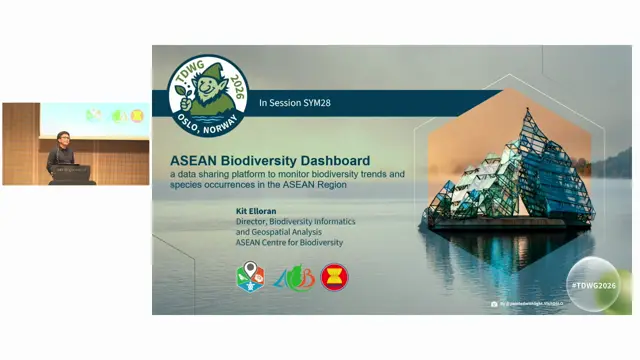
ASEAN Biodiversity Dashboard as a data sharing platform to monitor biodiversity trends and species occurrences in the ASEAN Region
Interoperable, GBIF-hosted regional infrastructure lets ACB turn occurrence data into indicators and dashboards for ASEAN policy reporting.