
Explore the conversation.
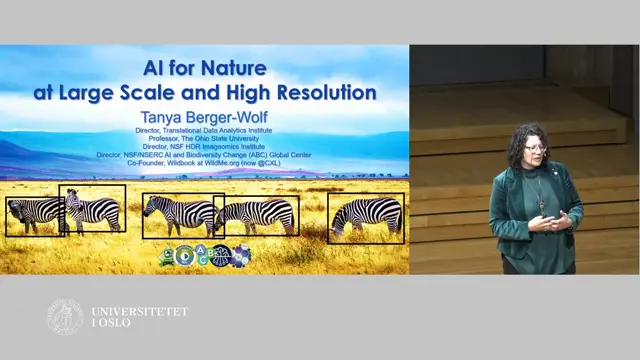
AI for Nature at Large Scale and High Resolution
AI can help fill biodiversity knowledge shortfalls only if biological knowledge is built into the models and the data infrastructure is FAIR for AI and returns value to primary data collectors, because 'there is no AI without data'.
Tanya Berger-Wolf ↗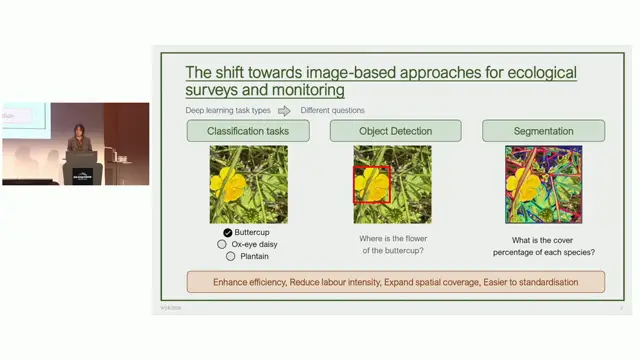
Are plant image datasets ready for AI-enabled community assessment? A systematic review of bias, representativeness and annotation quality
Current plant image datasets are not yet ready for AI-enabled ecological monitoring, especially for spatially explicit tasks and annotation quality.
Yuchen Zhao ↗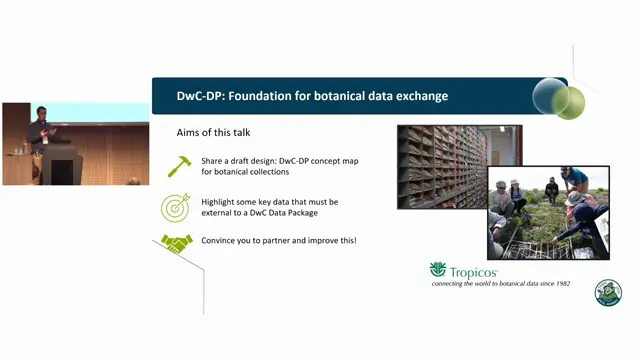
Machine-Ready Botanical Data: Mapping Integrated Collections and Traits with Darwin Core Data Package
Darwin Core Data Package can serve as a semantic integration layer for a botanical garden's diverse collections and trait data, and MBG's draft mapping is offered for community refinement.
Nathan VanderKraats ↗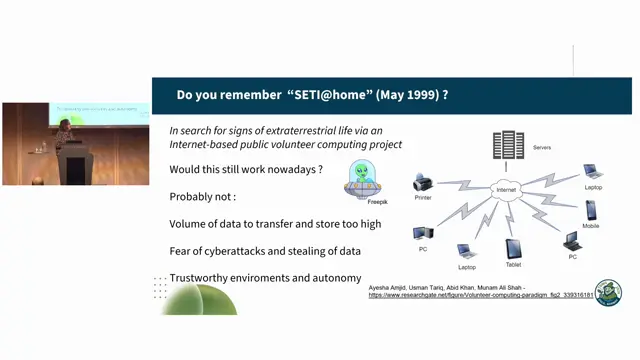
Responsible and GreenAI: Does our community need Gigantic Data Centers to deliver?
Biodiversity researchers mostly need AI-ready data rather than giant data centres, and AI use should be weighed against its environmental cost.
Patricia Mergen ↗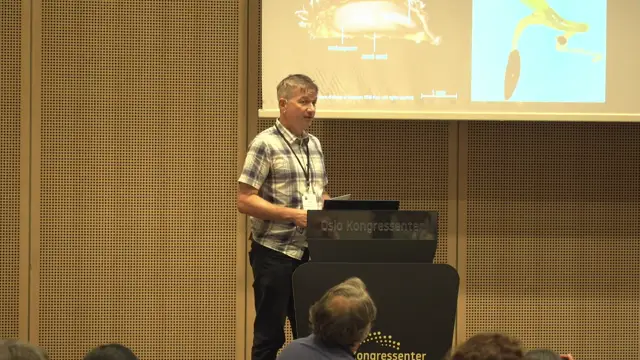
X-raying wild plant seeds: preparing images for future AI-driven global biodiversity research
Adding scale and linking legacy seed X-rays to collection records turns an inaccessible archive into AI-ready research data.
Robert Turner ↗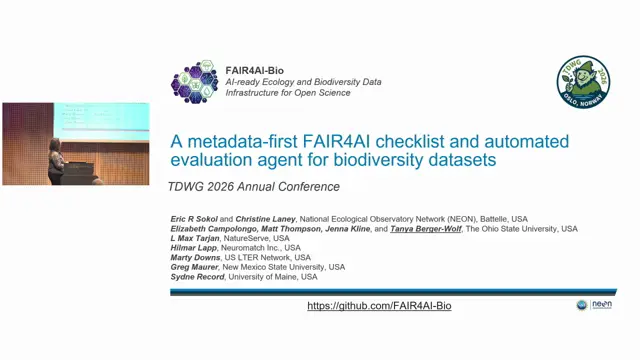
A metadata-first FAIR4AI checklist and automated evaluation agent for biodiversity datasets
FAIR4AI is mainly a metadata gap, and a community checklist plus an automated agent can measure and help close it while tracking provenance and governance back to data sources.
Tanya Berger-Wolf ↗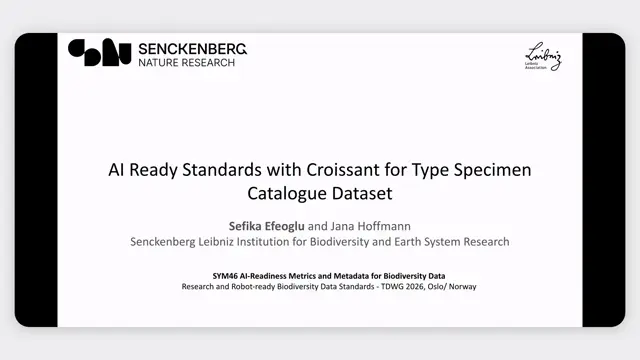
AI Ready Standards with Croissant for Type Specimens Catalog Datasets
Combining LLM extraction, Darwin Core and Croissant metadata offers a route from historical specimen catalogues to FAIR, ML-ready datasets.
Sefika Efeoglu ↗
Artificial Intelligence Amplifies Paleontology's Reproducibility Problem
AI can make uncertain paleontological data look clean and authoritative, so AI-ready data must also be verifiable back to evidence and interpretation.
Brooke Long-Fox ↗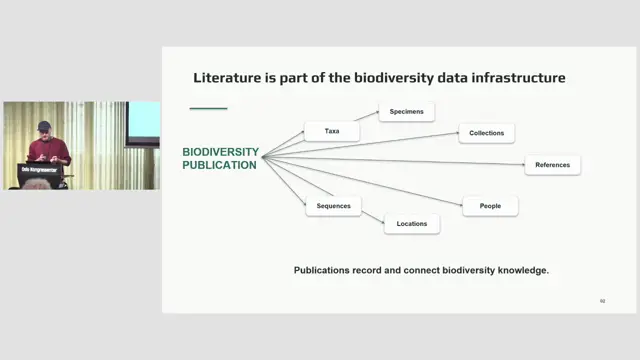
Biodiversity literature as FAIR and AI-ready data by design (and how to get there)
Don't just liberate biodiversity literature, publish it liberated.
Chris Le Coquet ↗
Digital Twins as System-Optimization Tools: Provisioning Edge and Cloud Infrastructure for Biodiversity Monitoring at Scale
Digital twins should close the sim-to-real loop for the sensor systems too, letting teams plan where and how to deploy multimodal monitoring before going into the field.
Tanya Berger-Wolf ↗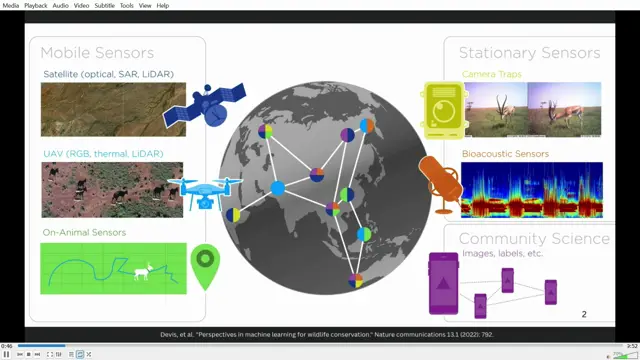
FAIR² Drones: An AI-Ready Standard for Cross-Domain Wildlife Drone Dataset
A shared dataset card that captures ecological, robotic and computer vision metadata makes costly drone datasets reusable across disciplines.
Jenna Kline ↗
From Buzzwords to Blueprints: What It Really Takes to Operationalise Biodiversity Digital Twins
Use buzzwords to get funded, then break them down into concrete blueprints: metadata, catalogues, governance and stewardship in the middle layer.
Sharif Islam ↗
Panel discussion: From Mobilizing Data to AI-Ready Knowledge
AI-readiness is purpose-dependent, and the hardest remaining problems are social: trust, attribution, governance and data sovereignty, where ontologies and knowledge graphs offer some control and explainability.
Hilmar Lapp, Robert Guralnick, Tanya Berger-Wolf ↗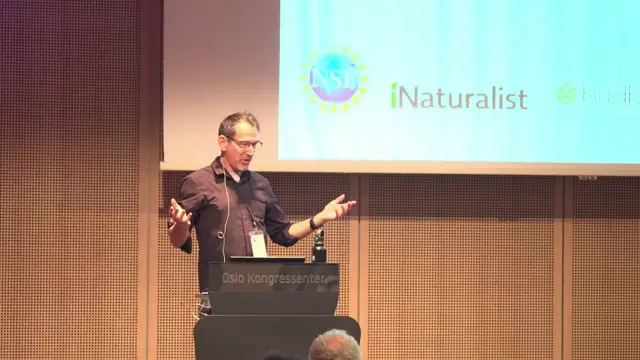
Phenobase: a harmonized, AI-ready knowledge base of global plant phenology
Combining ontologies with machine learning lets Phenobase close global phenology data gaps, but making the result AI-ready requires per-record model provenance, quality and citation.
Robert Guralnick ↗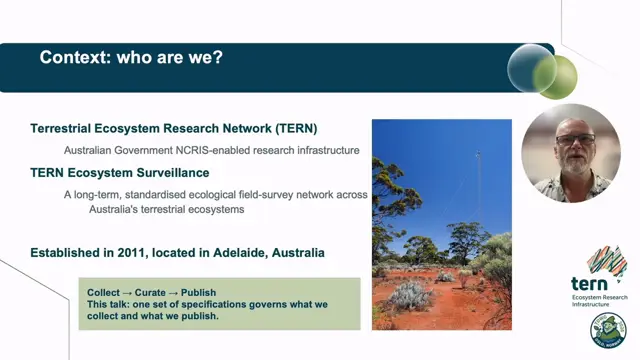
Robot-ready by construction: an ontology-driven, SHACL-validated submission pipeline for national ecological monitoring data
Driving both field data capture and RDF export from one semantically annotated specification makes monitoring data standards-compliant and machine-ready from the start.
Andrew Tokmakoff ↗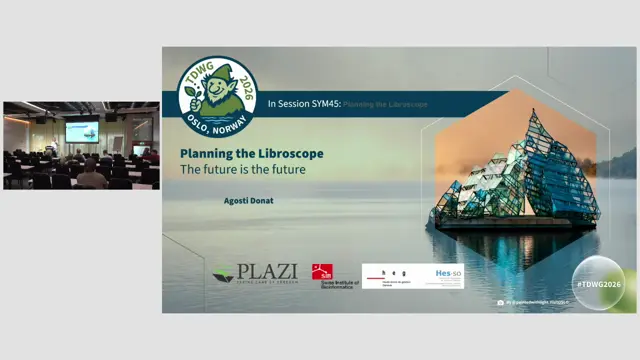
The future is the future - thought about access to data in publications
Liberating data from literature works, but the future lies in use-case-driven, digital-first publishing that also targets the undescribed majority of species.
Donat Agosti ↗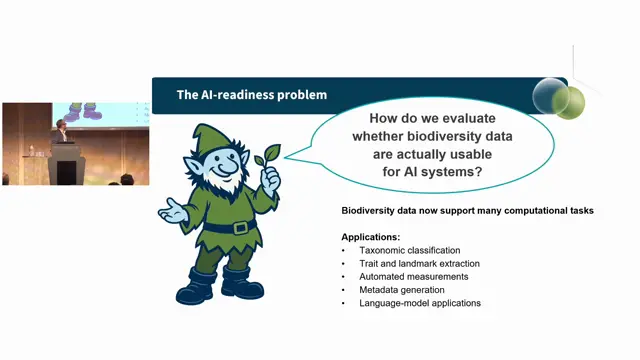
Toward Quantitative AI-Readiness Metrics for Biodiversity Data Infrastructures
AI readiness should be a task-specific, measurable profile rather than a single score, and current biodiversity standards lack most of the terms needed to describe it.
Yasin Bakış ↗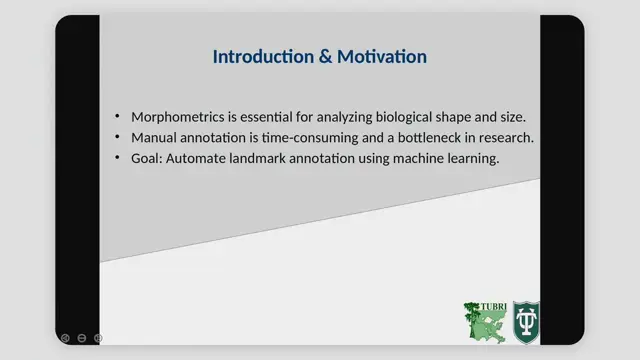
Automated Landmark Detection for Scalable Morphometric Data Extraction from Digitized Fish Collections
A lightweight dlib shape-regression model can automate most fish landmarking from museum images, but inner landmarks and variable specimen poses remain hard.
Bahadir Altintas ↗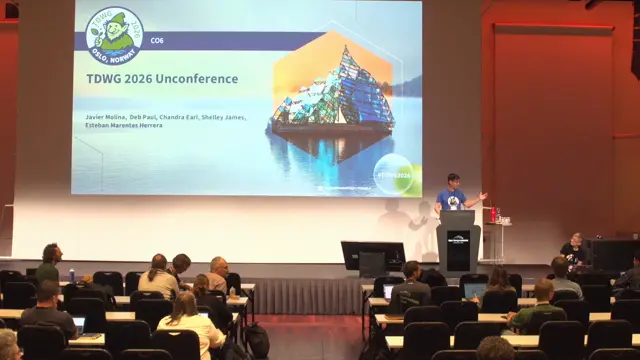
TDWG 2026 Unconference: pitches, topic voting and breakout report-backs
The Unconference showed the community's priorities (controlled vocabularies, AI readiness, project sustainability, Wikidata, Darwin Core data packages) and started several follow-up groups.
Javier Molina, Nicky Nicolson, Deb Paul ↗