
Managing high-volume specimen movements in the entomological collection of Naturalis with a new type of record
Myriam van Walsum · From Cabinets to Clouds - Bridging the gap between collection- and database management
The short versionA 'lot' record linking taxa to storage units makes high-volume physical moves cheap to record and tells staff where each taxon is.
What this was about
Myriam van Walsum explained a workload problem in Naturalis's pinned insect collection (about a third of 45 million specimens, only about 10% individually digitised). Records exist mainly at drawer level, with a table of identifications per storage unit. When taxa shifted between drawers, staff had to delete and manually re-enter identifications, so moves were often not recorded. Instead of disruptive independent taxon records, Naturalis introduced a 'lot' record: specimens of the same lowest determined taxon stored in one contiguous location. It is created by migrating existing storage-unit records, so moving a taxon only means updating the lot's link. A Catalogue of Life API lookup also reduced entry errors. She asked how lots should map to Darwin Core or DwC-DP and whether GBIF or DiSSCo want such records.
Why it matters. It is a practical data-model fix for a common curation bottleneck in drawer-level digitised collections. It also raises an open standards question about publishing lot and storage-unit records.
In the room
- Naturalis holds about 45 million specimens; over a third are pinned insects, only about 10% individually digitised (mostly bees).
- The zoology/geology CMS is from a Dutch vendor not designed for natural history, so Naturalis writes its own ABCD-aligned requirements.
- Taxonomically ordered storage creates many-to-many relationships between taxa and storage units.
- Manual delete/re-enter of identifications caused backlog, errors and lost locations, despite a legal obligation to know where specimens are.
- Lot definition: specimens of the same lowest determined taxon in one contiguous location; each specimen belongs to exactly one lot.
- Lots were created by data migration from existing storage-unit records; no new digitisation was needed.
- Catalogue of Life API integration in identifications reduced data entry errors.
Notable moments
Transcript
Automatically generated captions can contain mistakes, especially in names and technical terms. Times are relative to the room recording.
Read the transcript ↓
Related talks.
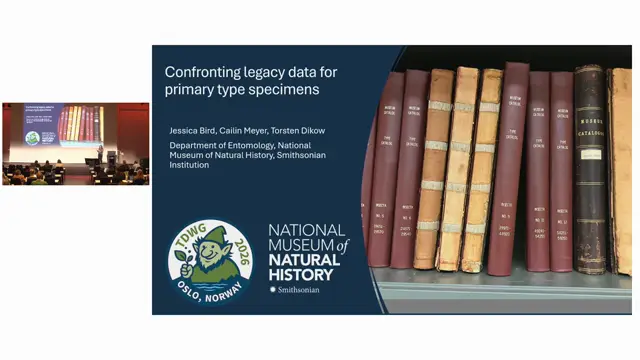
Confronting legacy data for primary type specimens
Decades of database migrations left the second-largest insect collection's type catalogue unreliable, and only a full physical inventory is fixing it.
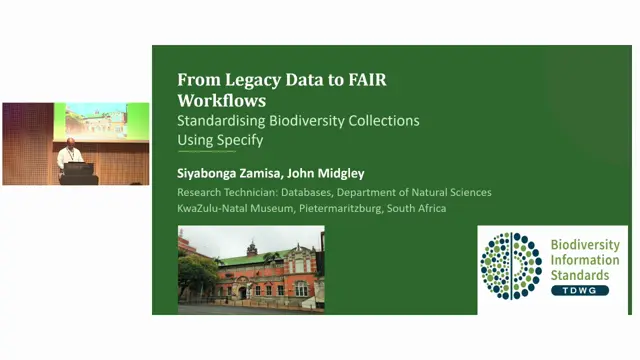
From Legacy Data to FAIR Workflows: Standardising Biodiversity Collections Using Specify
Standardised workflows, not just a new database, turned 11 differently managed collections into GBIF-ready data.
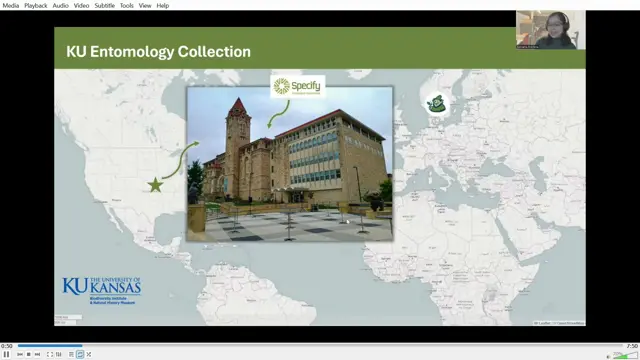
Updates on Data Mobilization in the KU Entomology Collection
Moving to Specify 7 with a nightly Darwin Core archive feed made KU Entomology's data and images continuously available to GBIF, Symbiota portals and students.