
Explore the conversation.
X-raying wild plant seeds: preparing images for future AI-driven global biodiversity research
Adding scale and linking legacy seed X-rays to collection records turns an inaccessible archive into AI-ready research data.
Robert Turner ↗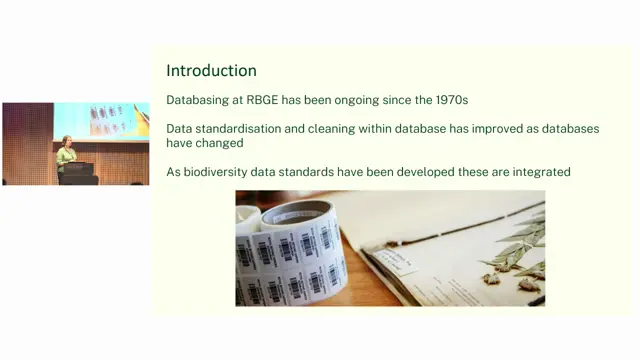
Applying Data Standards at the Royal Botanic Garden Edinburgh
Identifiers are how RBGE is standardising legacy herbarium data and reconnecting items spread across four separate collection management systems.
Robyn Drinkwater ↗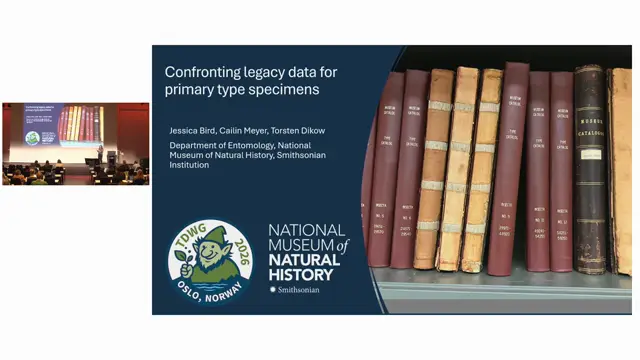
Confronting legacy data for primary type specimens
Decades of database migrations left the second-largest insect collection's type catalogue unreliable, and only a full physical inventory is fixing it.
Cailin Meyer ↗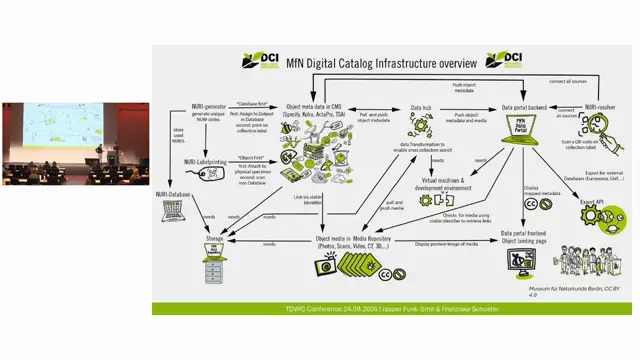
Everything is coded: How to prevent a game of telephone in a system full of interfaces
Shared understanding of what data means must be established at the start of a pipeline; standard formats alone won't stop meaning drifting between people.
Franziska Schuster, Jasper ↗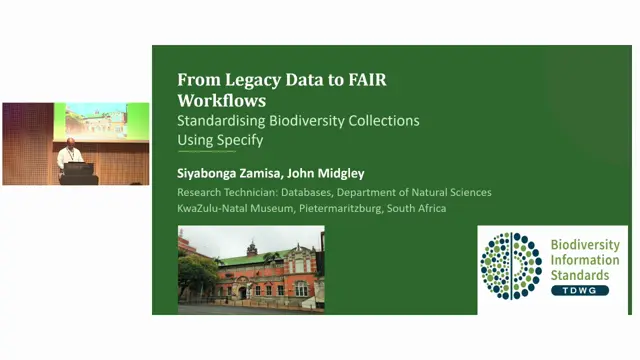
From Legacy Data to FAIR Workflows: Standardising Biodiversity Collections Using Specify
Standardised workflows, not just a new database, turned 11 differently managed collections into GBIF-ready data.
Siyabonga Zamisa ↗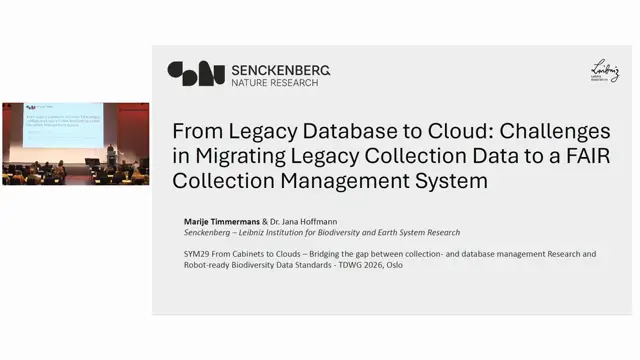
From Legacy Database to Cloud: Challenges in Migrating Legacy Collection Data to a FAIR Collection Management System
A dedicated data manager who acts as liaison and uses iterative prototypes can make a small institute's move to a shared CMS workable despite fragmented legacy practices.
Marije Timmermans ↗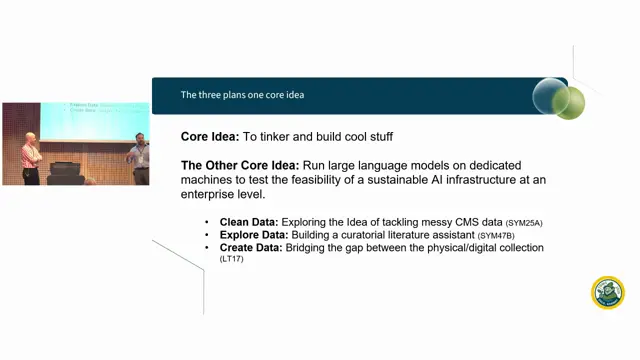
On-Device AI for Data Cleaning, Standardisation, and Exploration in Collections Management
Local LLM hardware can clean and enrich millions of legacy collection records at predictable cost, but validation of the outputs is the unsolved problem.
Jack Hollister, Unidentified co-presenter ↗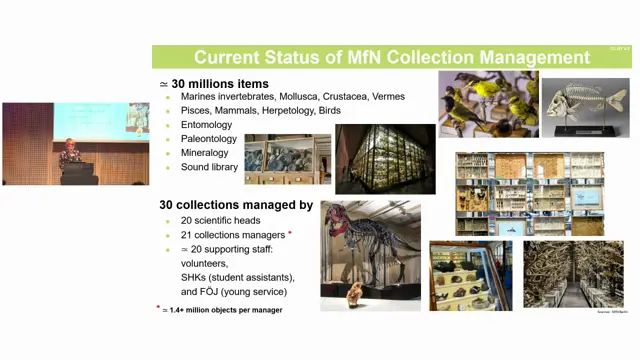
The Good, the Bad, and the Standardised: A Specify Journey Through 200 Years of the MfN Berlin's Biological Collections
Specify's flexibility lets MfN consolidate 30 historically complex collections into one database while starting to reconstruct colonial and wartime history, but geography and historical events remain unsolved.
Marion Depraetere ↗
Discussion: designing institutional biodiversity knowledge and data science centres
Interoperable institutional knowledge spaces depend less on technology than on people, shared storage and semantics, incentives and governance.
Unidentified session chair, Lars Vogt, Tarek Al Mustafa ↗