
Explore the conversation.
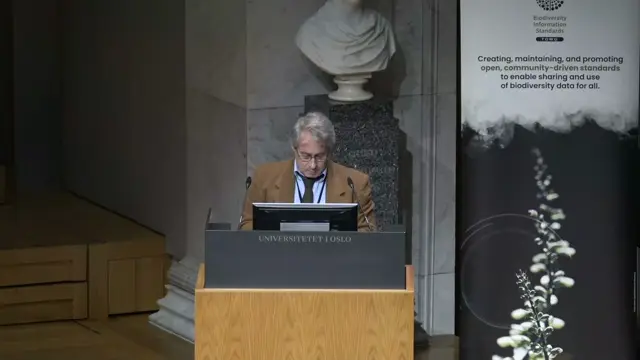
Address from the TDWG Chair: highlights of the year and TDWG at a crossroads
TDWG has had a productive year, but a growing, more diverse community and the rise of AI put it at a crossroads that needs more volunteers, better documentation and more sustainable maintenance and funding.
David Bloom ↗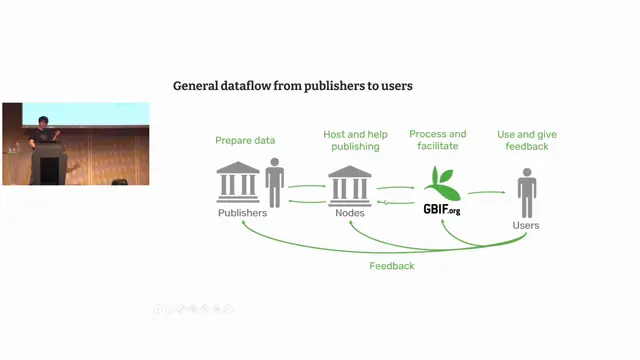
Digital curation across the biodiversity data lifecycle, at the node level (SiB Colombia), aggregator level (GBIF) and how to incorporate user feedback
Curation feedback works at every stage of the data lifecycle, and about a third or more of reported issues do get fixed; AI is used cautiously to summarise feedback.
Esteban Marentes Herrera ↗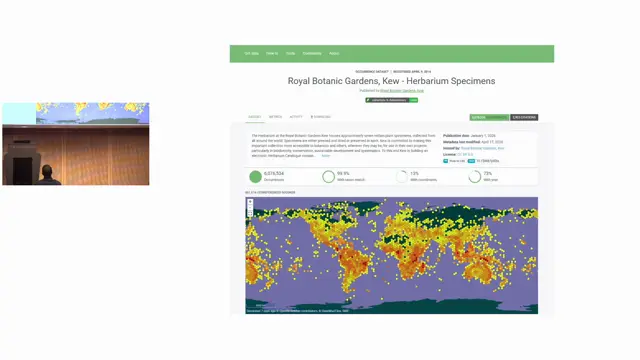
Geonomia: Metadata and Community for Georeferencing
Clustering specimens into collecting trips makes georeferencing and AI enrichment more efficient and should be done as a community effort.
Nicky Nicolson ↗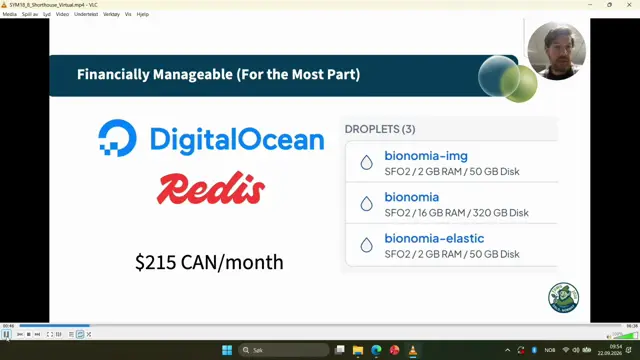
Resilient Attribution Infrastructures for Biodiversity Science: Archiving and Risk Mitigation in Bionomia
Small niche infrastructures can be resilient by planning for their own end: keep things simple and push versioned data and reusable code outward.
David Shorthouse ↗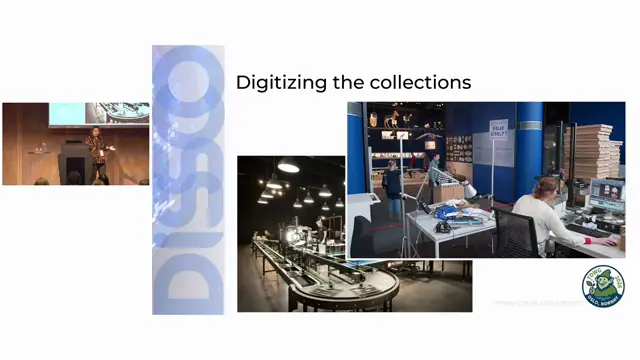
Robots Rapidly Writing Records: Machine Annotations at Scale with DiSSCo
DiSSCo can now run adapted machine annotation services over whole datasets, pointing to an image-to-verified-data digitisation pipeline.
Soulaine Theocharides ↗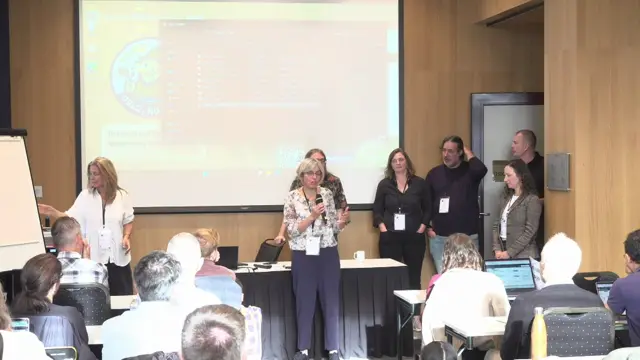
SYM18 discussion: who sustains biodiversity data infrastructures?
Volunteer and single-developer infrastructures deliver proven value, but the community lacks mechanisms and funding to protect them.
Eva Alonso, Giuditta Parolini, Mareike Petersen ↗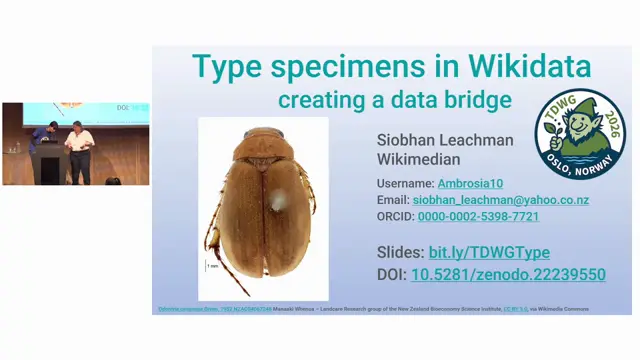
Type specimens in Wikidata
A consistent Wikidata type specimen model lets anyone link type specimens to collectors, publications, taxa and identifiers as a transparent finding aid.
Siobhan Leachman ↗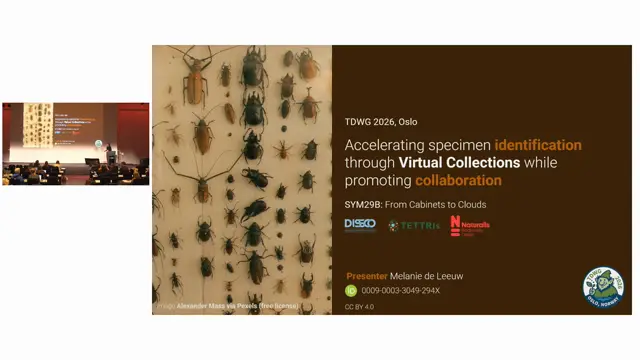
Accelerating specimen identification through Virtual Collections while promoting collaboration
Virtual reference collections with DOIs let experts identify and curate dispersed digital specimens remotely instead of shipping material or travelling.
Melanie de Leeuw ↗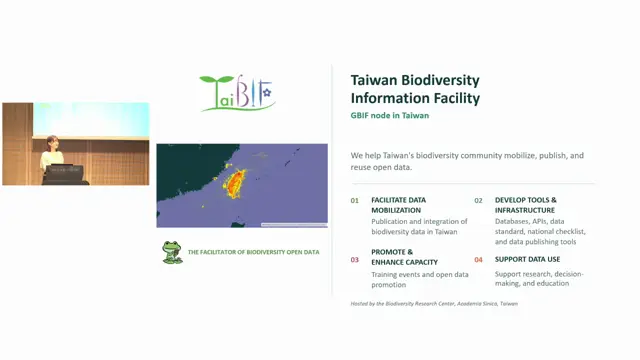
Empowering and Expanding Communities from Knowledge to Best Practices in Data Mobilization: The TaiBIF Collaborator Training System
A tiered, role-based certification pathway linked to paid assignments lets a small GBIF node multiply its support capacity.
Melissa Chin-Yi Lu ↗
Snapshot Japan: A Community-Driven Network for Large-Scale Wildlife Biodiversity Monitoring Using Camera Traps
Community support plus a simple standard protocol and Camtrap DP publishing let Snapshot Japan scale camera-trap monitoring from 9 to 65 sites in three years.
Kumiko Totsu ↗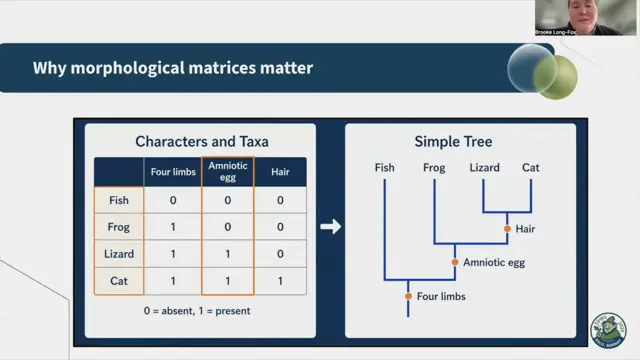
Validating LLM-Extracted Biodiversity Data to Preserve Scientific Meaning
LLM extraction speeds up morphological matrix curation enormously, but errors, including fabrications, appear in almost every output, so expert validation is essential.
Brooke Long-Fox ↗