
The future is the future - thought about access to data in publications
Donat Agosti · Planning the Libroscope: creating research ready biodiversity from scientific publications
The short versionLiberating data from literature works, but the future lies in use-case-driven, digital-first publishing that also targets the undescribed majority of species.
What this was about
Donat Agosti introduced the Libroscope and the Disentis roadmap goal of making 100% of major biodiversity publications open, FAIR, machine-actionable and AI-ready by 2035, using a use-case-driven approach. He described Plazi's current pipeline, in which PDFs or XML are processed so that data reach GBIF, Zenodo and dashboards within a day of publication, with provenance down to the exact position in the text, and noted 1.2 million treatments extracted and a steady ~10,000 new species a year across roughly 200 journals processed. He argued the community should also move beyond extracting from PDFs toward digital-first description of unknown and dark taxa.
Why it matters. Literature holds much of what we know about biodiversity yet remains the least open data type; this talk frames a roadmap for making it trusted, AI-ready data.
In the room
- Estimates: 500 million printed pages, ~2,000 taxonomic journals, 20-50 million treatments, and only 10-30% of species data accessible.
- The 2024 Disentis meeting produced a roadmap to make all major biodiversity publications open and FAIR by 2035.
- The Libroscope is use-case-driven: target specific data rather than everything at once.
- Around 30 GBIF hosted portals are dashboards from publications; material citations link back to exact text positions via persistent identifiers.
- Zenodo communities (e.g. for fruit flies) and the Biodiversity Literature Repository collect publications for processing.
- Lag from publication to GBIF has fallen from years to under a day in the best case.
- 1.2 million treatments extracted; ~200 journals processed over 10 years show a flat rate of ~10,000 new species a year.
Notable moments
Transcript
Automatically generated captions can contain mistakes, especially in names and technical terms. Times are relative to the room recording.
Read the transcript ↓
Related talks.
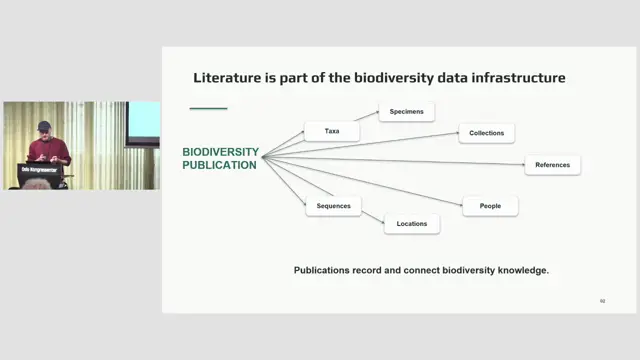
Biodiversity literature as FAIR and AI-ready data by design (and how to get there)
Don't just liberate biodiversity literature, publish it liberated.
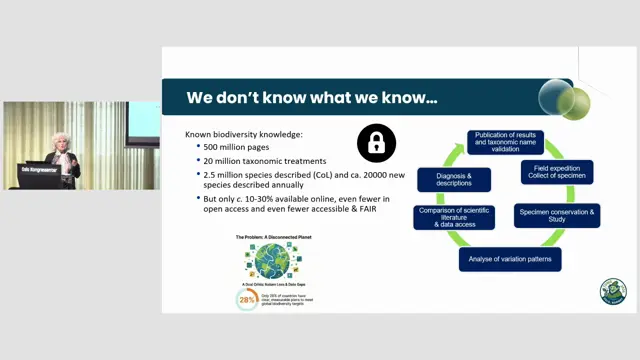
Building digital-native species: Transitioning from PDF liberation to semantic-by-design publishing
Keeping data linked and structured from specimen to publication yields FAIR, trusted data on the day of publication.
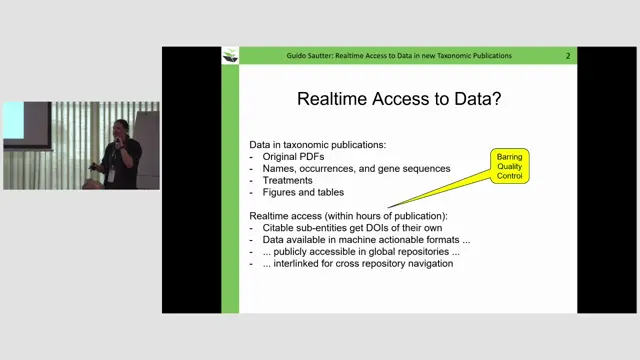
Realtime Access to Data in new Taxonomic Publications
Plazi can deliver interlinked, machine-actionable data from new taxonomic papers within hours, and XML-first publishing removes most of the costly effort.