
Explore the conversation.
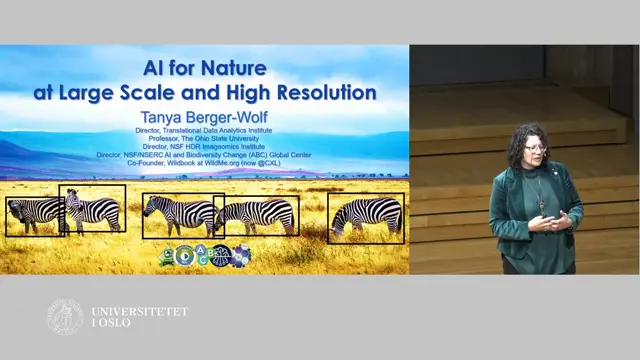
AI for Nature at Large Scale and High Resolution
AI can help fill biodiversity knowledge shortfalls only if biological knowledge is built into the models and the data infrastructure is FAIR for AI and returns value to primary data collectors, because 'there is no AI without data'.
Tanya Berger-Wolf ↗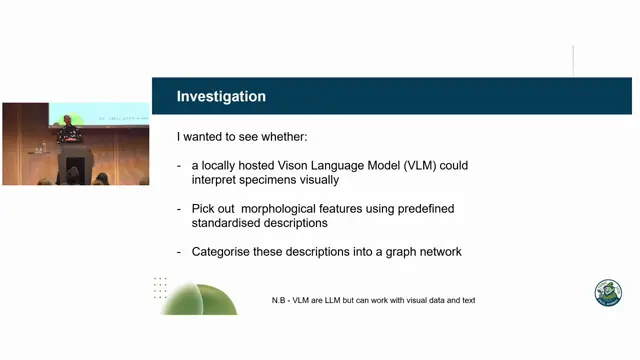
Agentic AI Systems for Specimen Interaction and Camera-Based Observation
Off-the-shelf local vision language models can pick out and count specimen morphology and spot damage with minimal guidance.
Jack Hollister ↗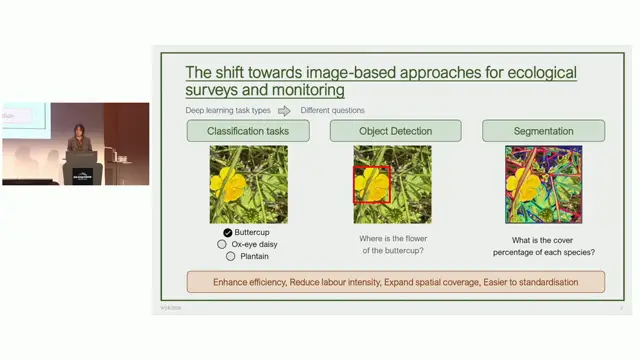
Are plant image datasets ready for AI-enabled community assessment? A systematic review of bias, representativeness and annotation quality
Current plant image datasets are not yet ready for AI-enabled ecological monitoring, especially for spatially explicit tasks and annotation quality.
Yuchen Zhao ↗
Future interfaces for BHL
Modern AI tools make new BHL interfaces feasible now (better OCR, image and map search, chatbots); the community must decide which are worth building.
Roderic Page ↗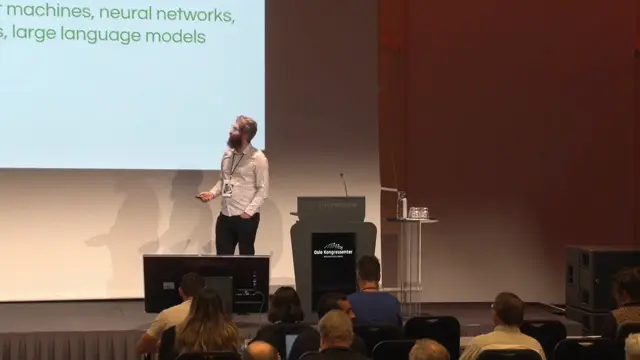
Introduction to the AI for Biodiversity Data session: what machine learning and LLMs actually do
LLMs are word predictors with no notion of truth, so their outputs, including hallucinations, cannot be objectively scored from the text alone.
David Williamson ↗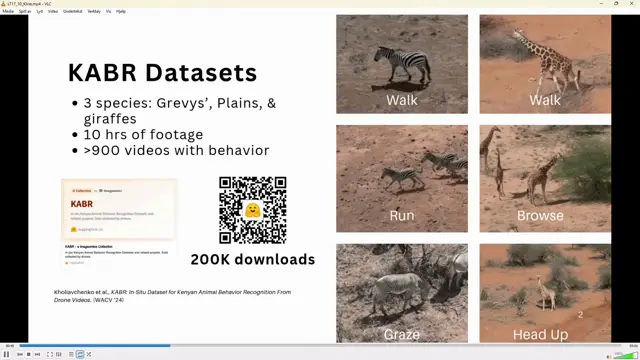
kabr-tools: A Modular Workflow for Automated Video-Based Behavioral Monitoring Across the Autonomy Spectrum
kabr-tools offers a modular, model-agnostic pipeline from drone or camera-trap video to ecological behaviour analysis.
Jenna Kline ↗
Semantic Governance and Knowledge Organization in AI-Augmented Biodiversity Infrastructures
AI-generated biodiversity knowledge must be provenance-aware and anchored in shared vocabularies, making AI-assisted rather than AI-directed curation.
Andrew Jones ↗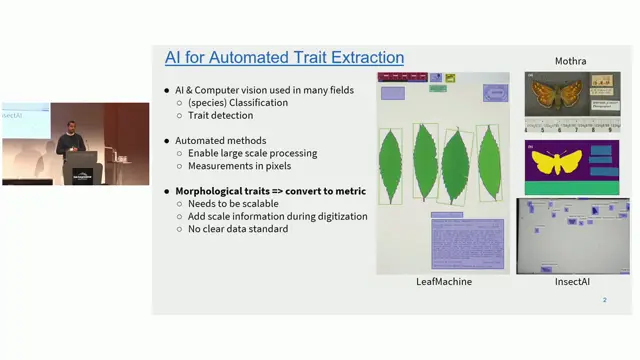
Towards Scalable Trait Measurements from Digitized Specimens
Matching rulers to an annotated reference set lets specimen images be calibrated to real-world units with under 1% error in 96% of cases.
Kenzo Milleville ↗
Phenobase: a harmonized, AI-ready knowledge base of global plant phenology
Combining ontologies with machine learning lets Phenobase close global phenology data gaps, but making the result AI-ready requires per-record model provenance, quality and citation.
Robert Guralnick ↗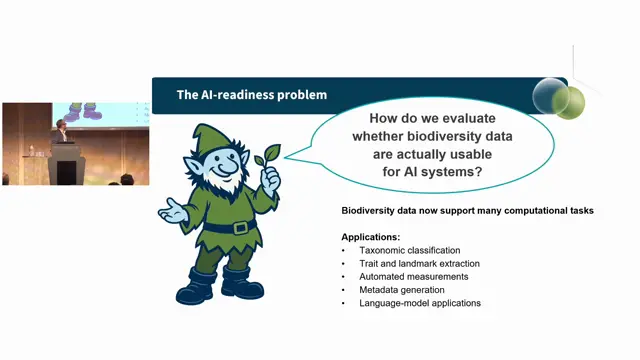
Toward Quantitative AI-Readiness Metrics for Biodiversity Data Infrastructures
AI readiness should be a task-specific, measurable profile rather than a single score, and current biodiversity standards lack most of the terms needed to describe it.
Yasin Bakış ↗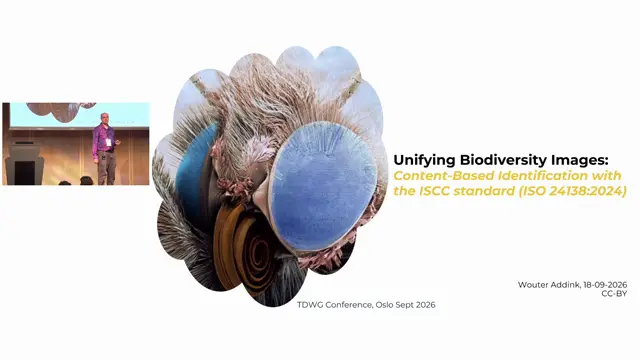
Unifying Biodiversity Images: Content-Based Identification with the ISCC standard (ISO 24138:2024)
ISCC gives images a content-derived, similarity-comparable identifier that anyone can recompute, addressing duplication, broken links and AI-generated fakes.
Wouter Addink ↗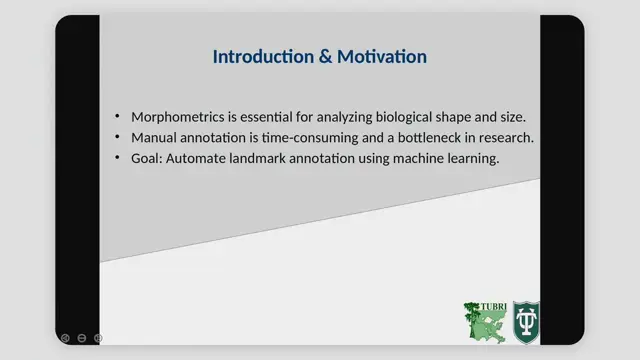
Automated Landmark Detection for Scalable Morphometric Data Extraction from Digitized Fish Collections
A lightweight dlib shape-regression model can automate most fish landmarking from museum images, but inner landmarks and variable specimen poses remain hard.
Bahadir Altintas ↗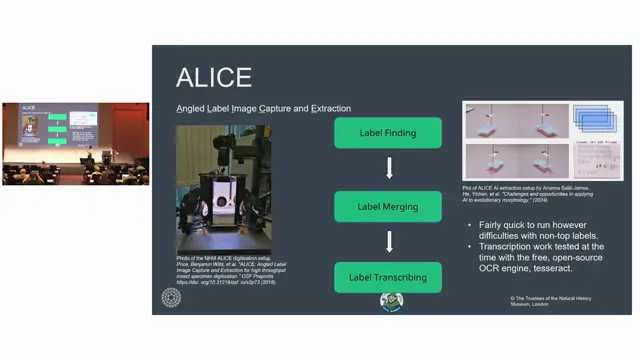
SCRIBE: Structured Collection Record Interpretation and Bio-entity Extraction
SCRIBE aims to replace many collection-specific extraction workflows with one LLM and computer-vision platform that turns any uploaded record images into structured data.
Arianna Salili-James ↗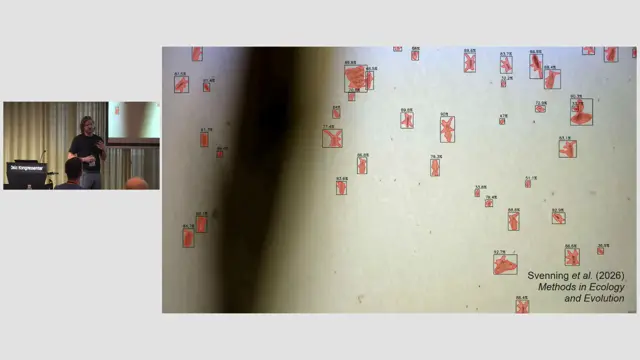
Standardizing Multimodal Insect Monitoring Data for AI-Ready Pipelines: Lessons from an InsectAI Community Datathon
Camtrap DP can largely accommodate automated insect monitoring data today, but the community needs agreed guidance and a few targeted extensions (track IDs, parent media and crop offsets, target taxonomic scope, identification provenance) to handle insect-specific challenges.
Jamie Alison ↗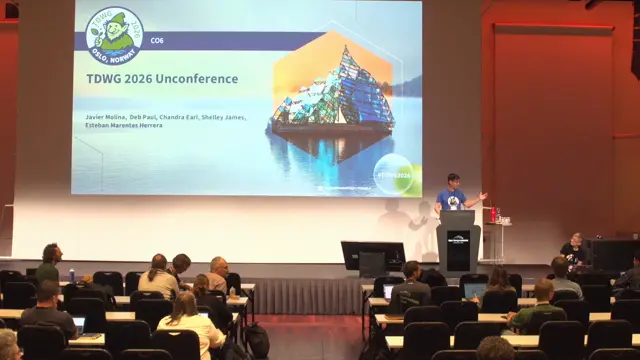
TDWG 2026 Unconference: pitches, topic voting and breakout report-backs
The Unconference showed the community's priorities (controlled vocabularies, AI readiness, project sustainability, Wikidata, Darwin Core data packages) and started several follow-up groups.
Javier Molina, Nicky Nicolson, Deb Paul ↗