
Explore the conversation.
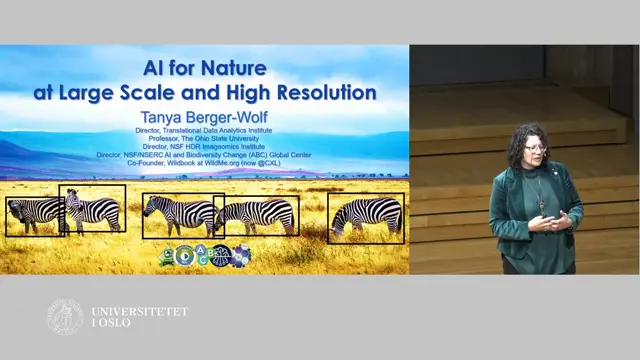
AI for Nature at Large Scale and High Resolution
AI can help fill biodiversity knowledge shortfalls only if biological knowledge is built into the models and the data infrastructure is FAIR for AI and returns value to primary data collectors, because 'there is no AI without data'.
Tanya Berger-Wolf ↗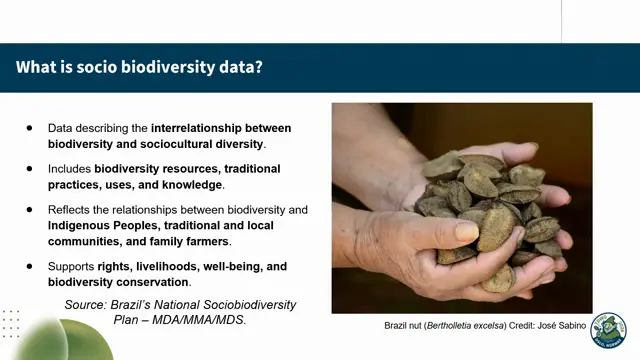
Extending Darwin Core to Represent Sociobiodiversity and Traditional Knowledge
Representing traditional knowledge in biodiversity standards needs new terms, knowledge-centred (not species-centred) models, and careful governance of who holds and publishes the data.
Clara Baringo Fonseca ↗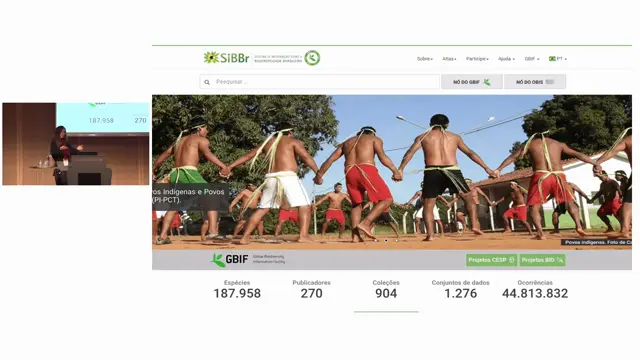
Toward RASD Implementation in Brazil: Integrating Conservation, Open Data, and Traditional Knowledge Safeguards
Protecting traditional knowledge requires community-controlled, attribute-level and semi-restricted access, not just hiding species locations.
Clara Baringo Fonseca ↗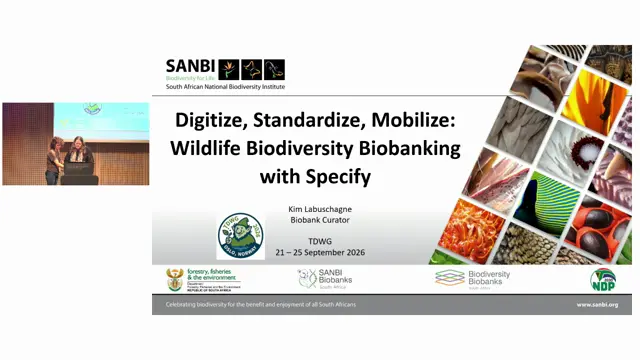
Digitize, Standardize, Mobilize: Wildlife Biodiversity Biobanking with Specify
Specify's hierarchical trees and attachments turned a fragmented wildlife biobank into a traceable extended-specimen data system.
Kim Labuschagne ↗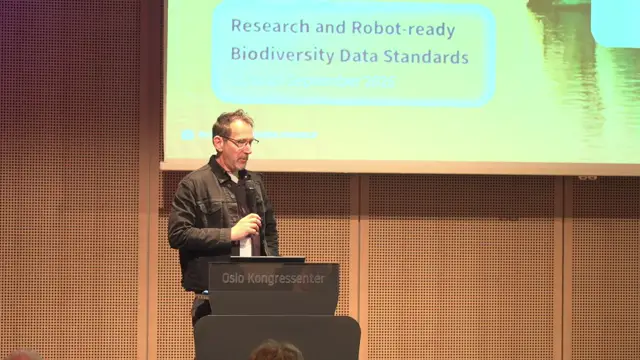
Panel discussion: From Mobilizing Data to AI-Ready Knowledge
AI-readiness is purpose-dependent, and the hardest remaining problems are social: trust, attribution, governance and data sovereignty, where ontologies and knowledge graphs offer some control and explainability.
Hilmar Lapp, Robert Guralnick, Tanya Berger-Wolf ↗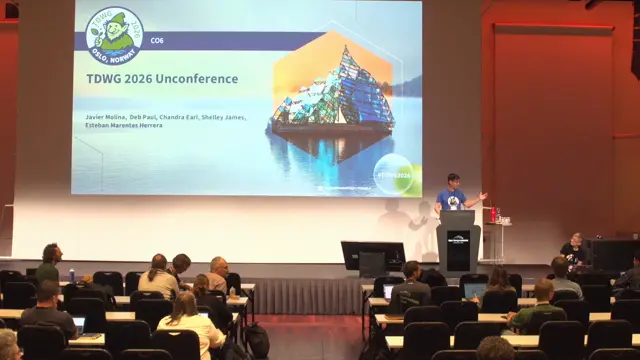
TDWG 2026 Unconference: pitches, topic voting and breakout report-backs
The Unconference showed the community's priorities (controlled vocabularies, AI readiness, project sustainability, Wikidata, Darwin Core data packages) and started several follow-up groups.
Javier Molina, Nicky Nicolson, Deb Paul ↗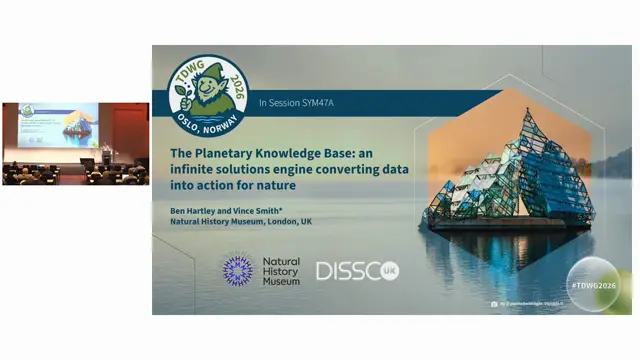
The Planetary Knowledge Base: an infinite solutions engine converting data into action for nature
The NHM is building the Planetary Knowledge Base in phases, with provenance, attribution and benefit-sharing designed in, to move biodiversity data to evidence to action at scale.
Vincent Smith ↗