
Explore the conversation.
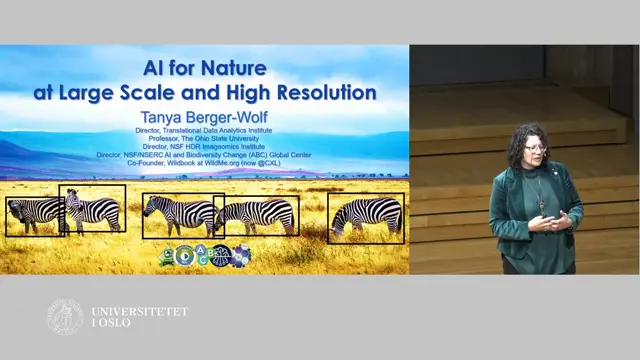
AI for Nature at Large Scale and High Resolution
AI can help fill biodiversity knowledge shortfalls only if biological knowledge is built into the models and the data infrastructure is FAIR for AI and returns value to primary data collectors, because 'there is no AI without data'.
Tanya Berger-Wolf ↗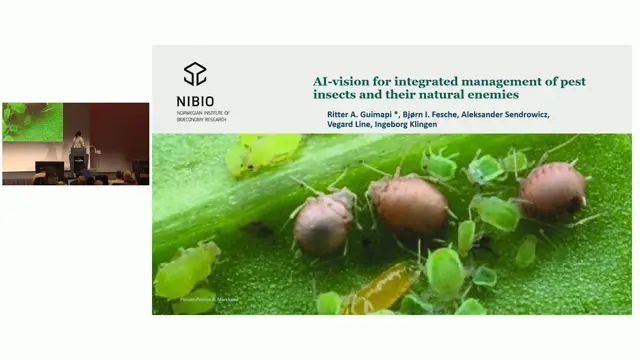
AI-vision for integrated management of pest insects and their natural enemies
Moving precision spraying from static weeds to mobile pests and their natural enemies is blocked mainly by the difficulty of collecting representative image data.
Ritter Guimapi ↗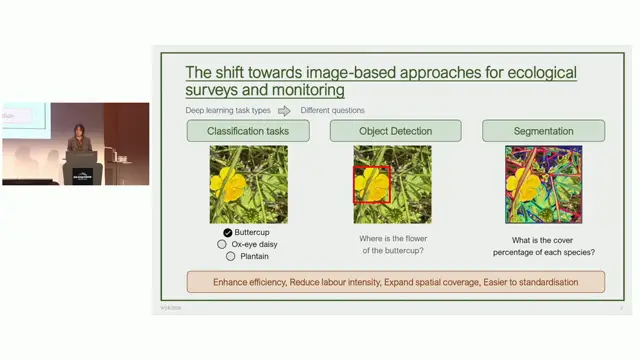
Are plant image datasets ready for AI-enabled community assessment? A systematic review of bias, representativeness and annotation quality
Current plant image datasets are not yet ready for AI-enabled ecological monitoring, especially for spatially explicit tasks and annotation quality.
Yuchen Zhao ↗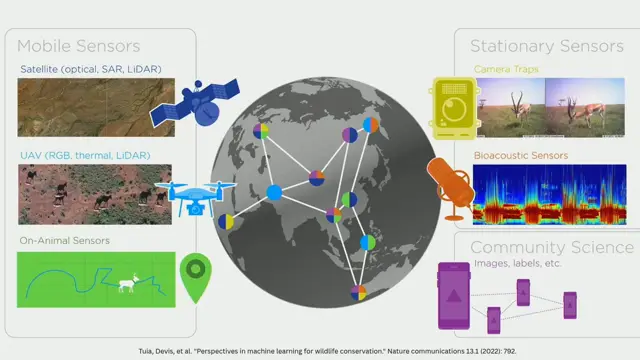
Cross-Modal Coordination for Biodiversity Monitoring at Scale: Lessons from SmartWilds
Coordinating multiple sensor modalities with AI at the far edge, informed by synchronised multimodal datasets like SmartWilds, can scale and adapt biodiversity monitoring.
Jenna Kline ↗
From satellite embeddings to Darwin Core: an open, ensemble-AI workflow for Prosopis juliflora mapping and reusable training-dataset generation
Satellite embeddings plus hyperspectral signatures and ground validation can map invasive Prosopis at scale and generate reusable, attributable training data.
Pranav Jha ↗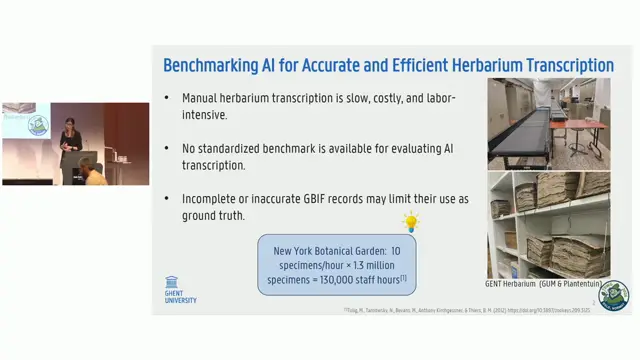
HerbAudit: Validating AI-Driven Herbarium Transcriptions
HerbAudit shows AI herbarium transcription reaching ~94% accuracy and provides a fair, field-aware way to benchmark it.
Dilara Ağacık ↗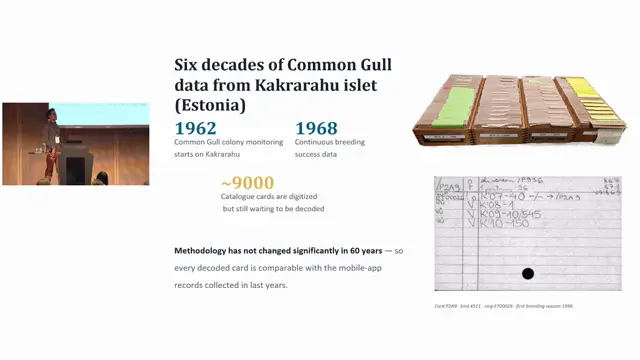
KakraCards: An AI-Assisted Pipeline for Liberating Six Decades of Seabird Heritage Data
Multi-model consensus with human adjudication builds ground truth and picks the best LLM for transcribing standardised historical cards.
Kristjan Adojaan ↗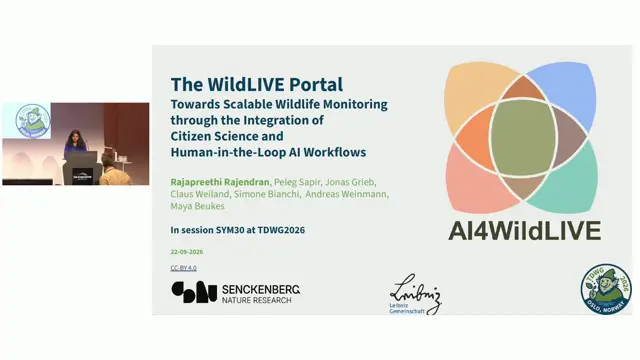
The WildLIVE Portal: Towards Scalable Wildlife Monitoring through the Integration of Citizen Science and Human-in-the-Loop AI Workflows
WildLIVE combines a model registry, provenance-tracked human verification and FAIR publication to move camera trap data from raw images to publishable data.
Rajapreethi Rajendran ↗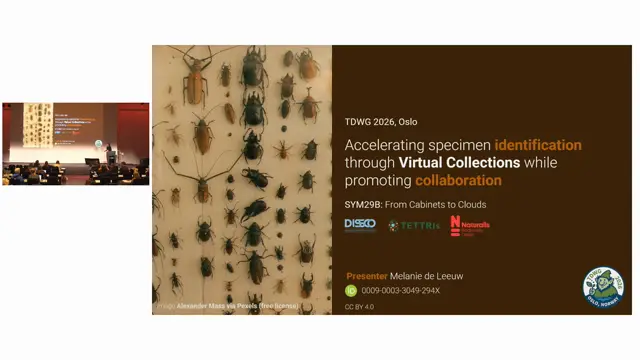
Accelerating specimen identification through Virtual Collections while promoting collaboration
Virtual reference collections with DOIs let experts identify and curate dispersed digital specimens remotely instead of shipping material or travelling.
Melanie de Leeuw ↗
AI Ready Standards with Croissant for Type Specimens Catalog Datasets
Combining LLM extraction, Darwin Core and Croissant metadata offers a route from historical specimen catalogues to FAIR, ML-ready datasets.
Sefika Efeoglu ↗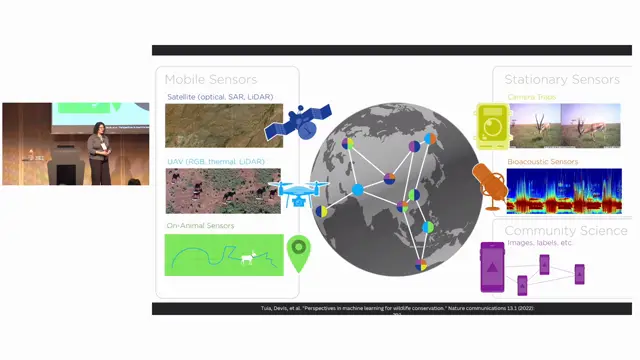
Digital Twins as System-Optimization Tools: Provisioning Edge and Cloud Infrastructure for Biodiversity Monitoring at Scale
Digital twins should close the sim-to-real loop for the sensor systems too, letting teams plan where and how to deploy multimodal monitoring before going into the field.
Tanya Berger-Wolf ↗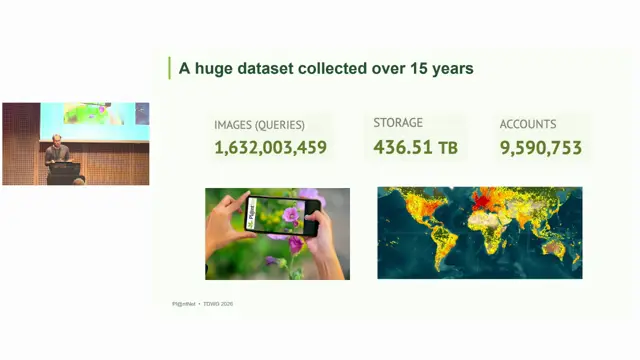
From 1.5 Billion Raw Queries to AI-Ready Biodiversity Data: Human-AI Collaborative Curation Pipelines in Pl@ntNet
Pl@ntNet's human–AI pipeline filters a vast, noisy stream into two GBIF datasets and training data, with separate branches for opted-in human-validated and automatic occurrence-only data.
Alexis Joly ↗
Beyond traditional identification keys: hybrid deep learning and Xper3 keys for insect identification
Deep-learning pre-filtering of an interactive key keeps the key's explainability while greatly shortening identification paths.
Agathe Puissant ↗