
Unifying Biodiversity Images: Content-Based Identification with the ISCC standard (ISO 24138:2024)
Wouter Addink · AI-Readiness Metrics and Metadata for Biodiversity Data
The short versionISCC gives images a content-derived, similarity-comparable identifier that anyone can recompute, addressing duplication, broken links and AI-generated fakes.
What this was about
Wouter Addink introduced the International Standard Content Code (ISCC, ISO 24138:2024) as a content-aware identifier for biodiversity media; nobody in the room had heard of it. He explained why DOIs (location-focused) and cryptographic hashes (break on any pixel, metadata or format change) fall short for images, and how ISCC combines meta, content, data and instance codes so that content codes survive watermarks or format conversion and Hamming distance measures similarity. A beta 'declaration event' binds an ISCC to a signed creator and timestamp using DIDs and an append-only log run on decentralised hubs, enabling content-based discovery, provenance, isolation of AI fakes and annotations resilient to derivatives.
Why it matters. Biodiversity media are copied, converted and increasingly faked; a content-based identifier could keep annotations and provenance attached across copies and formats.
In the room
- Challenges: AI-generated fakes undermining trust, uncoordinated copies, and metadata/provenance lost when files are renamed or converted.
- PIDs like DOIs, RORs and ORCIDs work where identifying metadata is easy, but images need their content to distinguish them.
- Standard hashes such as SHA-256 change completely with any pixel, metadata or format change.
- ISCC works for images, video, audio and text; a full code concatenates meta, content, data and instance units (typically 64 bits each) with self-describing header (main type, subtype).
- The instance code behaves like a hash; the data code changes with data changes; the content code stays the same under format conversion or watermarking.
- Because ISCC codes carry semantics, Hamming distance between codes measures how different two items are, enabling similarity matching.
- Declaration events (beta, not yet in the standard) bind an ISCC to a signature and timestamp as a FAIR Digital Object, using DIDs and an append-only log on self-hostable hubs rather than blockchain.
Notable moments
Transcript
Automatically generated captions can contain mistakes, especially in names and technical terms. Times are relative to the room recording.
Read the transcript ↓
Related talks.
Structured identification keys complementing AI: closing the corpus bottleneck with AI-assisted digitisation
AI and identification keys are complementary, and LLM-assisted digitisation of printed literature now makes it feasible to build structured keys at scale for expert review.
How Darwin Core enables harmonizing Biodiversity Data via the OSCA Consortium
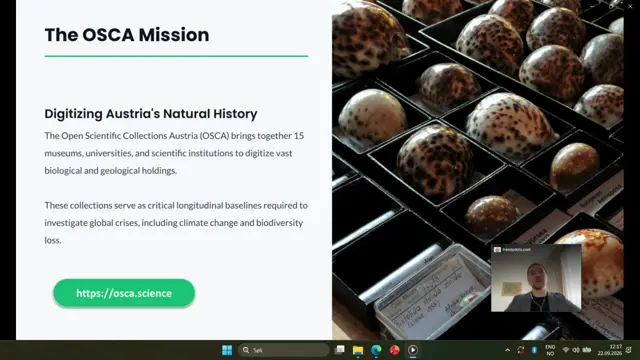
A shared Darwin Core-based cloud pipeline lets 15 Austrian institutions of very different IT capacity publish harmonised specimen data.
LLM-Based Pipeline for Extracting Nomenclatural Acts from Taxonomic Literature
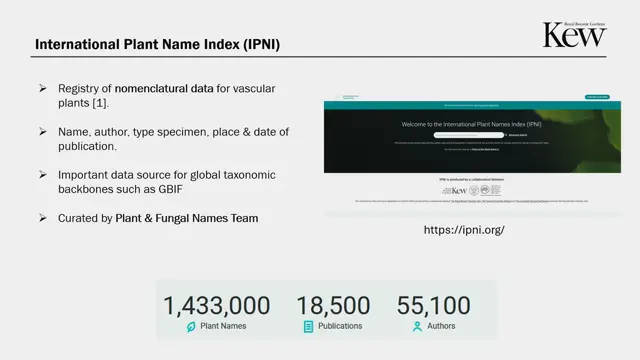
A grounded, schema-constrained two-pass LLM pipeline extracts IPNI-ready nomenclatural data well once treatments are found; finding treatment boundaries is the bottleneck.