
Explore the conversation.
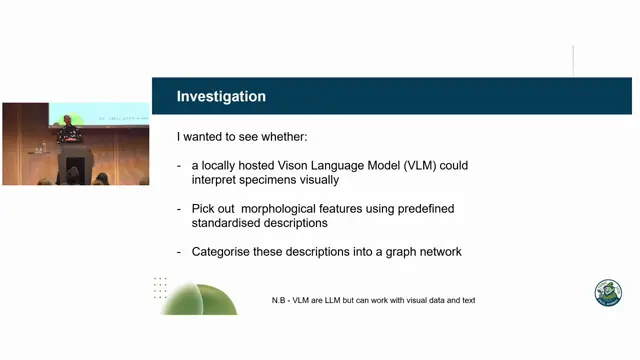
Agentic AI Systems for Specimen Interaction and Camera-Based Observation
Off-the-shelf local vision language models can pick out and count specimen morphology and spot damage with minimal guidance.
Jack Hollister ↗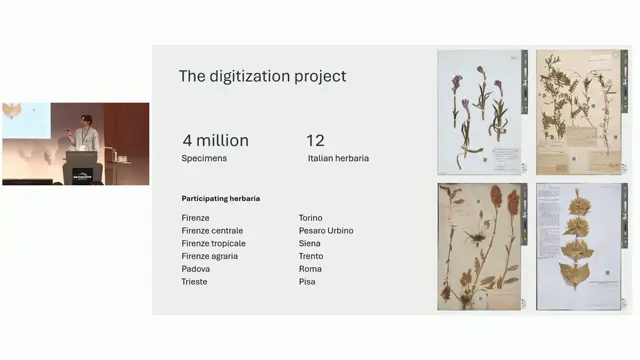
AI-assisted georeferencing a posteriori of herbarium specimens: a case study on Italian herbaria
Combining LLM parsing and LLM judging with gazetteers more than doubles correct georeferences for historical herbarium localities compared with Google Maps, even with a local model.
Matteo Conti ↗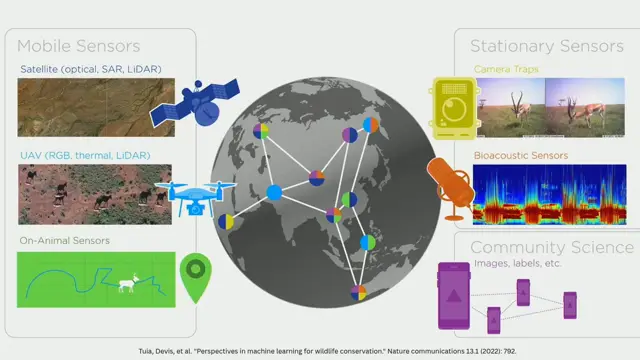
Cross-Modal Coordination for Biodiversity Monitoring at Scale: Lessons from SmartWilds
Coordinating multiple sensor modalities with AI at the far edge, informed by synchronised multimodal datasets like SmartWilds, can scale and adapt biodiversity monitoring.
Jenna Kline ↗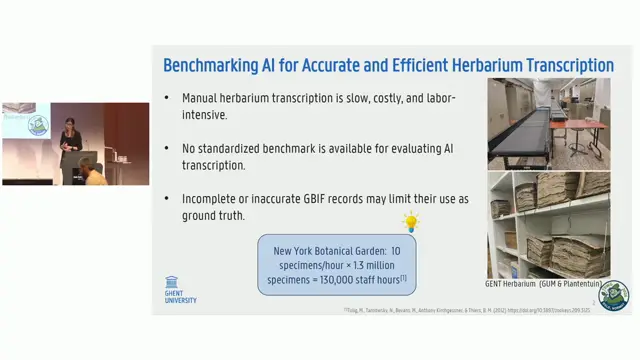
HerbAudit: Validating AI-Driven Herbarium Transcriptions
HerbAudit shows AI herbarium transcription reaching ~94% accuracy and provides a fair, field-aware way to benchmark it.
Dilara Ağacık ↗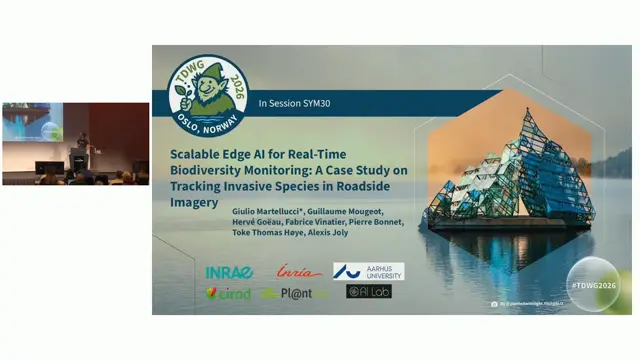
Scalable Edge AI for Real-Time Biodiversity Monitoring: tracking invasive plant species in roadside imagery
Distilling a tiling-based plant identifier into a single ConvNeXt model makes high-resolution roadside invasive-species monitoring fast, cheap and more accurate.
Giulio Martellucci ↗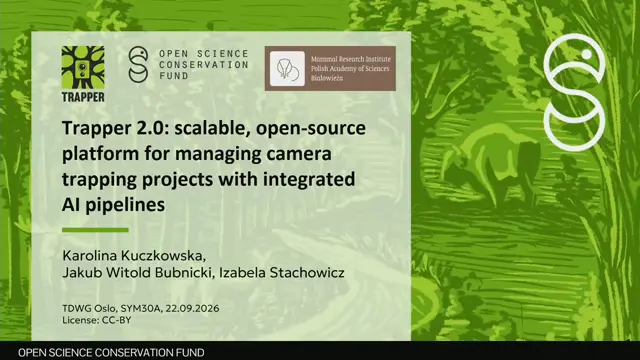
Trapper 2.0: scalable, open-source platform for managing camera trapping projects with integrated AI pipelines
Trapper 2.0 offers an open, model-agnostic, edge-deployable pipeline for camera trap photos and videos with expert review and Camtrap DP export.
Karolina Kuczkowska ↗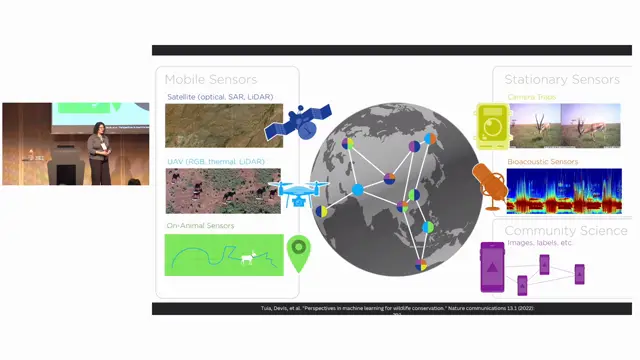
Digital Twins as System-Optimization Tools: Provisioning Edge and Cloud Infrastructure for Biodiversity Monitoring at Scale
Digital twins should close the sim-to-real loop for the sensor systems too, letting teams plan where and how to deploy multimodal monitoring before going into the field.
Tanya Berger-Wolf ↗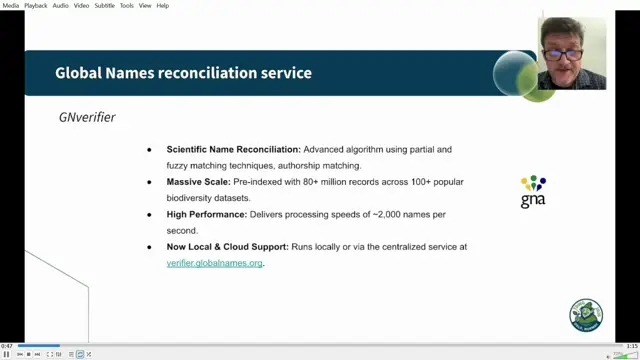
Local scientific name resolution using custom data sources
GNverifier can now be run locally over any custom or private name datasets, using the standardised SFGA format and GNdb, with the same API as the central service.
Dmitry Mozzherin ↗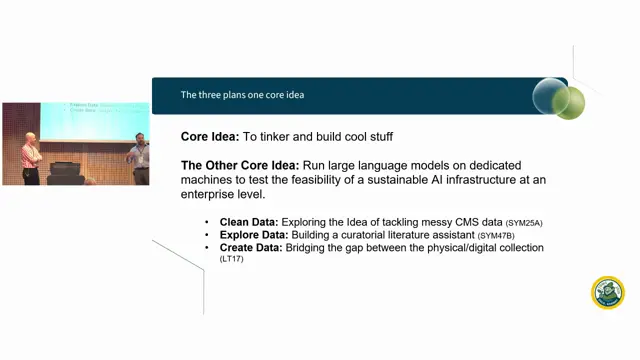
On-Device AI for Data Cleaning, Standardisation, and Exploration in Collections Management
Local LLM hardware can clean and enrich millions of legacy collection records at predictable cost, but validation of the outputs is the unsolved problem.
Jack Hollister, Unidentified co-presenter ↗
Contained Agentic Workflow for Literature Analysis and Data Extraction in Museum Collections
Contained, local agentic RAG over a literature corpus is feasible on a laptop or shared edge machine, avoiding the security worries of cloud agents in museums.
Steen Dupont ↗