
Explore the conversation.
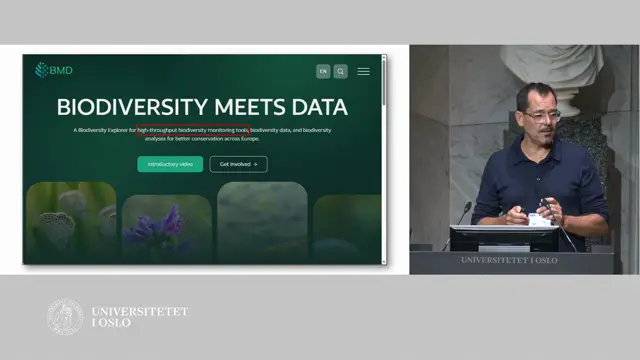
Mainstreaming high-throughput biodiversity monitoring using AI
AI identification platforms like ARISE can take sensor data automatically to GBIF-published, standardised data for protected-area managers, but training costs are high and human verification still matters.
Niels Raes ↗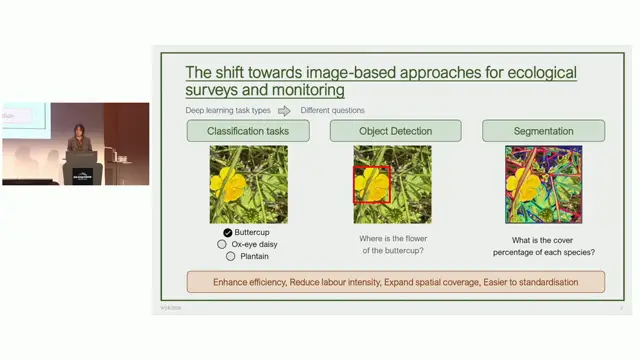
Are plant image datasets ready for AI-enabled community assessment? A systematic review of bias, representativeness and annotation quality
Current plant image datasets are not yet ready for AI-enabled ecological monitoring, especially for spatially explicit tasks and annotation quality.
Yuchen Zhao ↗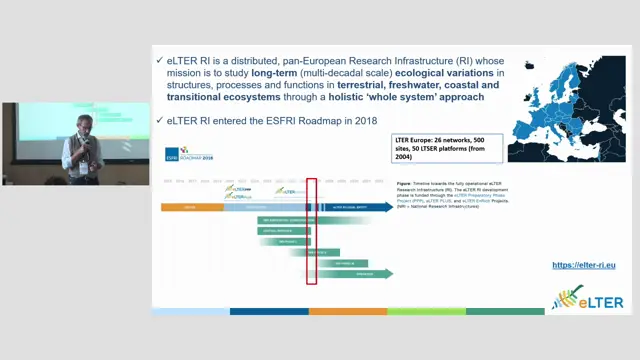
Bridging eLTER Data Reporting Format: enabling interoperable biodiversity and ecological data publication across research infrastructures
eLTER is aligning its CSV-based data reporting format with Darwin Core and Frictionless data packages to make long-term ecological data more FAIR.
Alessandro Oggioni ↗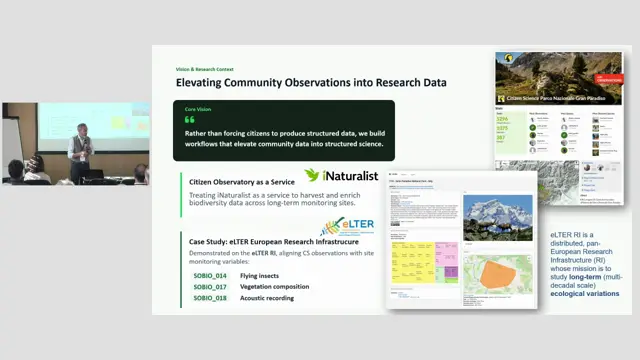
From citizen observations to long-term ecological knowledge: integrating iNaturalist records into LTER framework through automated enrichment
Rather than forcing citizens to produce structured data, automated enrichment elevates iNaturalist records into research-ready data for eLTER sites.
Alessandro Oggioni ↗
KakraCards: An AI-Assisted Pipeline for Liberating Six Decades of Seabird Heritage Data
Multi-model consensus with human adjudication builds ground truth and picks the best LLM for transcribing standardised historical cards.
Kristjan Adojaan ↗
Soundscape China: Listening to the Sounds of Nature with AI
Soundscape China is building a nationwide acoustic sensor network, database and AI models, gathering 3.6 million recordings in its first year.
Congtian Lin ↗
From 'Lost in Translation' to Fit-for-Purpose Data: Why Ecologists and Conservation Practice Still Need Groupings and Uncertainties
Biodiversity data systems must be able to record identification uncertainty and taxonomic groupings, or ecologists face a choice between false certainty and lost ecological information.
Bernhard Kløw Askedalen, Natalie ↗
From Sensor to Species: AI-Assisted Segmentation, Deep Learning Workflows, and Persistent Biodiversity Records from Earth Observation Systems
Persistent organism identifiers for remotely sensed individual trees could turn repeat Earth-observation imagery into longitudinal biodiversity records, but only if uncertainty and model provenance travel with every record.
Kit Lewers ↗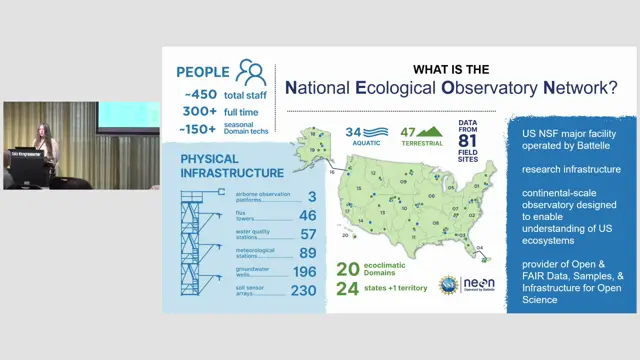
NEON, Community Standards, and the Hyper-Extended Specimen
NEON was built for interoperability from the start, but sustaining standards, crosswalks and value-added links needs community-level solutions.
Chandra Earl ↗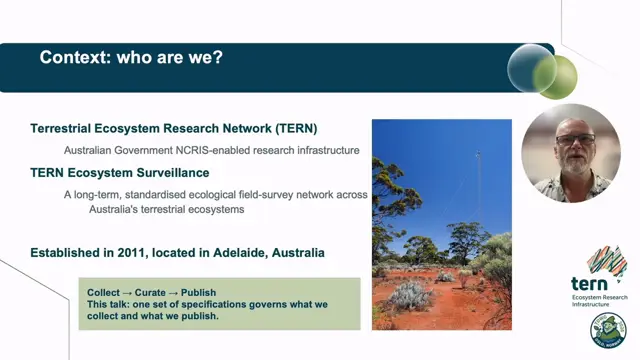
Robot-ready by construction: an ontology-driven, SHACL-validated submission pipeline for national ecological monitoring data
Driving both field data capture and RDF export from one semantically annotated specification makes monitoring data standards-compliant and machine-ready from the start.
Andrew Tokmakoff ↗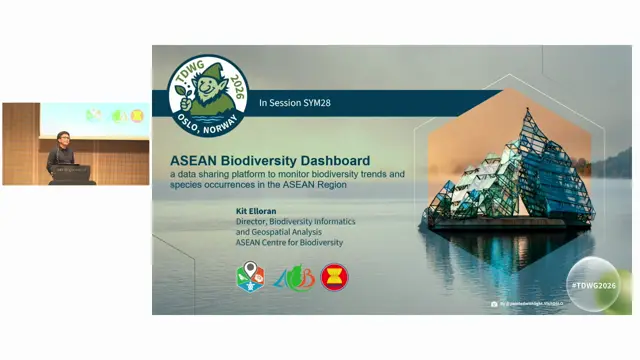
ASEAN Biodiversity Dashboard as a data sharing platform to monitor biodiversity trends and species occurrences in the ASEAN Region
Interoperable, GBIF-hosted regional infrastructure lets ACB turn occurrence data into indicators and dashboards for ASEAN policy reporting.
Christian Elloran ↗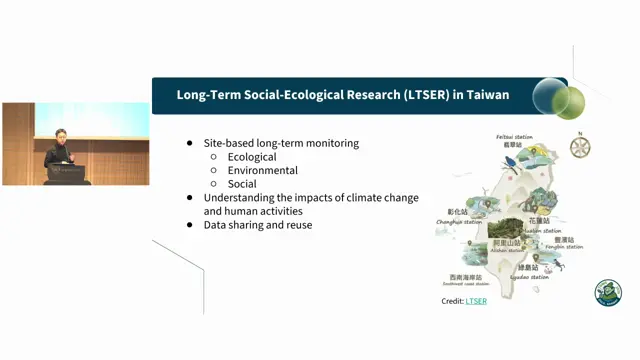
Building a Living Publication Workflow for Long-Term Social-Ecological Monitoring Data: The Taiwan LTSER Experience
Embedding Darwin Core alignment as automated checkpoints in a repository-based pipeline keeps continuously updated monitoring data flowing to GBIF.
Jhu-Jyun Jhang ↗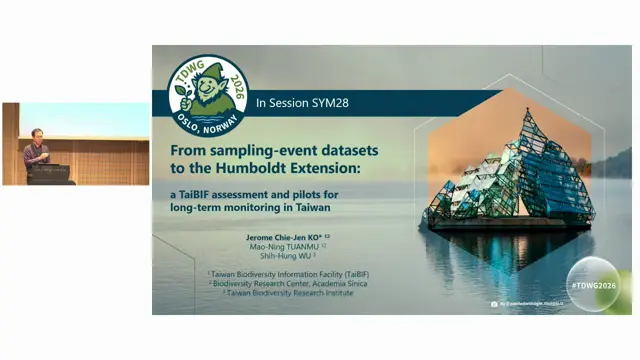
From sampling-event datasets to the Humboldt Extension: a TaiBIF assessment and pilots for long-term monitoring in Taiwan
Giving monitoring-data providers immediate site-level trend feedback, based on a minimal set of Humboldt terms, can motivate adoption better than asking for the full extension.
Jerome Chie-Jen Ko ↗
Integrating advanced monitoring technologies for spatially explicit, ecosystem-based biodiversity conservation across diverse habitats in Saudi Arabia
Saudi Arabia's network of 35 Biodiversity Protection Areas combines reintroductions, spatial risk mapping and satellite, camera-trap and drone monitoring to conserve species across very diverse ecosystems.
Mohammad Zafarul Islam ↗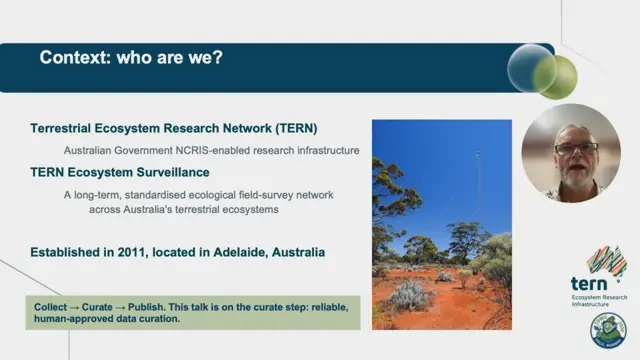
Reliable LLM-assisted curation of ecological survey data: a deployed agent bridging field collection and data curation
An LLM agent that proposes findings for curator approval, with confirmed patterns turned into deterministic rules, catches plausibility errors that schema validation misses.
Andrew Tokmakoff ↗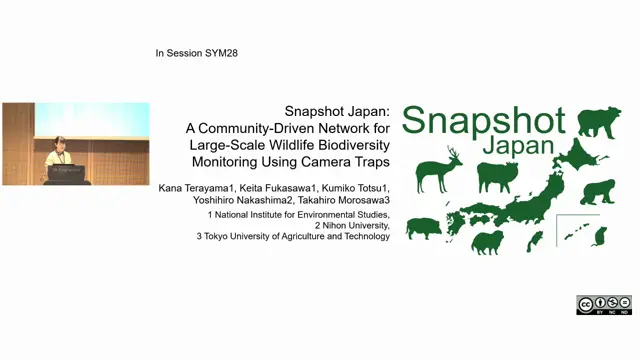
Snapshot Japan: A Community-Driven Network for Large-Scale Wildlife Biodiversity Monitoring Using Camera Traps
Community support plus a simple standard protocol and Camtrap DP publishing let Snapshot Japan scale camera-trap monitoring from 9 to 65 sites in three years.
Kumiko Totsu ↗