
Reliable LLM-assisted curation of ecological survey data: a deployed agent bridging field collection and data curation
Andrew Tokmakoff · Large Language Models for Biodiversity Data Discovery, Integration, and Curation. AI applications, integration, and validation
The short versionAn LLM agent that proposes findings for curator approval, with confirmed patterns turned into deterministic rules, catches plausibility errors that schema validation misses.
What this was about
Andrew Tokmakoff described a deployed LLM curation agent for TERN Ecosystem Surveillance plot data. The data moved from an older system to a new EMSA-based, schema-driven app, and side-loaded data can bypass app validation. Declarative YAML rules compiled to SQL run first. The model then works through phased briefs and queries the database via a tool harness, surfacing ecologically implausible values (999 m hummock grass, shrubs taller than the canopy, inverted soil horizons). Findings go to a curator dashboard, and nothing is written without human approval. Lessons: adjudicate by class not row, never accept silence as 'no findings', and codify confirmed findings into deterministic rules.
Why it matters. It is a rare deployed, cautious example of LLM-assisted curation with clear governance (no autonomous writes) and a practical recipe others can reuse.
In the room
- TERN is Australia's government-funded ecological research infrastructure; the Adelaide team runs hundreds of revisited plots collecting soils, vegetation and samples.
- The new EMSA-based PWA is schema-driven, but a bridge is needed to the old publishing system; side-loaded Excel data lose app validation.
- Data can be schema-valid but implausible, e.g. a 999 m hummock grass placeholder. Such errors are rare human factors, not systemic.
- Declarative rules in YAML compile to SQL (e.g. point intercept heights > 80 m); rules were themselves created with the LLM.
- Phased prompts ('briefs'), e.g. flag a single species across 50+ intercepts and don't reason it away by bioregion (the model once dismissed 76 intercepts as normal for arid regions).
- Harness loop: brief and tools -> model requests queries -> harness runs SQL -> JSON rows back -> model reports findings -> findings table -> curator.
- Every database write passes through a curator; adjudication is by class, not individual rows.
Notable moments
Transcript
Automatically generated captions can contain mistakes, especially in names and technical terms. Times are relative to the room recording.
Read the transcript ↓
Related talks.
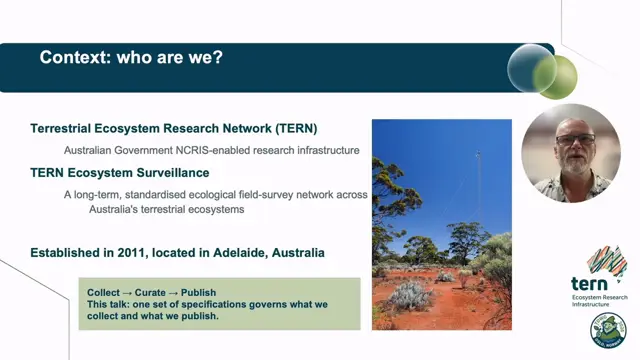
Robot-ready by construction: an ontology-driven, SHACL-validated submission pipeline for national ecological monitoring data
Driving both field data capture and RDF export from one semantically annotated specification makes monitoring data standards-compliant and machine-ready from the start.
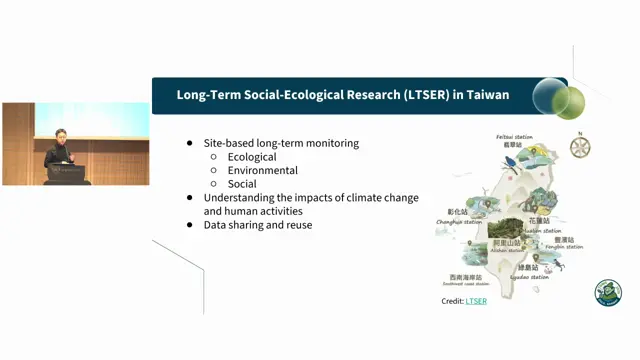
Building a Living Publication Workflow for Long-Term Social-Ecological Monitoring Data: The Taiwan LTSER Experience
Embedding Darwin Core alignment as automated checkpoints in a repository-based pipeline keeps continuously updated monitoring data flowing to GBIF.
An Introduction to the Biodiversity Data Quality Standard (BDQ)
BDQ provides 110 standard, use-case-linked tests so that data quality can be assessed consistently from collection to aggregation.