
Explore the conversation.
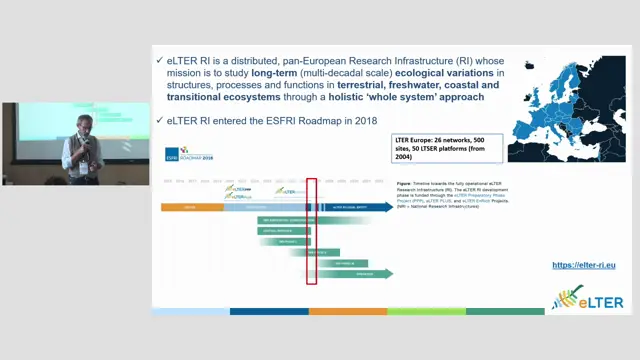
Bridging eLTER Data Reporting Format: enabling interoperable biodiversity and ecological data publication across research infrastructures
eLTER is aligning its CSV-based data reporting format with Darwin Core and Frictionless data packages to make long-term ecological data more FAIR.
Alessandro Oggioni ↗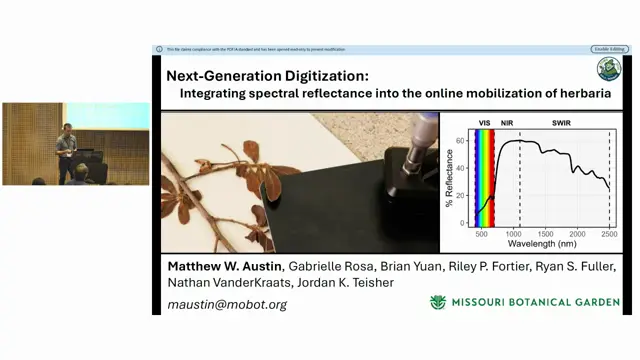
Next-generation digitization: integrating spectral reflectance into the online mobilization of herbaria
Spectral reflectance can be captured at scale during herbarium digitisation and supports accurate species identification from leaves alone.
Matthew Austin ↗
Freshwater data platforms: acronym soup, abundance, classifications and data quality
The freshwater community prefers connected, specialised platforms feeding GBIF over one system, but must address abundance data, classification consistency and trust in data from diverse providers.
Koen Martens, Anne Lyche Solheim, Olaf Banki ↗
Rethinking “absence” in biodiversity data collection and modeling
Separating observation from inference means recording 'detected' and 'not detected' rather than presence and absence.
Rob Stevenson ↗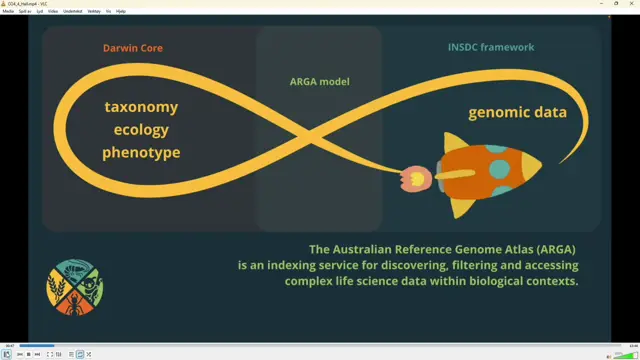
Visualising specimens as event chains on the Australian Reference Genome Atlas
Modelling genomic data as event chains from organism to data product preserves context and provenance that flat records collapse.
Kathryn Hall ↗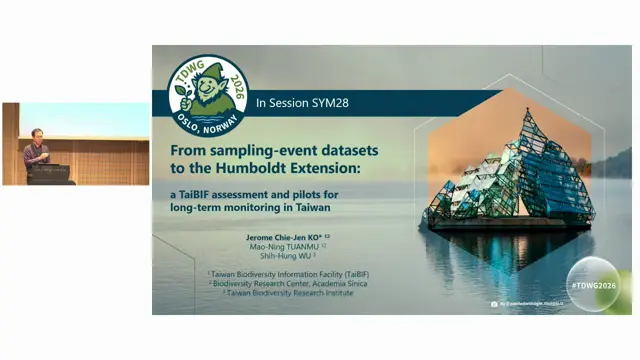
From sampling-event datasets to the Humboldt Extension: a TaiBIF assessment and pilots for long-term monitoring in Taiwan
Giving monitoring-data providers immediate site-level trend feedback, based on a minimal set of Humboldt terms, can motivate adoption better than asking for the full extension.
Jerome Chie-Jen Ko ↗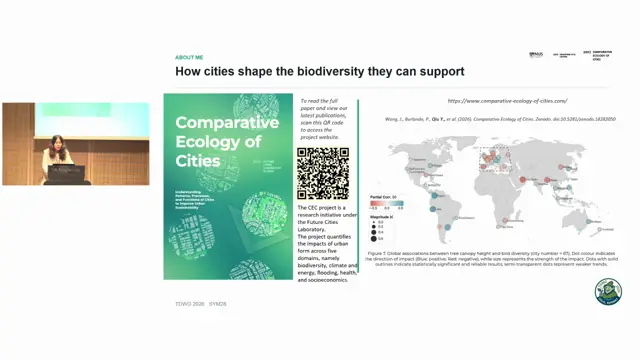
Reporting structure and sampling-bias correction in citizen-science bird data across Asian cities
Abundant citizen-science records do not guarantee inference support; reporting structure can distort richness hotspots and urban-biodiversity relationships unless it is diagnosed and controlled.
Yeshan Qiu ↗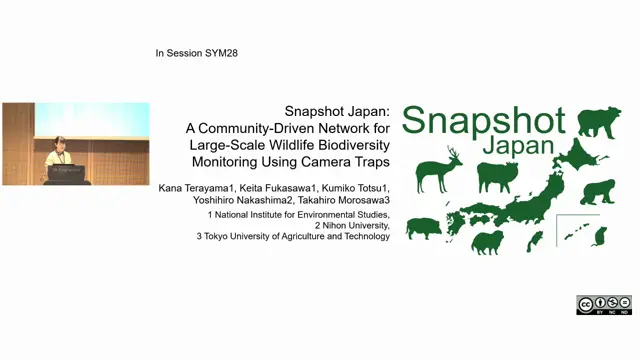
Snapshot Japan: A Community-Driven Network for Large-Scale Wildlife Biodiversity Monitoring Using Camera Traps
Community support plus a simple standard protocol and Camtrap DP publishing let Snapshot Japan scale camera-trap monitoring from 9 to 65 sites in three years.
Kumiko Totsu ↗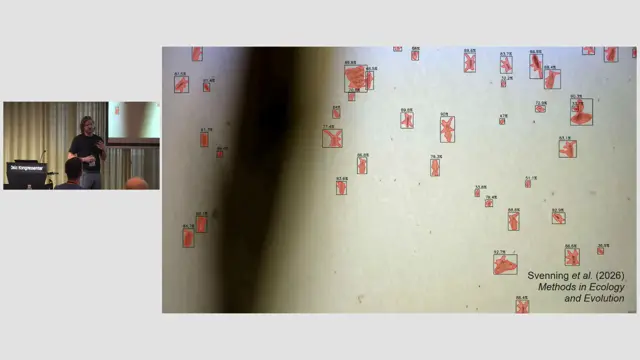
Standardizing Multimodal Insect Monitoring Data for AI-Ready Pipelines: Lessons from an InsectAI Community Datathon
Camtrap DP can largely accommodate automated insect monitoring data today, but the community needs agreed guidance and a few targeted extensions (track IDs, parent media and crop offsets, target taxonomic scope, identification provenance) to handle insect-specific challenges.
Jamie Alison ↗