
Explore the conversation.
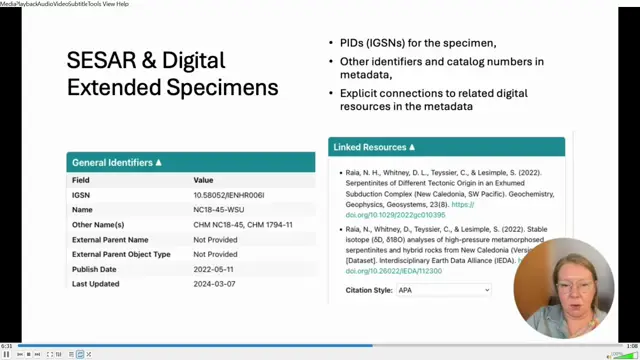
Bridging domains: how SESAR supports Earth and biodiversity digital extended specimens
Persistent sample identifiers plus linked metadata propagated to DataCite let samples be connected to their derived research products across Earth and biodiversity domains.
Andrea Thomer ↗
Extending Specify 7 for geological collections (GeoSpecify)
GeoSpecify brings geology into the same Specify data model as biological collections, with purpose-built age, stratigraphy and composite-object features.
Theresa Miller ↗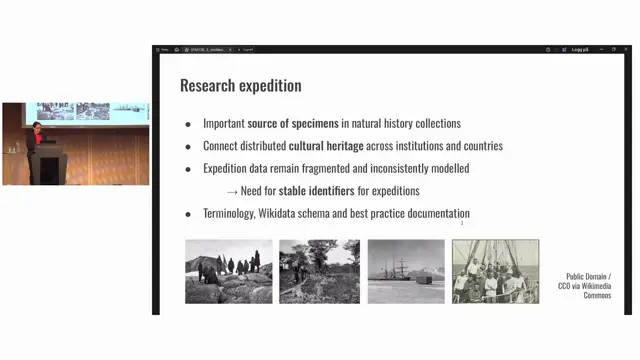
Here, There, and Everywhere: Modelling Research Expeditions in Wikidata
Treat research expeditions as first-class entities with Wikidata identifiers so distributed specimens, people, publications and archives can be linked.
Sabine von Mering ↗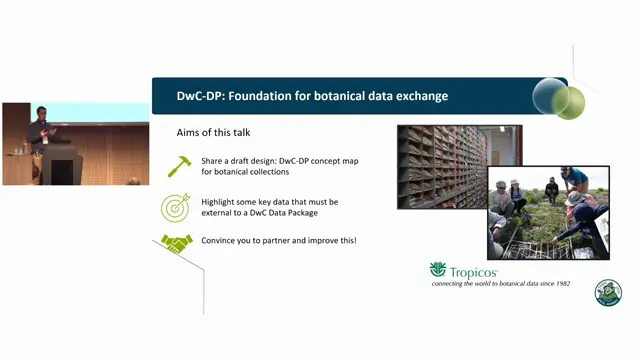
Machine-Ready Botanical Data: Mapping Integrated Collections and Traits with Darwin Core Data Package
Darwin Core Data Package can serve as a semantic integration layer for a botanical garden's diverse collections and trait data, and MBG's draft mapping is offered for community refinement.
Nathan VanderKraats ↗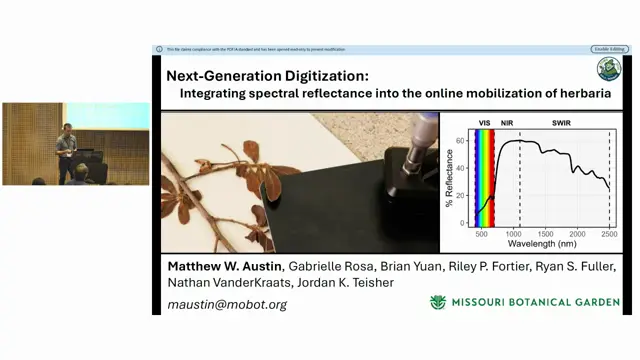
Next-generation digitization: integrating spectral reflectance into the online mobilization of herbaria
Spectral reflectance can be captured at scale during herbarium digitisation and supports accurate species identification from leaves alone.
Matthew Austin ↗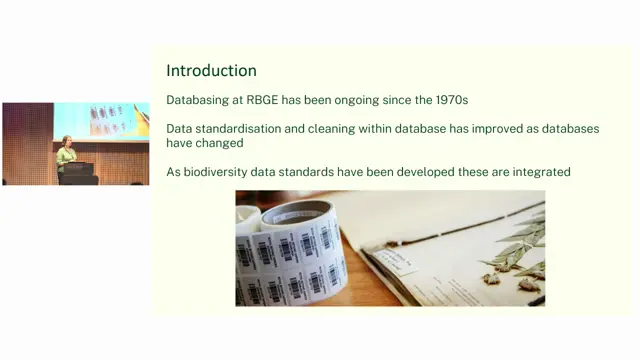
Applying Data Standards at the Royal Botanic Garden Edinburgh
Identifiers are how RBGE is standardising legacy herbarium data and reconnecting items spread across four separate collection management systems.
Robyn Drinkwater ↗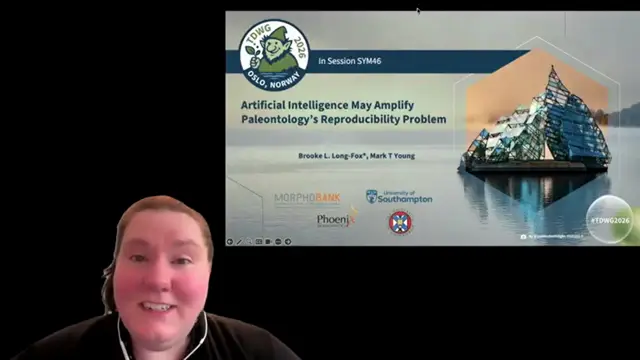
Artificial Intelligence Amplifies Paleontology's Reproducibility Problem
AI can make uncertain paleontological data look clean and authoritative, so AI-ready data must also be verifiable back to evidence and interpretation.
Brooke Long-Fox ↗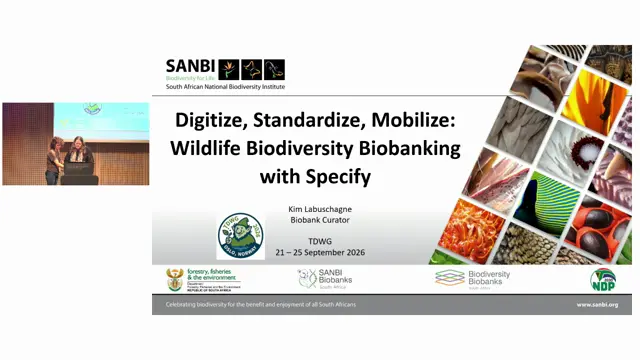
Digitize, Standardize, Mobilize: Wildlife Biodiversity Biobanking with Specify
Specify's hierarchical trees and attachments turned a fragmented wildlife biobank into a traceable extended-specimen data system.
Kim Labuschagne ↗
From Specimens to Networks: Darwin Core Data Packages in Practice
The Darwin Core conceptual model and Data Package give material entities a rich, relational context that flat Darwin Core Archives could not express.
John Wieczorek ↗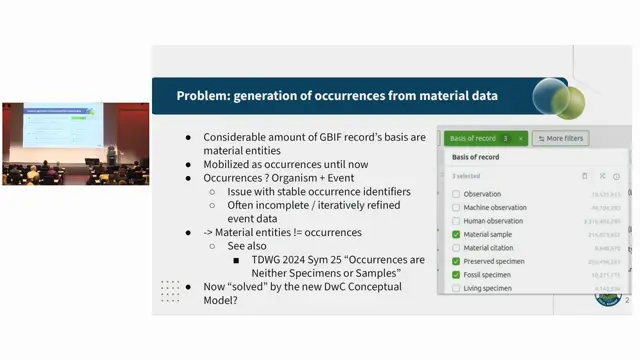
Material Samples and Occurrences in Darwin Core Data Packages: Practical Experiences from DINA
DINA's material-sample model maps well to DwC-DP, so DINA wants to publish without synthetic occurrences and needs community conventions for consumers to derive them.
Jonas Grieb ↗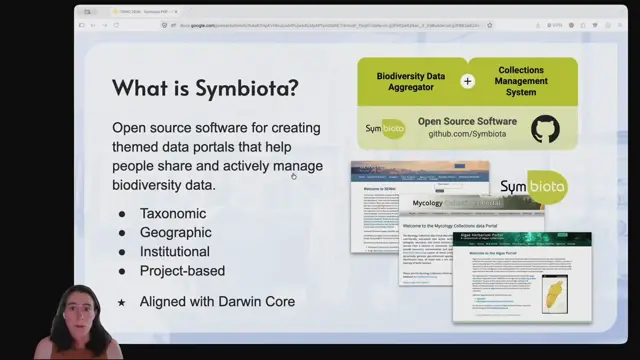
Mobilizing rich, interoperable, and secure fossil data from underserved collections using Symbiota
Targeted Symbiota enhancements around geological context, taxonomy and relationships make a low-barrier CMS viable for under-resourced fossil collections.
Erica Krimmel ↗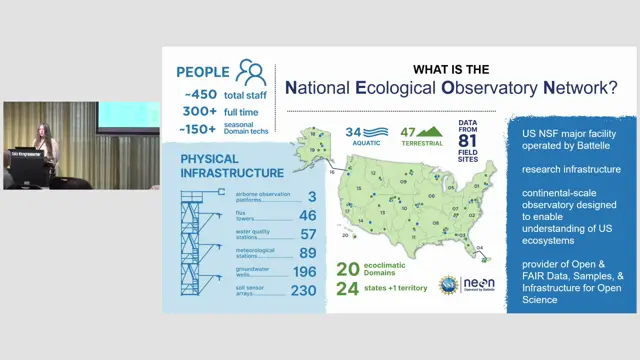
NEON, Community Standards, and the Hyper-Extended Specimen
NEON was built for interoperability from the start, but sustaining standards, crosswalks and value-added links needs community-level solutions.
Chandra Earl ↗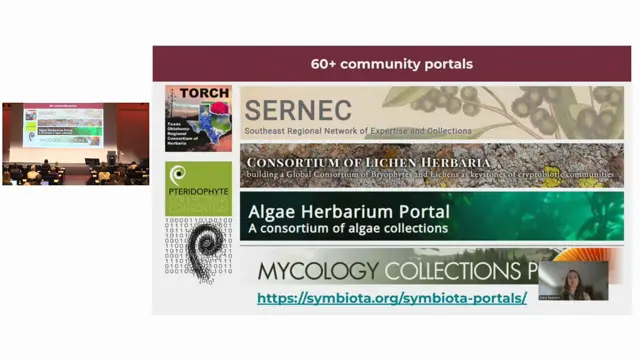
Sharing Extended Specimen Data from Symbiota Portals using Registered Extensions
Existing registered Darwin Core extensions met each of Symbiota's extended-specimen needs, so look for existing standards before inventing new ones.
Katie Pearson ↗
SpecifyaaS: Managing Ephemeral Repositories in Collections-Based Research
Giving researchers their own lightweight Specify instances early in the research process standardises data from the start and eases later exchange with the institutional collection.
Kevin Holston ↗
Sustainability and collaboration in a time of uncertainty
Sustaining biodiversity data infrastructure requires treating technology, people and a diversified funding portfolio as one interconnected system.
Libby Ellwood ↗
SYM42 discussion: DwC-DP profiles, deriving occurrences, ABCD's future and system boundaries
Richer relational models bring the community together but raise hard governance questions about profiles, occurrence derivation, system scope and link persistence.
James A. Macklin, Jonas Grieb, John Wieczorek ↗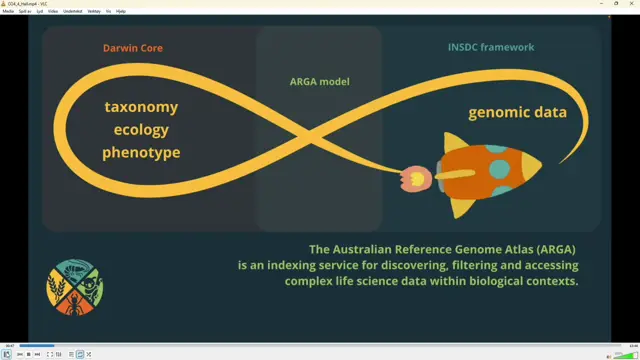
Visualising specimens as event chains on the Australian Reference Genome Atlas
Modelling genomic data as event chains from organism to data product preserves context and provenance that flat records collapse.
Kathryn Hall ↗