
Explore the conversation.
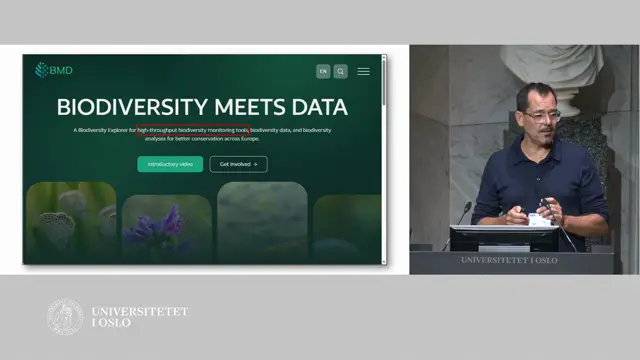
Mainstreaming high-throughput biodiversity monitoring using AI
AI identification platforms like ARISE can take sensor data automatically to GBIF-published, standardised data for protected-area managers, but training costs are high and human verification still matters.
Niels Raes ↗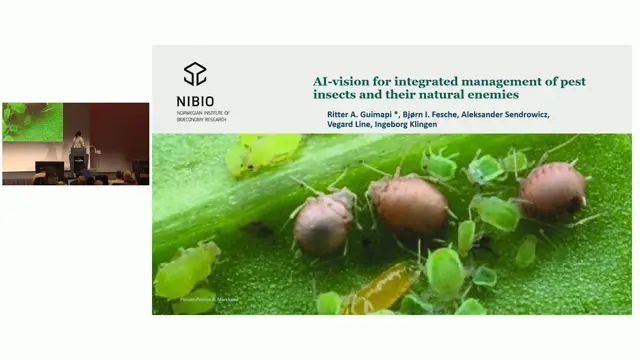
AI-vision for integrated management of pest insects and their natural enemies
Moving precision spraying from static weeds to mobile pests and their natural enemies is blocked mainly by the difficulty of collecting representative image data.
Ritter Guimapi ↗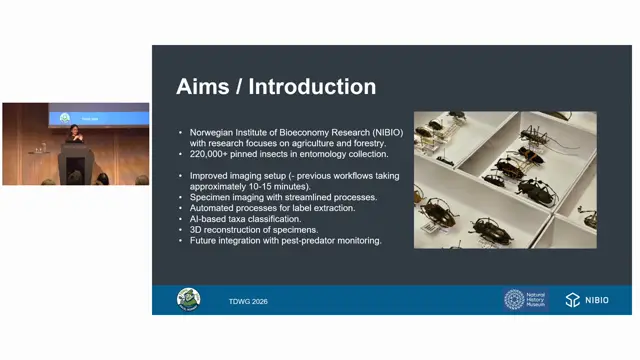
From Collection Drawers to AI - A One-Week Recipe
A useful AI-ready digitisation setup can be built in a week from recycled materials and borrowed cameras.
Arianna Salili-James ↗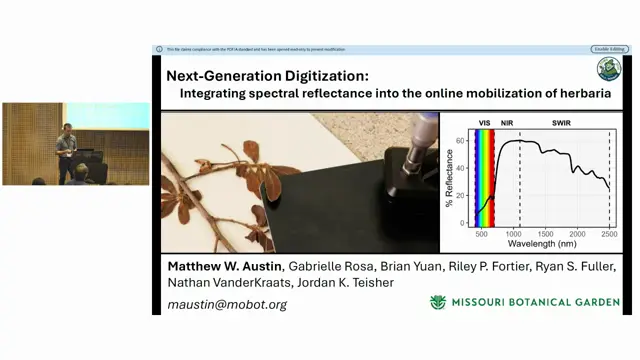
Next-generation digitization: integrating spectral reflectance into the online mobilization of herbaria
Spectral reflectance can be captured at scale during herbarium digitisation and supports accurate species identification from leaves alone.
Matthew Austin ↗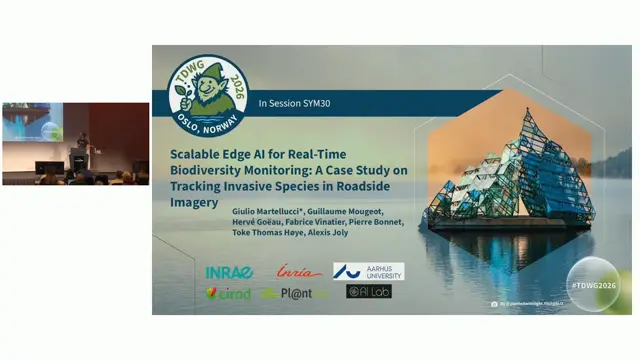
Scalable Edge AI for Real-Time Biodiversity Monitoring: tracking invasive plant species in roadside imagery
Distilling a tiling-based plant identifier into a single ConvNeXt model makes high-resolution roadside invasive-species monitoring fast, cheap and more accurate.
Giulio Martellucci ↗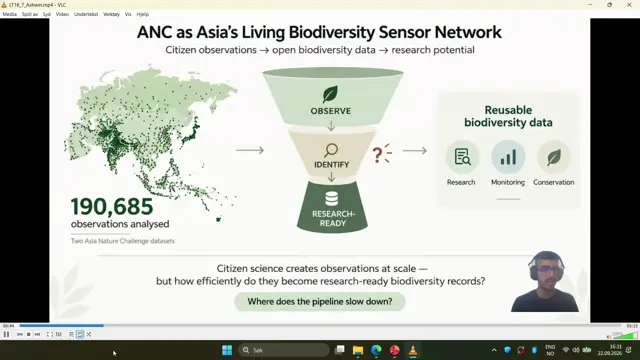
The Asian Nature Challenge as a Beacon of Citizen Science: Regional Contributions, Macroecological Data Networks, and Strategies for Optimizing Taxonomic Identification Efficiency in India
More observations do not mean more usable data; identification capacity is the bottleneck for India's citizen science.
Ashwin A ↗
The Swedish experience on verification and how to improve quality on observations
Human verification remains essential, and the community needs a standard to exchange verification status between systems.
Mora Aronsson ↗
Freshwater data platforms: acronym soup, abundance, classifications and data quality
The freshwater community prefers connected, specialised platforms feeding GBIF over one system, but must address abundance data, classification consistency and trust in data from diverse providers.
Koen Martens, Anne Lyche Solheim, Olaf Banki ↗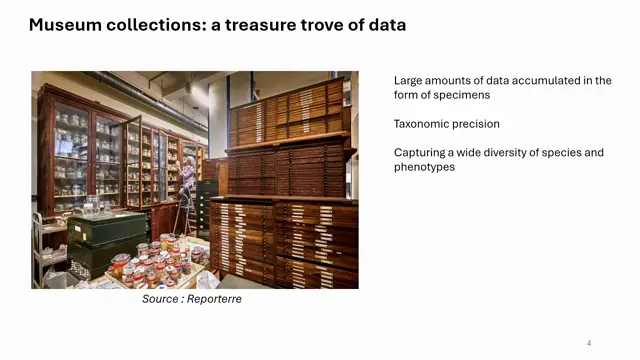
Beyond traditional identification keys: hybrid deep learning and Xper3 keys for insect identification
Deep-learning pre-filtering of an interactive key keeps the key's explainability while greatly shortening identification paths.
Agathe Puissant ↗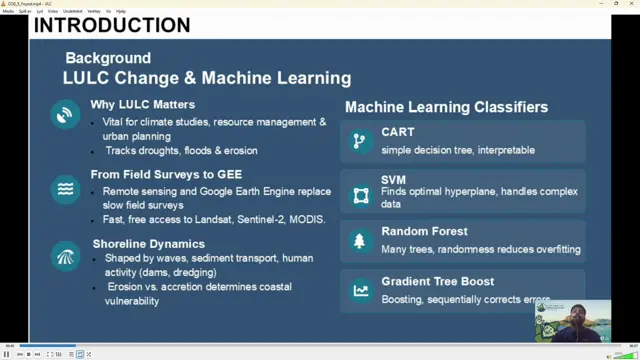
Evaluating Four Machine Learning Using Google Earth Engine for Analyzing LULC Dynamics of Sandwip Island, Bangladesh
Random Forest in Google Earth Engine gave the most accurate land cover classification of the highly dynamic Sandwip Island, revealing large increases in built-up area and mangroves alongside strong shoreline erosion and accretion.
Md Abrar Al Foysol ↗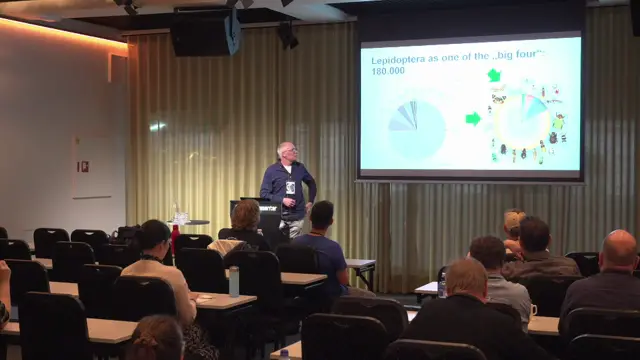
From Standardized Field Methods to AI-Ready Knowledge: The LEPMON Project with the LAUP Infrastructure Stack for Automated Moth Monitoring
LEPMON's LAUP portal shows an end-to-end infrastructure for camera-based moth monitoring that builds Camtrap DP into routine data management, making millions of observations downloadable and analysable.
Peter Grobe ↗
Structured identification keys complementing AI: closing the corpus bottleneck with AI-assisted digitisation
AI and identification keys are complementary, and LLM-assisted digitisation of printed literature now makes it feasible to build structured keys at scale for expert review.
Wouter Koch ↗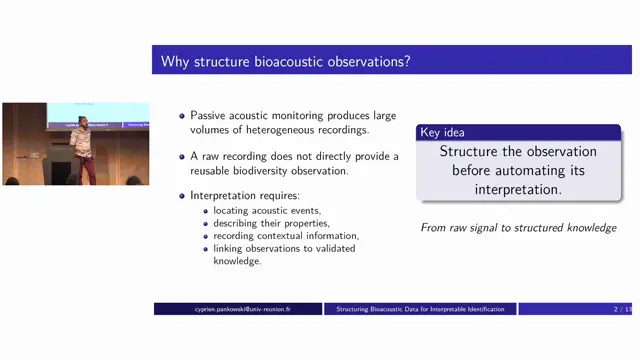
The Iterative Signal-Based System (ISBS): Structuring Bioacoustic Data for Interpretable Identification
Describing cetacean vocalisations with explicit descriptors and symbolic classification gives interpretable, taxonomy-like structure to bioacoustic data before large-scale AI.
Cyprien Pankowski ↗