
Explore the conversation.
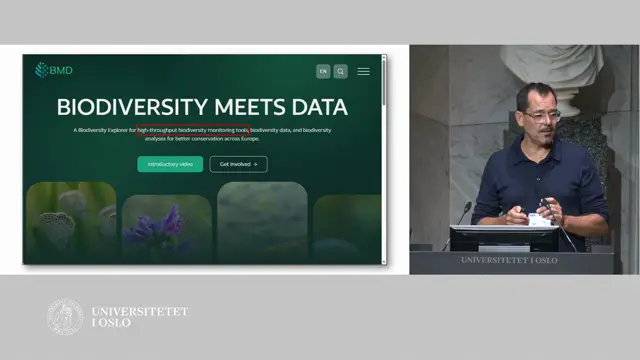
Mainstreaming high-throughput biodiversity monitoring using AI
AI identification platforms like ARISE can take sensor data automatically to GBIF-published, standardised data for protected-area managers, but training costs are high and human verification still matters.
Niels Raes ↗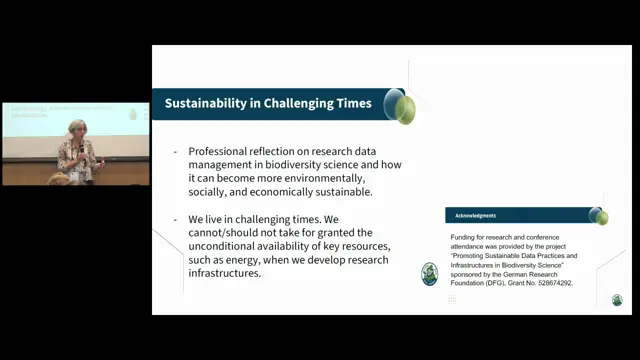
Adopting Environmental Sustainability as a Strategy to Build Resilient Data Infrastructures in Biodiversity Science
Building frugal, environmentally sustainable data infrastructures is a practical risk-management strategy for resilience.
Giuditta Parolini ↗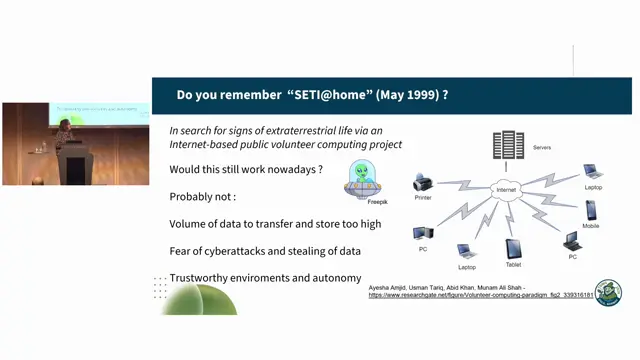
Responsible and GreenAI: Does our community need Gigantic Data Centers to deliver?
Biodiversity researchers mostly need AI-ready data rather than giant data centres, and AI use should be weighed against its environmental cost.
Patricia Mergen ↗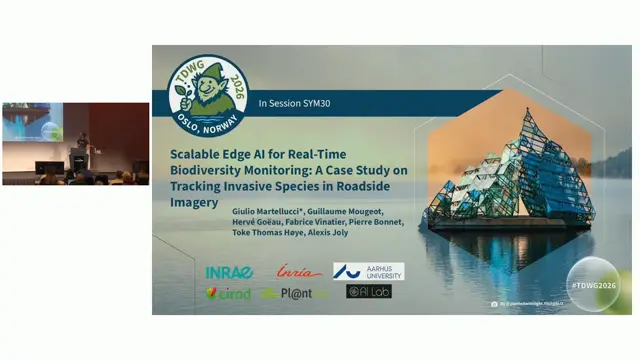
Scalable Edge AI for Real-Time Biodiversity Monitoring: tracking invasive plant species in roadside imagery
Distilling a tiling-based plant identifier into a single ConvNeXt model makes high-resolution roadside invasive-species monitoring fast, cheap and more accurate.
Giulio Martellucci ↗
Trapper 2.0: scalable, open-source platform for managing camera trapping projects with integrated AI pipelines
Trapper 2.0 offers an open, model-agnostic, edge-deployable pipeline for camera trap photos and videos with expert review and Camtrap DP export.
Karolina Kuczkowska ↗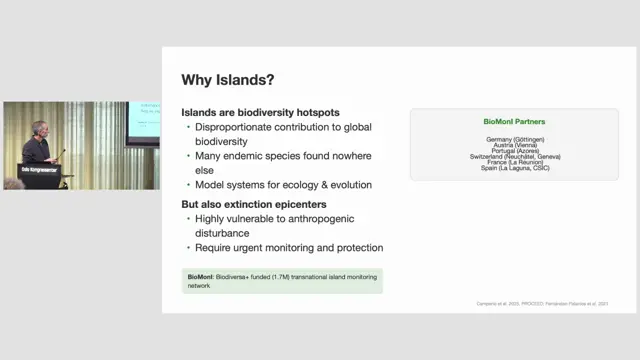
Literature triage to support Island Biodiversity Monitoring
Classifier-based literature triage matches human curators at a fraction of LLM cost and is worth investing in for recurring curation tasks.
Patrick Ruch ↗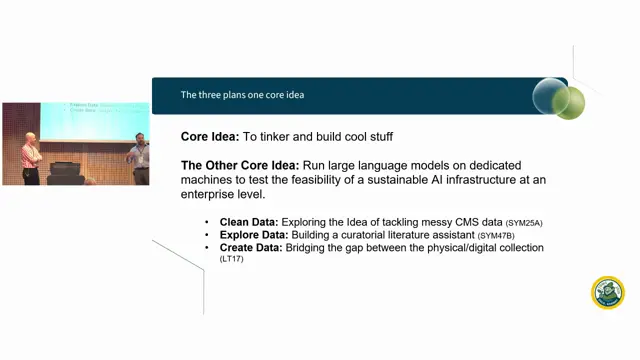
On-Device AI for Data Cleaning, Standardisation, and Exploration in Collections Management
Local LLM hardware can clean and enrich millions of legacy collection records at predictable cost, but validation of the outputs is the unsolved problem.
Jack Hollister, Unidentified co-presenter ↗