
Explore the conversation.
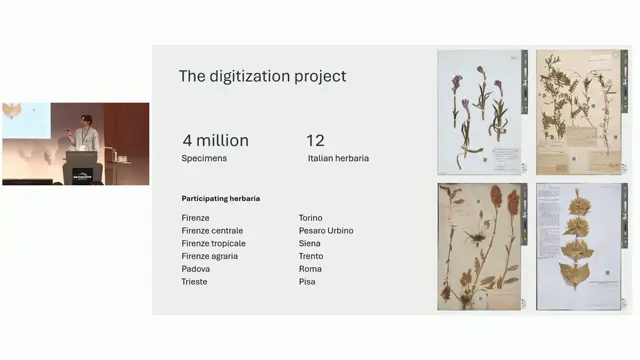
AI-assisted georeferencing a posteriori of herbarium specimens: a case study on Italian herbaria
Combining LLM parsing and LLM judging with gazetteers more than doubles correct georeferences for historical herbarium localities compared with Google Maps, even with a local model.
Matteo Conti ↗
Digitising heritage for science: the Medical Entomology Museum as a platform for entomological biodiversity research and vector-borne disease surveillance
Digitised historical mosquito vouchers become reusable evidence that gives context to current vector surveillance.
Eunice Jamesboy ↗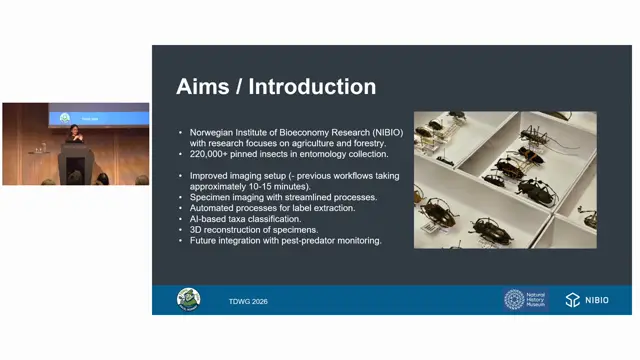
From Collection Drawers to AI - A One-Week Recipe
A useful AI-ready digitisation setup can be built in a week from recycled materials and borrowed cameras.
Arianna Salili-James ↗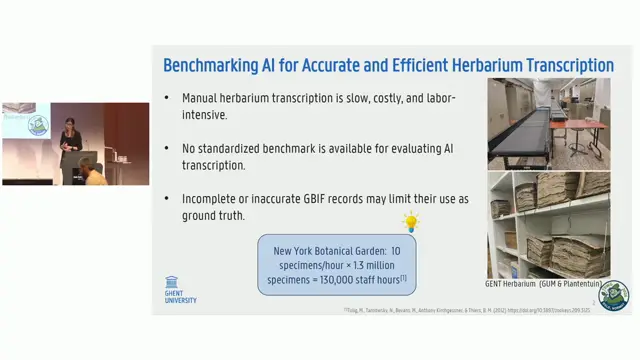
HerbAudit: Validating AI-Driven Herbarium Transcriptions
HerbAudit shows AI herbarium transcription reaching ~94% accuracy and provides a fair, field-aware way to benchmark it.
Dilara Ağacık ↗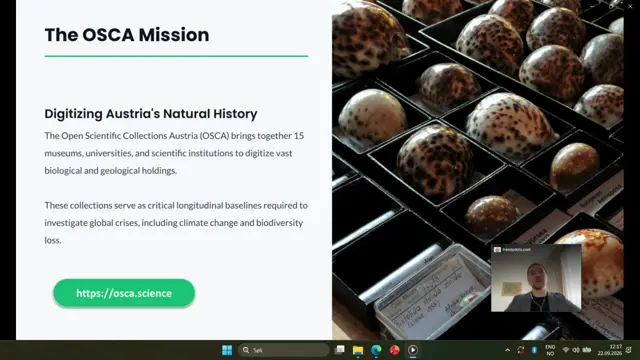
How Darwin Core enables harmonizing Biodiversity Data via the OSCA Consortium
A shared Darwin Core-based cloud pipeline lets 15 Austrian institutions of very different IT capacity publish harmonised specimen data.
Cristian-Dan Bara ↗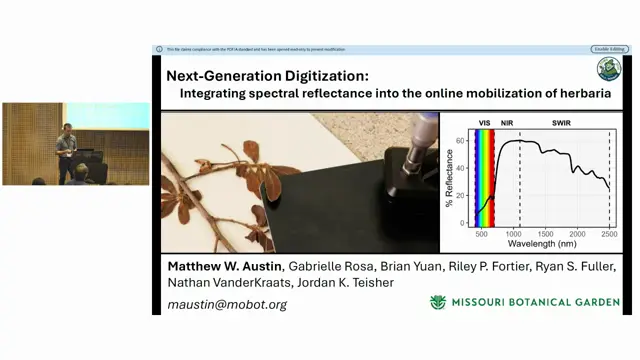
Next-generation digitization: integrating spectral reflectance into the online mobilization of herbaria
Spectral reflectance can be captured at scale during herbarium digitisation and supports accurate species identification from leaves alone.
Matthew Austin ↗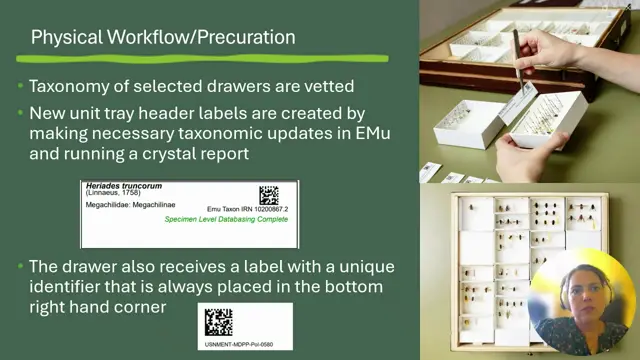
Pinned insect digitization conveyor: image and data transcription workflows
An industrial conveyor workflow with QR-encoded metadata and automated skeletal records makes mass digitisation of pinned insects feasible.
Jessica Bird, Sylvia Orli ↗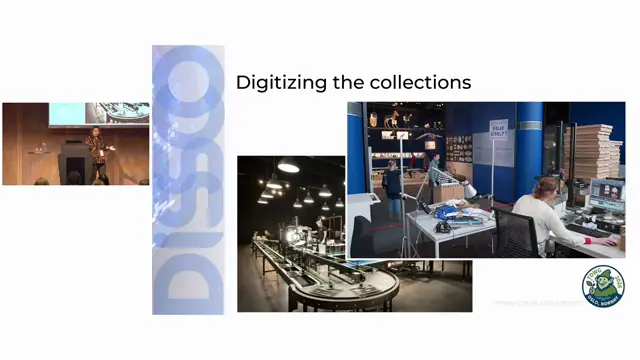
Robots Rapidly Writing Records: Machine Annotations at Scale with DiSSCo
DiSSCo can now run adapted machine annotation services over whole datasets, pointing to an image-to-verified-data digitisation pipeline.
Soulaine Theocharides ↗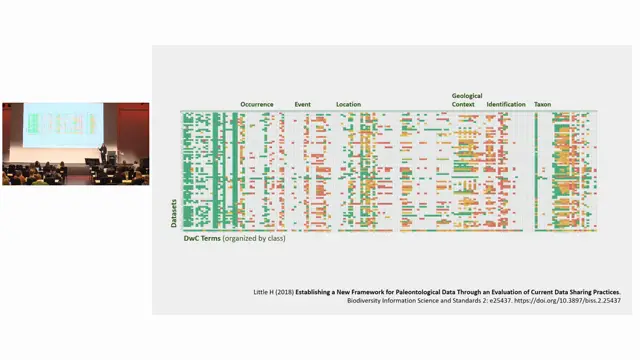
A framework for aligning collections data with the global data ecosystem from data creation to extension in the Smithsonian National Museum of Natural History Department of Paleobiology
Making paleo collections work in the global data ecosystem needs an iterative, full life-cycle framework, not one-off digitisation.
Holly Little ↗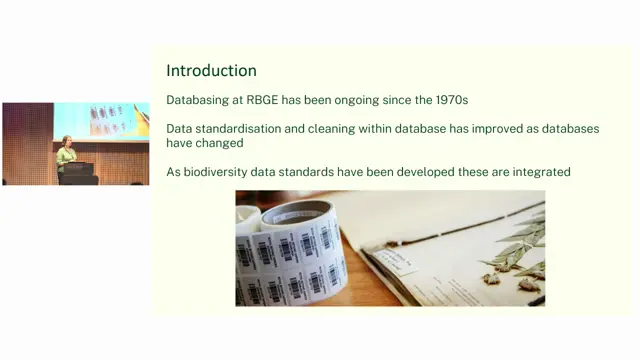
Applying Data Standards at the Royal Botanic Garden Edinburgh
Identifiers are how RBGE is standardising legacy herbarium data and reconnecting items spread across four separate collection management systems.
Robyn Drinkwater ↗
Digitising Plant and Fungal Collections at Royal Botanic Gardens, Kew: Applying International Standards to Support Data Sharing and Geospatial Analysis
WGSRPD enables cross-collection geospatial analysis at Kew, but historical, heterogeneous data leave half of records without fine-level assignment.
Udayangani Liu ↗
Drawers in the dark harboring data that could spark - finding the sweet spot in collection digitization and mobilizing metadata from museum's collections
Plan digitisation for the easy 95%, capture a minimal dataset, and decide when good enough beats perfection.
Nora Lentge-Maaß ↗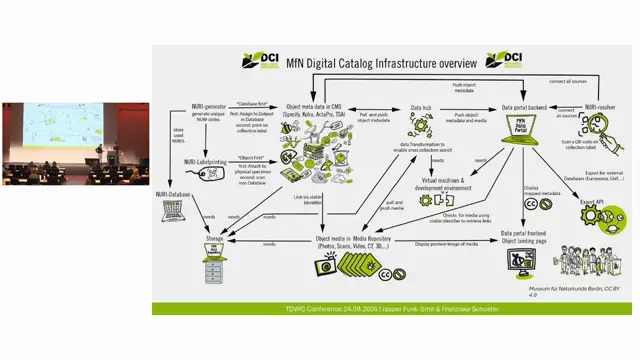
Everything is coded: How to prevent a game of telephone in a system full of interfaces
Shared understanding of what data means must be established at the start of a pipeline; standard formats alone won't stop meaning drifting between people.
Franziska Schuster, Jasper ↗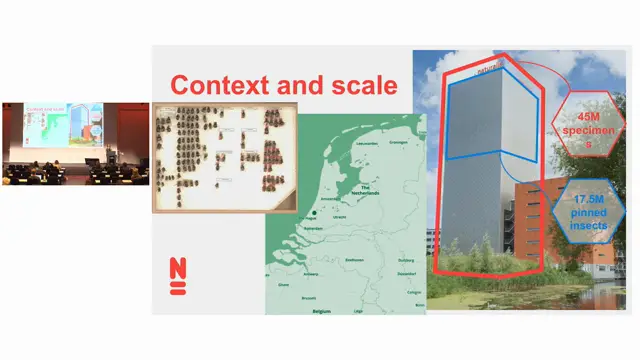
Managing high-volume specimen movements in the entomological collection of Naturalis with a new type of record
A 'lot' record linking taxa to storage units makes high-volume physical moves cheap to record and tells staff where each taxon is.
Myriam van Walsum ↗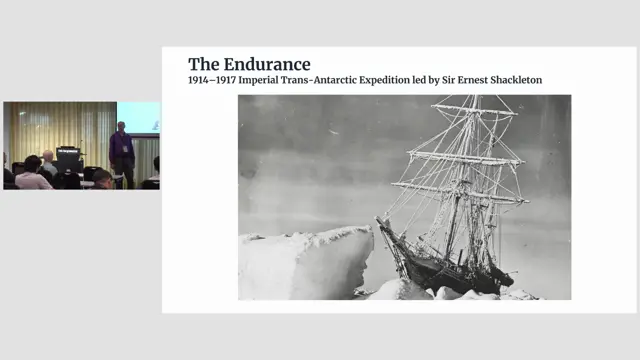
Unifying Natural Heritage for a Resilient Future
DiSSCo's ERIC model and FAIR digital specimen objects are intended to make Europe's specimen data resilient beyond short-term project funding.
Wouter Addink ↗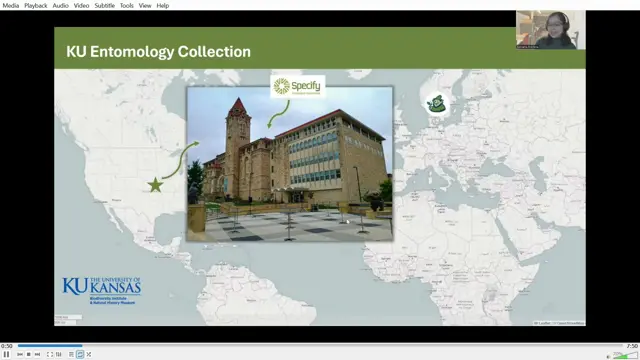
Updates on Data Mobilization in the KU Entomology Collection
Moving to Specify 7 with a nightly Darwin Core archive feed made KU Entomology's data and images continuously available to GBIF, Symbiota portals and students.
Samanta Orellana ↗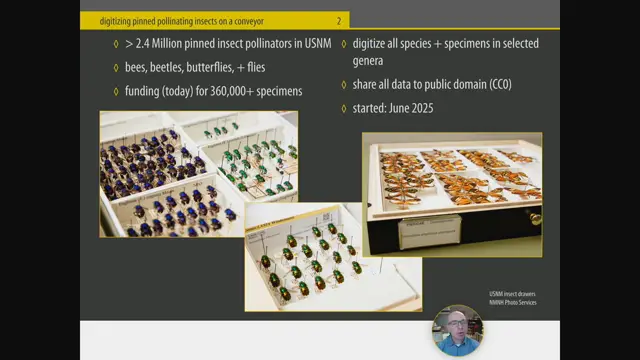
Automated data transcription and Darwin Core field itemization from insect specimen labels using machine learning
Labellum goes beyond label OCR to itemise insect-label text into Darwin Core fields, with high accuracy for most fields but problems with catalogue numbers.
Torsten Dikow ↗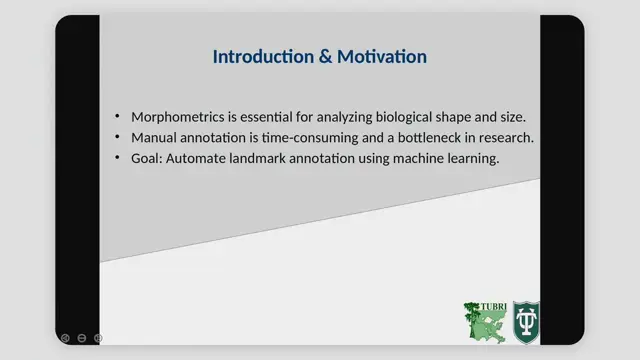
Automated Landmark Detection for Scalable Morphometric Data Extraction from Digitized Fish Collections
A lightweight dlib shape-regression model can automate most fish landmarking from museum images, but inner landmarks and variable specimen poses remain hard.
Bahadir Altintas ↗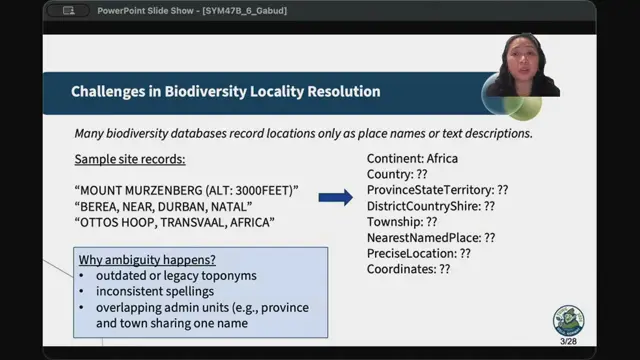
Enhancing Biodiversity Georeferencing Using Large Language Models and Knowledge Graphs
LLM preprocessing plus knowledge-base matching fills in locality hierarchies and proposes coordinates, with a review tool to keep humans in control.
Roselyn Gabud ↗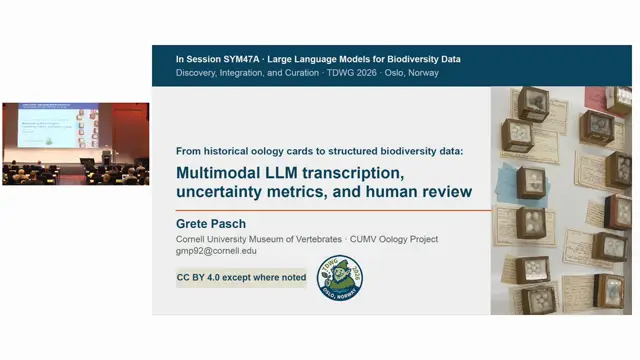
From Historical Oology Cards to Structured Biodiversity Data: Multimodal LLM Transcription, Uncertainty Metrics, and Human Review
Token-level hesitation from log-probabilities does not tell you which transcriptions are wrong, but it reliably predicts where human review effort will go.
Grete Pasch ↗
SCRIBE: Structured Collection Record Interpretation and Bio-entity Extraction
SCRIBE aims to replace many collection-specific extraction workflows with one LLM and computer-vision platform that turns any uploaded record images into structured data.
Arianna Salili-James ↗