
Explore the conversation.
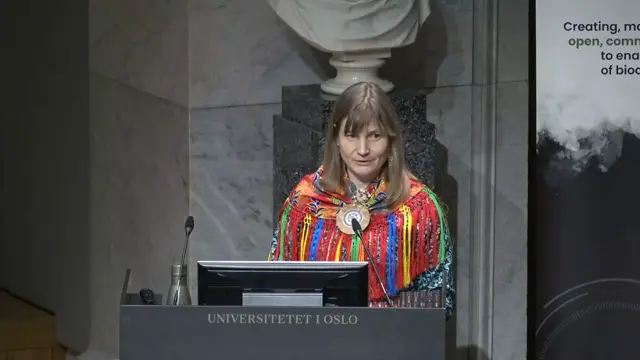
Sámi perspectives on biodiversity data governance: when biodiversity data travel, does their governance travel with them?
Biodiversity data about lands, ecosystems and species can be Indigenous data, so infrastructures must ask whether context, authority and responsibilities travel with the data as FAIR makes them easier to reuse.
Máret J. Heatta ↗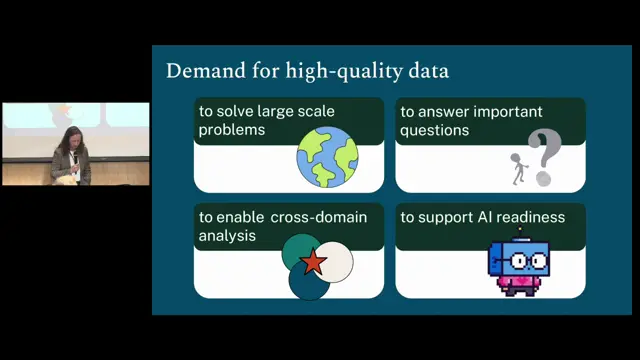
Supporting resilient data infrastructure in a changing environment
Technical copies are not enough: durable data infrastructure depends on preserved human expertise, messy maintenance work and data standardized close to collection.
Rachael Blake ↗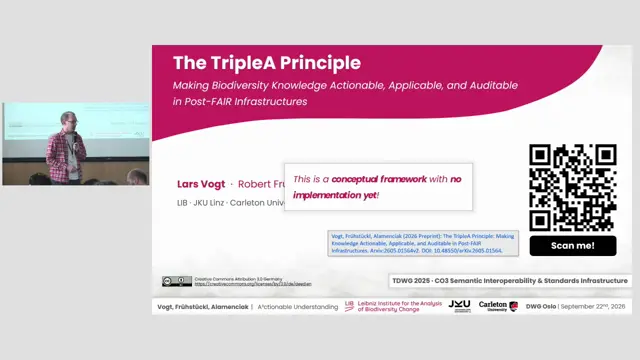
The Triple A Principle: actionability, applicability and auditability for actionable biodiversity knowledge
Actionable biodiversity knowledge needs procedural content with explicit applicability conditions and evidence, not just FAIR metadata.
Lars Vogt ↗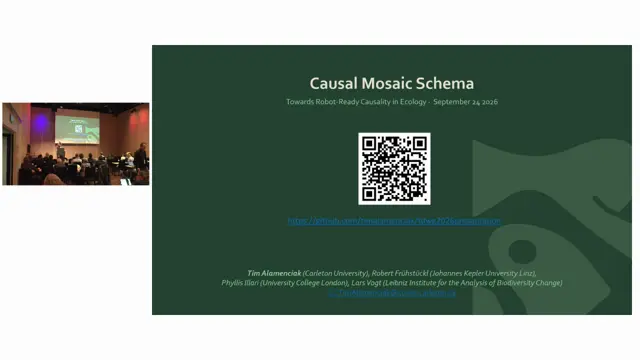
Causal Mosaic Schema: Encoding Causal Claims in Ecological Literature as Machine-Actionable Knowledge Graphs
Encoding how and how strongly the literature claims causation, not just what causes what, can link siloed ecological knowledge into decision-support tools for practitioners.
Tim Alamenciak ↗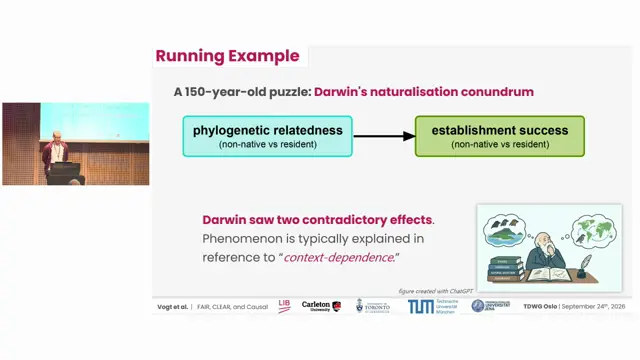
FAIR, CLEAR, and Causal: A semantic framework for ecological knowledge synthesis
Semantic Units can turn ecological causal claims into addressable, versioned graph objects to which evidence and failures can be pinned, helping ecology accumulate rather than merely accrue causal knowledge.
Lars Vogt ↗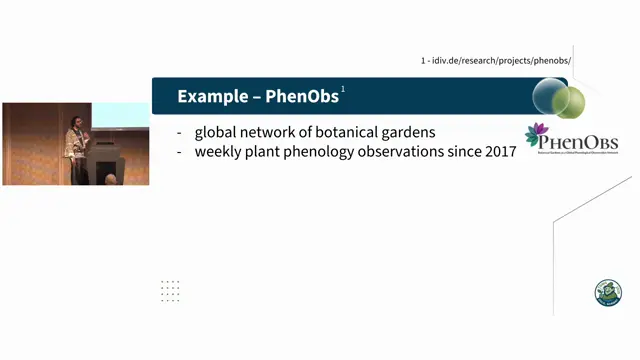
Prototype: The Semantic Units Framework and Rosetta Statements for Knowledge Graph Construction Workflows
Rosetta-statement templates compiled into RML and SHACL make semantic-unit knowledge graphs much easier to author, at the cost of larger graphs.
Tarek Al Mustafa ↗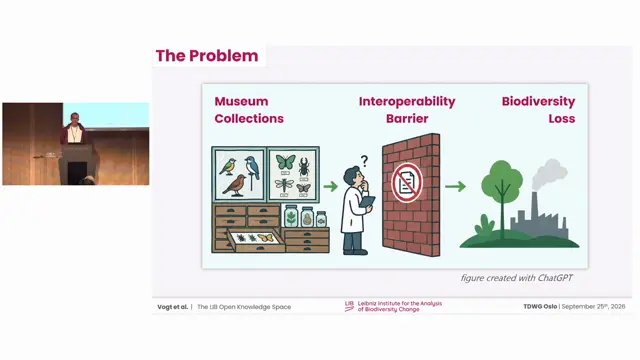
The LIB Open Knowledge Space: A semantic architecture for FAIR, CLEAR, and AI-ready biodiversity knowledge
Knowledge can enter the LIB Open Knowledge Space as natural language immediately and be formalised step by step, so content becomes FAIR, CLEAR and AI-ready incrementally.
Lars Vogt ↗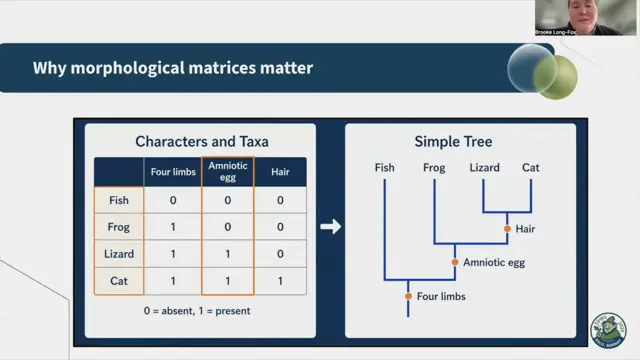
Validating LLM-Extracted Biodiversity Data to Preserve Scientific Meaning
LLM extraction speeds up morphological matrix curation enormously, but errors, including fabrications, appear in almost every output, so expert validation is essential.
Brooke Long-Fox ↗