
Explore the conversation.
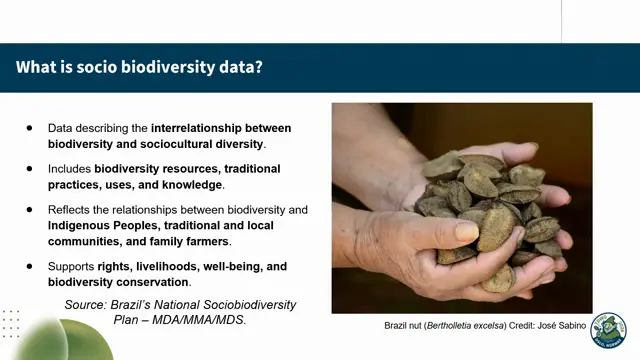
Extending Darwin Core to Represent Sociobiodiversity and Traditional Knowledge
Representing traditional knowledge in biodiversity standards needs new terms, knowledge-centred (not species-centred) models, and careful governance of who holds and publishes the data.
Clara Baringo Fonseca ↗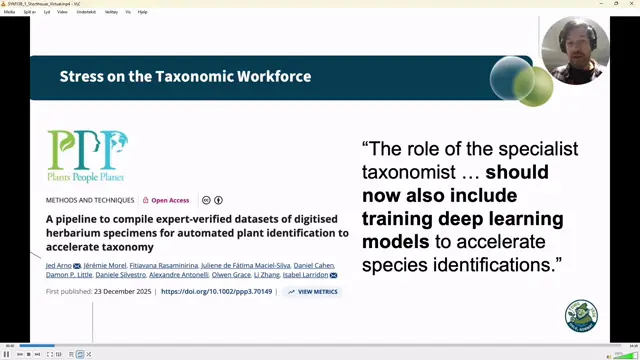
Open Digital Curation and Round-Tripping Biodiversity Data Enhancements Across Collection Infrastructures: Six Years and 50 Million Links in Bionomia
Round-tripping is much harder than expected, and data managers must fully populate identifiedBy so taxonomists' expertise is credited.
David Shorthouse ↗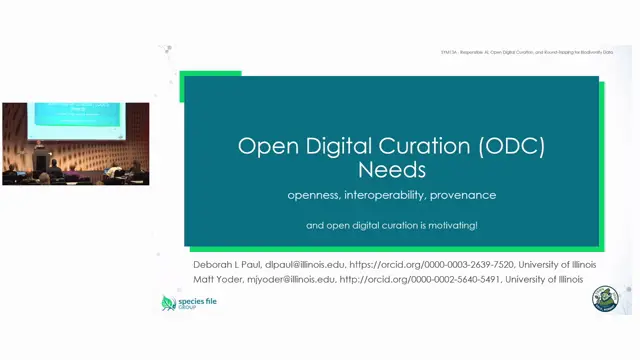
Open Digital Curation Needs: openness, interoperability, provenance
Open digital curation increases transparency, agency and trust and reduces latency, but needs new provenance practices for AI.
Deborah Paul ↗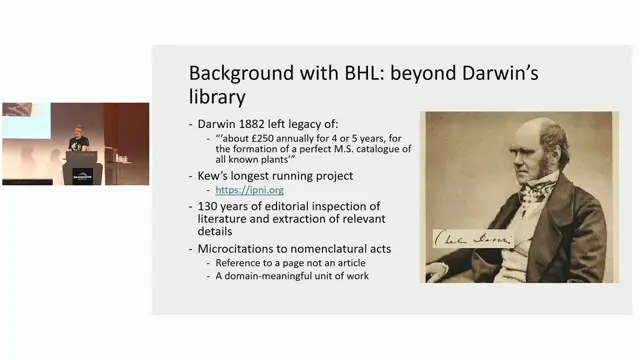
Possibilities to enhance the semantic navigation of BHL: further developing the 'unit of work'
Letting user communities carve BHL into branded, pre-filtered 'hosted portals' could serve diverse needs, satisfy funders and drive innovation.
Nicky Nicolson ↗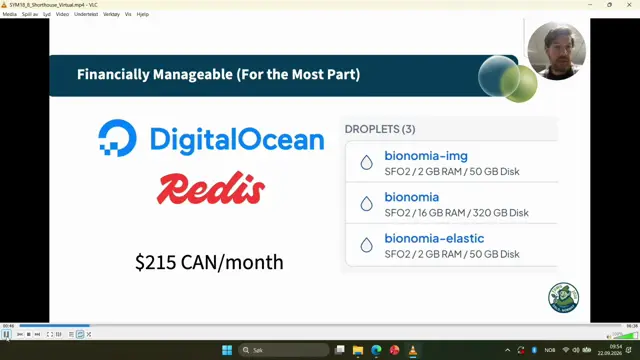
Resilient Attribution Infrastructures for Biodiversity Science: Archiving and Risk Mitigation in Bionomia
Small niche infrastructures can be resilient by planning for their own end: keep things simple and push versioned data and reusable code outward.
David Shorthouse ↗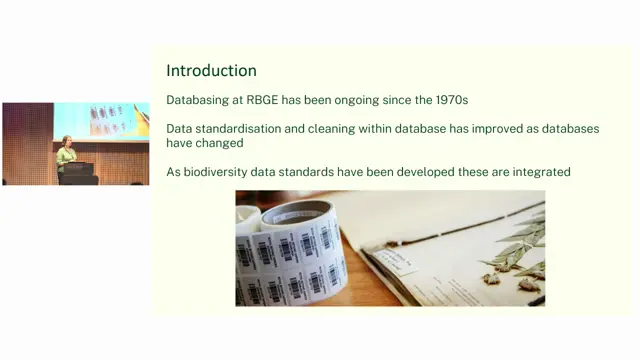
Applying Data Standards at the Royal Botanic Garden Edinburgh
Identifiers are how RBGE is standardising legacy herbarium data and reconnecting items spread across four separate collection management systems.
Robyn Drinkwater ↗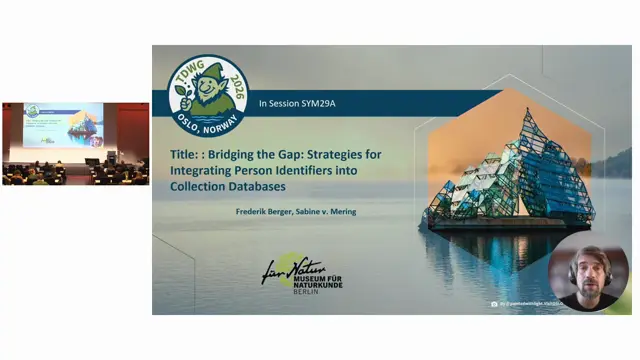
Bridging the Gap: Strategies for Integrating Person Identifiers into Collection Databases
Wikidata's community-built person data can be used to pre-structure candidate matches, but expert judgement and institutional priorities remain essential for identifying collectors.
Frederik Berger ↗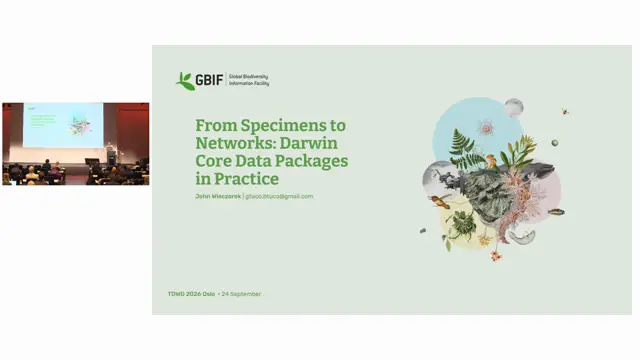
From Specimens to Networks: Darwin Core Data Packages in Practice
The Darwin Core conceptual model and Data Package give material entities a rich, relational context that flat Darwin Core Archives could not express.
John Wieczorek ↗
Panel discussion: From Mobilizing Data to AI-Ready Knowledge
AI-readiness is purpose-dependent, and the hardest remaining problems are social: trust, attribution, governance and data sovereignty, where ontologies and knowledge graphs offer some control and explainability.
Hilmar Lapp, Robert Guralnick, Tanya Berger-Wolf ↗
SYM29A panel discussion: working with collection managers, documentation and institutional strategy
Bridging cabinets and clouds depends on people: engaging collection managers, making data work visible, institutional strategy and durable documentation.
Caitlin Thorn, Jacobus Christiaan Steenkamp, Cailin Meyer ↗
Approaches to the Automated Tracking of Taxonomic Research Activities
TETTRIX aims to build a machine-run, regularly updated picture of who is doing taxonomy on what and where, and is asking the community which sources it is missing.
David Fichtmueller ↗
Bionomia, Scholia, Wikidata and Zenodo: broadcasting biodiversity data contributions
Linking people, specimens, publications, datasets and collections through Wikidata and associated tools (Bionomia, Scholia, Expeditia, Zenodo) makes biodiversity contributions findable and creditable.
Siobhan Leachman ↗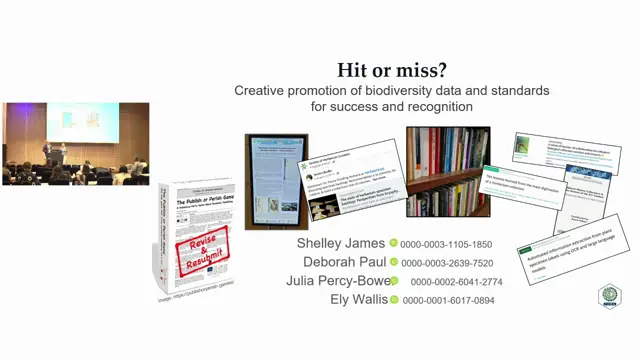
Hit or miss? Creative promotion of biodiversity data and standards for success and recognition
The community should broaden what it counts and publishes as outputs, and deliberately reach new audiences with creative, citable formats.
Shelley James, Deborah Paul ↗