
Explore the conversation.
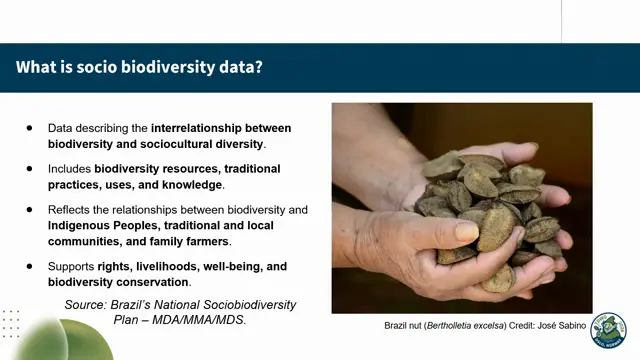
Extending Darwin Core to Represent Sociobiodiversity and Traditional Knowledge
Representing traditional knowledge in biodiversity standards needs new terms, knowledge-centred (not species-centred) models, and careful governance of who holds and publishes the data.
Clara Baringo Fonseca ↗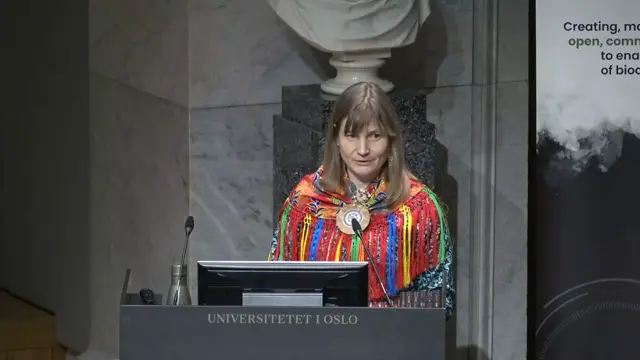
Sámi perspectives on biodiversity data governance: when biodiversity data travel, does their governance travel with them?
Biodiversity data about lands, ecosystems and species can be Indigenous data, so infrastructures must ask whether context, authority and responsibilities travel with the data as FAIR makes them easier to reuse.
Máret J. Heatta ↗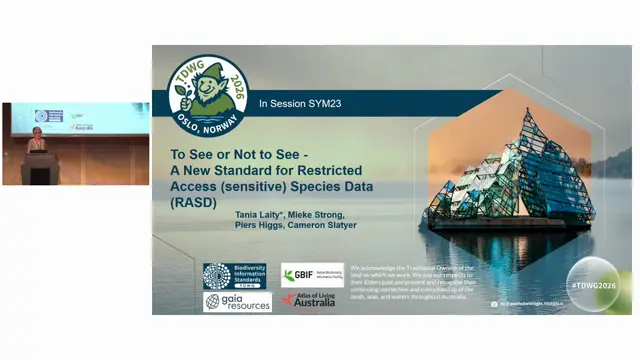
A new standard for restricted access (sensitive) species data
A proposed Darwin Core extension would record why data were restricted and what treatment was applied, in a one-to-many way similar to MeasurementOrFact.
Tania Laity ↗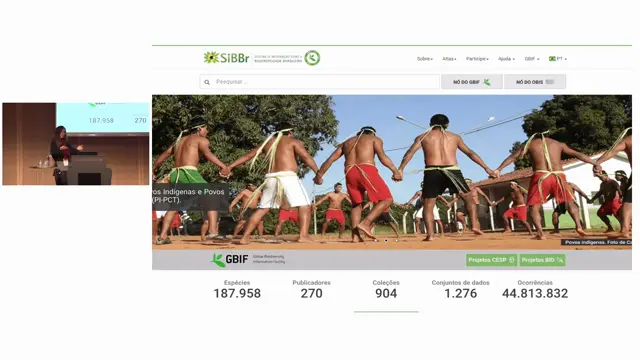
Toward RASD Implementation in Brazil: Integrating Conservation, Open Data, and Traditional Knowledge Safeguards
Protecting traditional knowledge requires community-controlled, attribute-level and semi-restricted access, not just hiding species locations.
Clara Baringo Fonseca ↗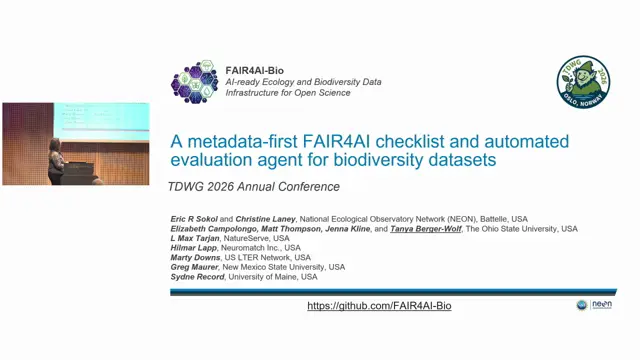
A metadata-first FAIR4AI checklist and automated evaluation agent for biodiversity datasets
FAIR4AI is mainly a metadata gap, and a community checklist plus an automated agent can measure and help close it while tracking provenance and governance back to data sources.
Tanya Berger-Wolf ↗
Discussion: designing institutional biodiversity knowledge and data science centres
Interoperable institutional knowledge spaces depend less on technology than on people, shared storage and semantics, incentives and governance.
Unidentified session chair, Lars Vogt, Tarek Al Mustafa ↗