
Explore the conversation.

Keeping Colliders in Physics: Rebuilding the ALA taxonomic backbone
Taxonomic checklists are not backbones: data aggregators need a curated single hierarchy with quality-control feedback loops, not automated merging of checklists.
Cameron Slatyer ↗
Closing Gaps in Specimen Metadata: A Collaborative Annotation and Feedback Platform for Natural History Collections
A national collaborative annotation platform with AI-assisted transcription can close metadata gaps across many Taiwanese collections.
Szu-Hsien Lee ↗
Closing the Loop: The DiSSCo Annotation Validation Framework for Trustworthy Data Round-Tripping
DiSSCo proposes impact-based, layered validation so trusted annotations are promoted automatically and only high-impact ones need expert review.
Wouter Addink ↗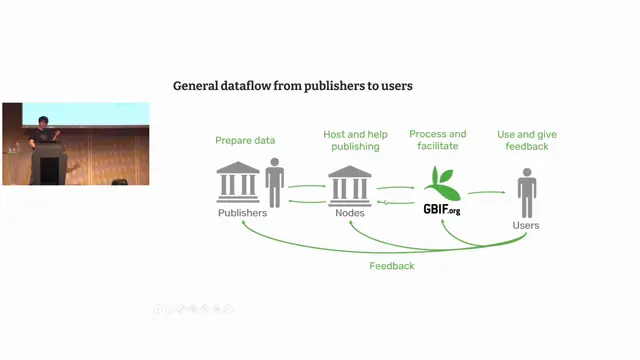
Digital curation across the biodiversity data lifecycle, at the node level (SiB Colombia), aggregator level (GBIF) and how to incorporate user feedback
Curation feedback works at every stage of the data lifecycle, and about a third or more of reported issues do get fixed; AI is used cautiously to summarise feedback.
Esteban Marentes Herrera ↗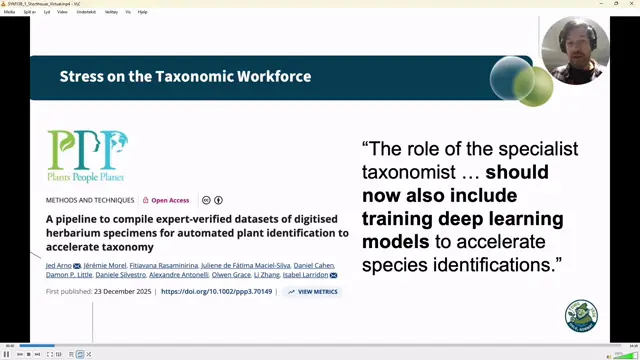
Open Digital Curation and Round-Tripping Biodiversity Data Enhancements Across Collection Infrastructures: Six Years and 50 Million Links in Bionomia
Round-tripping is much harder than expected, and data managers must fully populate identifiedBy so taxonomists' expertise is credited.
David Shorthouse ↗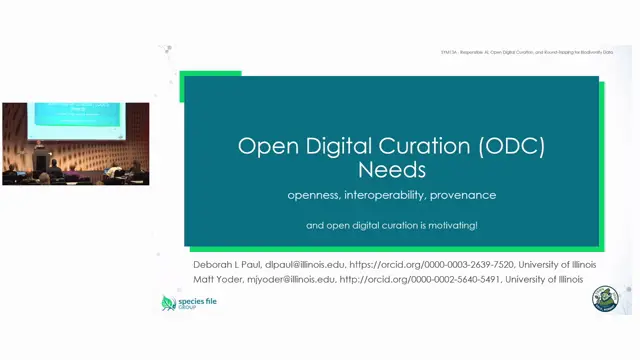
Open Digital Curation Needs: openness, interoperability, provenance
Open digital curation increases transparency, agency and trust and reduces latency, but needs new provenance practices for AI.
Deborah Paul ↗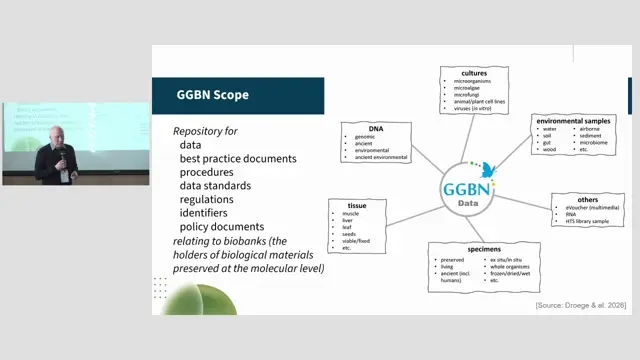
Rebuilding core functionalities of the GGBN system: taxonomic alignment with international research infrastructures
GGBN is rebuilding transparent automated name parsing and matching on GBIF parsing and ChecklistBank/Catalogue of Life XR to improve sample discovery.
Walter Berendsohn ↗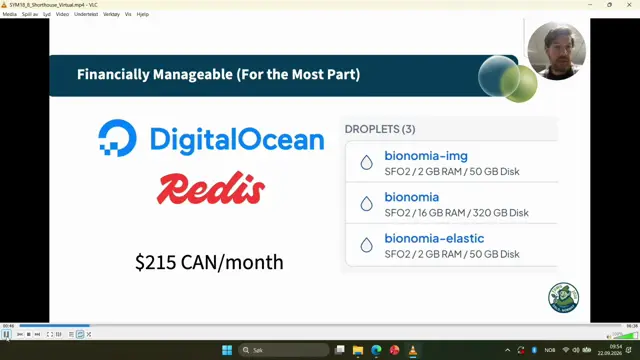
Resilient Attribution Infrastructures for Biodiversity Science: Archiving and Risk Mitigation in Bionomia
Small niche infrastructures can be resilient by planning for their own end: keep things simple and push versioned data and reusable code outward.
David Shorthouse ↗
SYM18 discussion: who sustains biodiversity data infrastructures?
Volunteer and single-developer infrastructures deliver proven value, but the community lacks mechanisms and funding to protect them.
Eva Alonso, Giuditta Parolini, Mareike Petersen ↗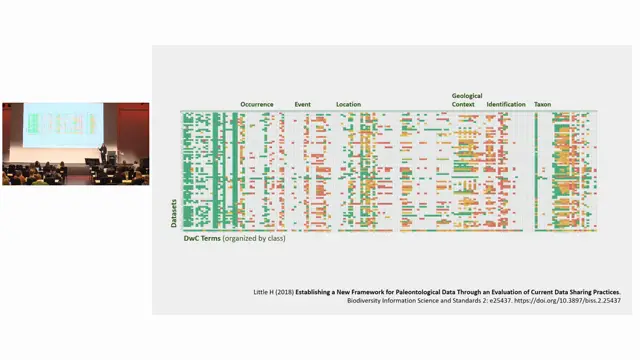
A framework for aligning collections data with the global data ecosystem from data creation to extension in the Smithsonian National Museum of Natural History Department of Paleobiology
Making paleo collections work in the global data ecosystem needs an iterative, full life-cycle framework, not one-off digitisation.
Holly Little ↗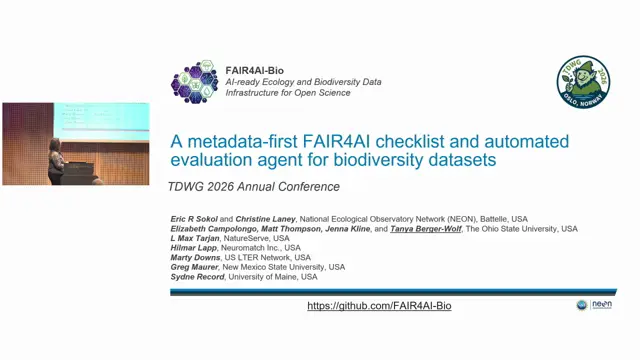
A metadata-first FAIR4AI checklist and automated evaluation agent for biodiversity datasets
FAIR4AI is mainly a metadata gap, and a community checklist plus an automated agent can measure and help close it while tracking provenance and governance back to data sources.
Tanya Berger-Wolf ↗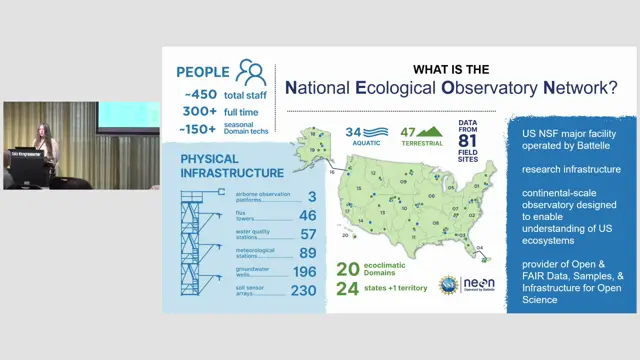
NEON, Community Standards, and the Hyper-Extended Specimen
NEON was built for interoperability from the start, but sustaining standards, crosswalks and value-added links needs community-level solutions.
Chandra Earl ↗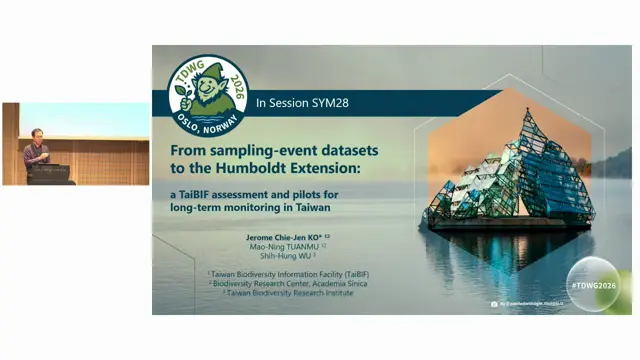
From sampling-event datasets to the Humboldt Extension: a TaiBIF assessment and pilots for long-term monitoring in Taiwan
Giving monitoring-data providers immediate site-level trend feedback, based on a minimal set of Humboldt terms, can motivate adoption better than asking for the full extension.
Jerome Chie-Jen Ko ↗