
Explore the conversation.
Address from the TDWG Chair: highlights of the year and TDWG at a crossroads
TDWG has had a productive year, but a growing, more diverse community and the rise of AI put it at a crossroads that needs more volunteers, better documentation and more sustainable maintenance and funding.
David Bloom ↗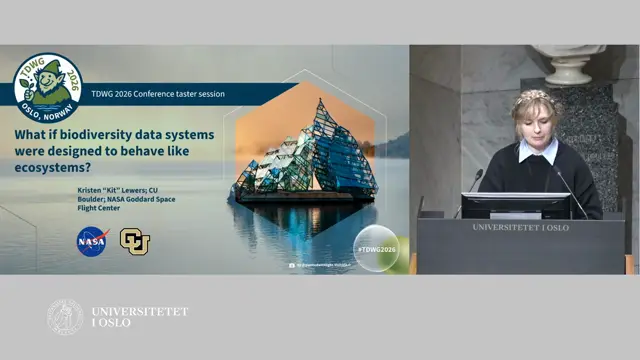
What if biodiversity data systems were designed to behave like ecosystems?
Biodiversity information systems should be designed like ecosystems: loosely coupled, event-driven components linked by shared standards, able to reorganise as conditions change.
Kit Lewers ↗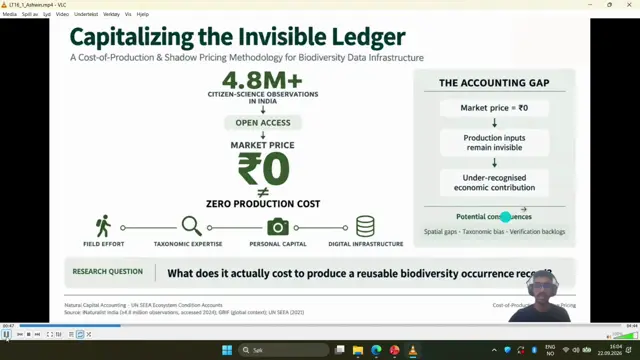
Capitalizing the Invisible Ledger: A Cost-of-Production and Shadow Pricing Methodology for Valuing Open-Source Biodiversity Assets in India
Open access removes the price of biodiversity data, not its production cost; citizen science is under-recognised national data infrastructure.
Ashwin A ↗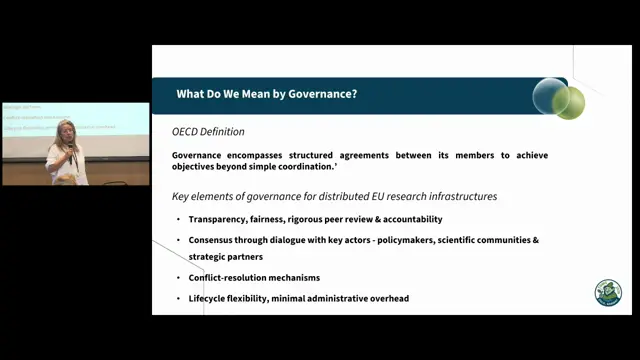
Governance as a Foundation for Resilient Biodiversity Data Infrastructures: Lessons from DiSSCo
Inclusive, funder-connected governance designed into a research infrastructure from day one is a core ingredient of its resilience.
Eva Alonso ↗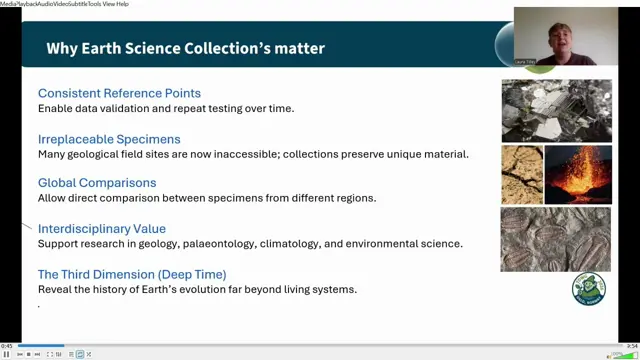
Improving access to Earth science collections data via GeoCASe and the European Open Science Cloud (GeoDARA)
Linking specimen-rich GeoCASe records to dataset-level DCAT descriptions could let deep-time collection data feed modern environmental observation infrastructures.
Laura Tilley ↗
Introduction: Reimagining BHL
BHL at 20 has a new independent foundation but an unsecured future, and the symposium seeks ideas to shape what comes next.
Nicole Kearney ↗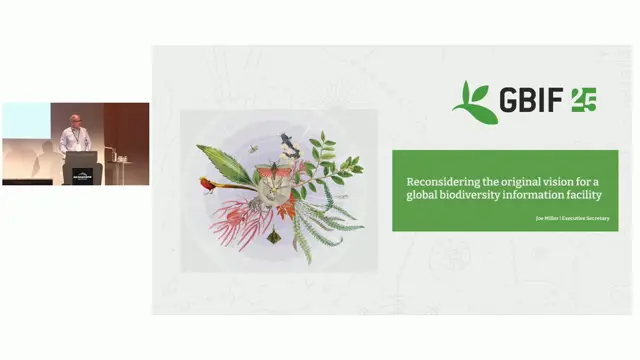
Reconsidering the original vision for a global biodiversity information facility
GBIF achieved its 1999 vision only partially and through a network of collaborating infrastructures; the community must decide whether that is enough and articulate the next vision.
Joe Miller ↗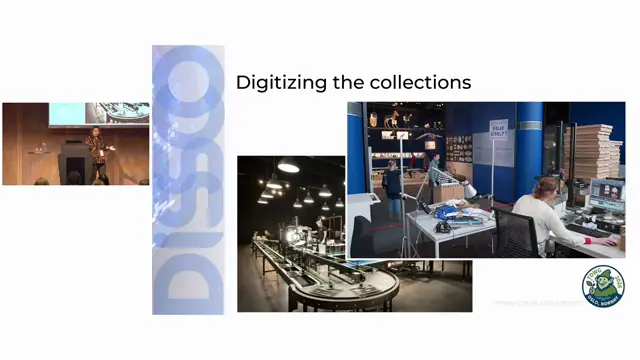
Robots Rapidly Writing Records: Machine Annotations at Scale with DiSSCo
DiSSCo can now run adapted machine annotation services over whole datasets, pointing to an image-to-verified-data digitisation pipeline.
Soulaine Theocharides ↗
SYM08A closing discussion: sustaining and connecting the BHL ecosystem
Focusing on core functions made GBIF and BHL successful; sustaining the connected ecosystem now requires clear value statements and machine interfaces such as MCP servers.
Nicole Kearney ↗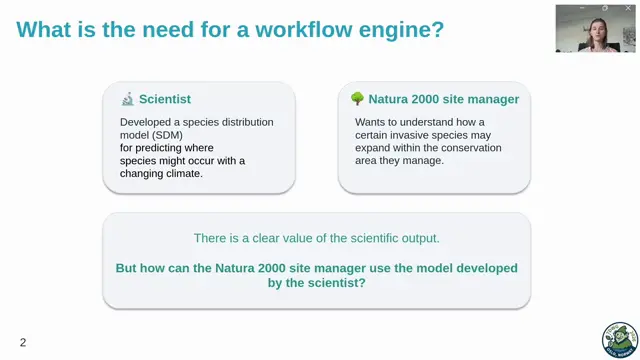
BMD workflow engine: FAIR workflows, RO-Crate and FAIR Signposting for a European biodiversity data space
Packaging containerised workflows and their runs as RO-Crates with FAIR Signposting lets non-technical users run models remotely and get machine-actionable, citable results.
Lena Perzlmaier ↗
Freshwater data platforms: acronym soup, abundance, classifications and data quality
The freshwater community prefers connected, specialised platforms feeding GBIF over one system, but must address abundance data, classification consistency and trust in data from diverse providers.
Koen Martens, Anne Lyche Solheim, Olaf Banki ↗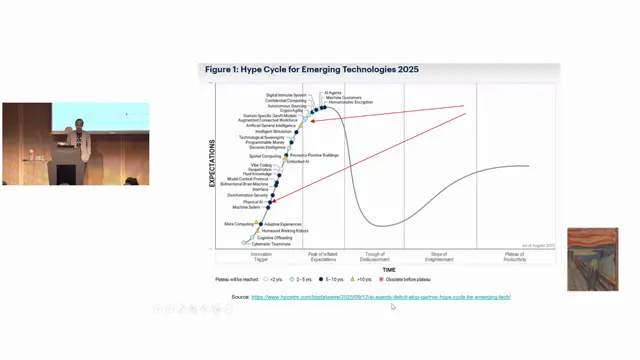
From Buzzwords to Blueprints: What It Really Takes to Operationalise Biodiversity Digital Twins
Use buzzwords to get funded, then break them down into concrete blueprints: metadata, catalogues, governance and stewardship in the middle layer.
Sharif Islam ↗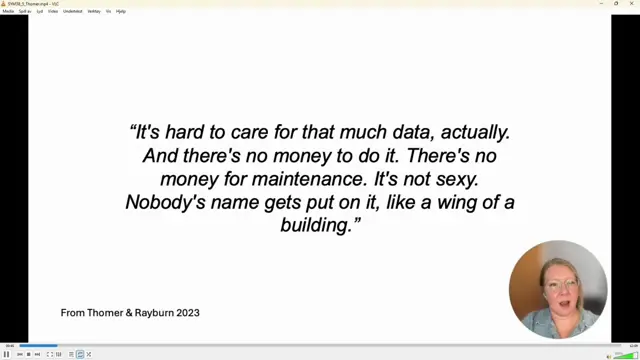
From preservation to perseverance: bridging disciplines for data resilience
Data resilience in a crisis is about prioritisation and mutual aid rather than perfection, and infrastructures need to be kept appropriately visible to be funded.
Andrea Thomer ↗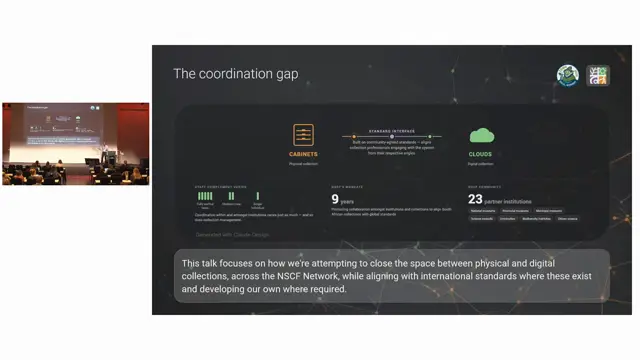
From Silos to Standards - Advancing Standardised Collection State Documentation for Institutional Continuity and Coordination
Standardising how collection state (readiness, risk, conditions) is recorded turns tacit curatorial knowledge into shared, comparable institutional memory.
Jacobus Christiaan Steenkamp ↗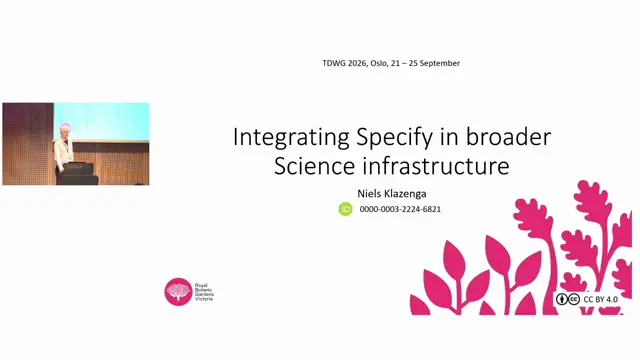
Integrating Specify in broader Science infrastructure
Specify works best at RBG Victoria as one component of a wider hub-based science infrastructure, with custom tools filling its gaps.
Niels Klazenga ↗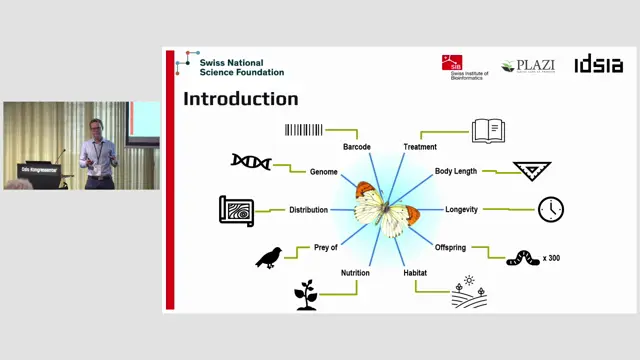
Species trait literature mining to support integrative biodiversity distribution modelling
Demonstrating research use cases like trait-informed distribution modelling is key to persuading funders to support literature mobilisation infrastructure.
Robert Waterhouse ↗
Unifying Natural Heritage for a Resilient Future
DiSSCo's ERIC model and FAIR digital specimen objects are intended to make Europe's specimen data resilient beyond short-term project funding.
Wouter Addink ↗
Discussion: designing institutional biodiversity knowledge and data science centres
Interoperable institutional knowledge spaces depend less on technology than on people, shared storage and semantics, incentives and governance.
Unidentified session chair, Lars Vogt, Tarek Al Mustafa ↗
From Standardized Field Methods to AI-Ready Knowledge: The LEPMON Project with the LAUP Infrastructure Stack for Automated Moth Monitoring
LEPMON's LAUP portal shows an end-to-end infrastructure for camera-based moth monitoring that builds Camtrap DP into routine data management, making millions of observations downloadable and analysable.
Peter Grobe ↗
SCRIBE: Structured Collection Record Interpretation and Bio-entity Extraction
SCRIBE aims to replace many collection-specific extraction workflows with one LLM and computer-vision platform that turns any uploaded record images into structured data.
Arianna Salili-James ↗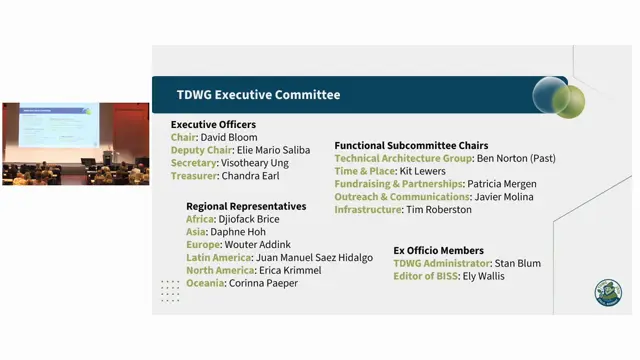
TDWG Business Meeting: elections, subcommittee and working group reports, and TDWG 2027 announcement
TDWG is recruiting for key elected roles and subcommittees while reporting a busy standards year and announcing a large joint 2027 meeting in Montreal.
David Bloom, Ben Norton, Kit Lewers ↗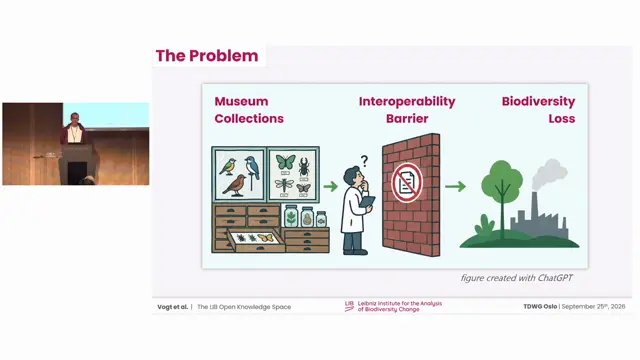
The LIB Open Knowledge Space: A semantic architecture for FAIR, CLEAR, and AI-ready biodiversity knowledge
Knowledge can enter the LIB Open Knowledge Space as natural language immediately and be formalised step by step, so content becomes FAIR, CLEAR and AI-ready incrementally.
Lars Vogt ↗