
Explore the conversation.
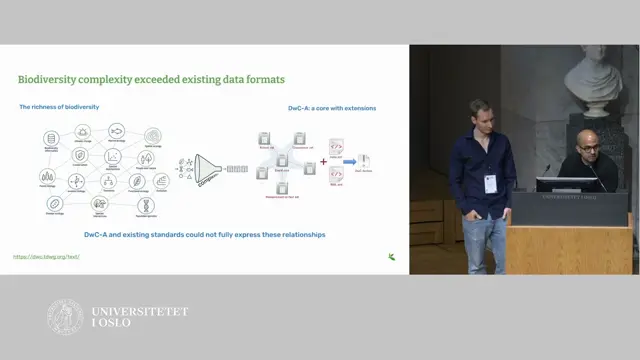
DwC-DP Integration at GBIF
GBIF is close to supporting Darwin Core Data Packages end to end, with typed and stricter validation, while keeping Darwin Core Archives fully supported.
Federico Mendez, Mikhail Podolskiy ↗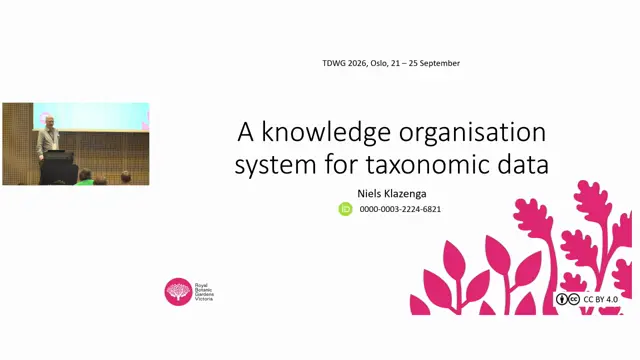
A knowledge organisation system for taxonomic data
Separating taxon data into layers with immutable taxon concepts at the centre gives a practical path to implementing TCS and fixing checklist quality problems.
Niels Klazenga ↗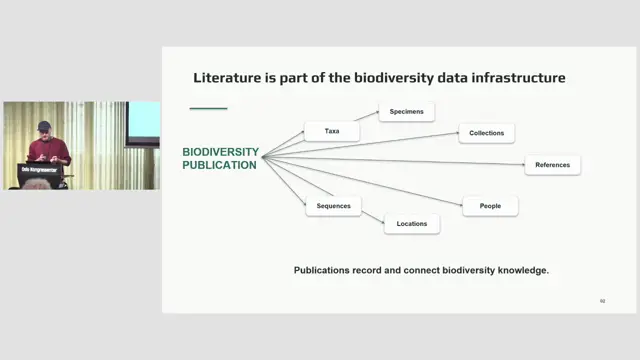
Biodiversity literature as FAIR and AI-ready data by design (and how to get there)
Don't just liberate biodiversity literature, publish it liberated.
Chris Le Coquet ↗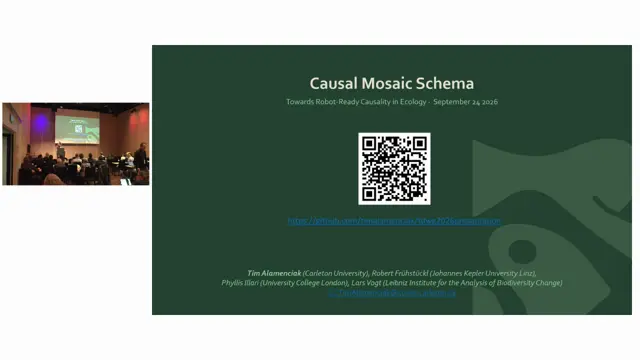
Causal Mosaic Schema: Encoding Causal Claims in Ecological Literature as Machine-Actionable Knowledge Graphs
Encoding how and how strongly the literature claims causation, not just what causes what, can link siloed ecological knowledge into decision-support tools for practitioners.
Tim Alamenciak ↗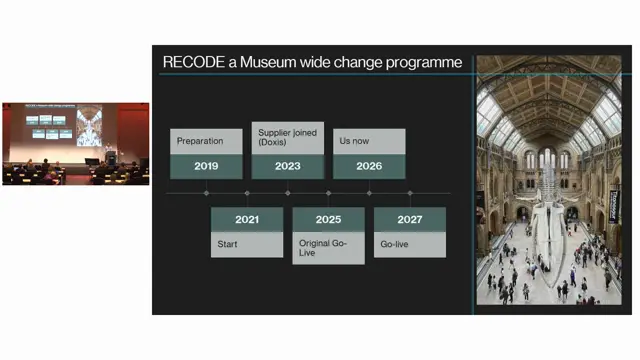
Old habits and new visions: Exploring the RECODE data model, future integration and data enhancement
Normalising decades of flat CMS data into relational entities and workflow-driven processes gives NHM a foundation for integrations and AI, but it needs institutional governance.
Steen Dupont ↗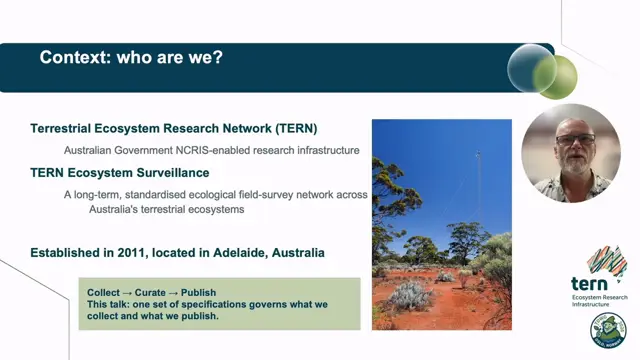
Robot-ready by construction: an ontology-driven, SHACL-validated submission pipeline for national ecological monitoring data
Driving both field data capture and RDF export from one semantically annotated specification makes monitoring data standards-compliant and machine-ready from the start.
Andrew Tokmakoff ↗
The BMD Cubing Engine: Harmonizing Biodiversity and Earth Observation Data
BMD's cubing engine turns a declarative YAML recipe into reproducible, provenance-documented data cubes that harmonise GBIF occurrences with climate and Earth observation data on one grid.
Mathias Dillen ↗