
Hit or miss? Creative promotion of biodiversity data and standards for success and recognition
Shelley James, Deborah Paul · Publishing and Communications Promoting Biodiversity, Natural History Collections, People, Data and Data Standards
The short versionThe community should broaden what it counts and publishes as outputs, and deliberately reach new audiences with creative, citable formats.
What this was about
Shelley James and Deb Paul led an interactive session asking what counts as a publication, whether institutions credit software and datasets, and which audiences the community fails to reach. Audience members described getting credit via Zenodo DOIs and funder CV sections, the long-term impact of taxonomy not captured by short-term metrics, the gap between formal evaluation boxes and informal profiles, and the need to reach the private sector. The presenters promoted the diamond open access journal they edit and BISS at Pensoft, the new ORPHO authoring tool, cheap engaging swag, digitising hidden collections, publishing protocols and creative outputs (art auctions, animated talk illustrations) on Zenodo with DOIs, and registering names in nomenclatural registries.
Why it matters. Recognition of datasets, software, protocols and outreach shapes careers and funding in biodiversity informatics, and the discussion surfaced both practical tactics and structural barriers in evaluation systems.
In the room
- Publications can include software, tutorials, datasets, blog posts, grey literature and even collection tours.
- Institutions often recognise only formal peer-reviewed outputs, unlike individuals' broader view.
- Audience: dataset and software DOIs (e.g. via Zenodo) and funder forms such as Horizon Europe or NSF 'other outputs' sections are routes to credit.
- Taxonomic publications may have impact over a century, unlike fast-cycle fields, which short-term metrics miss.
- Formal evaluations (tenure, docentship, Academy of Finland) have fixed boxes; 'digital recognition' matters only if that 'market' accepts it.
- Deb Paul warned that early-career researchers in the US have faced negative reactions from colleagues for using AI-generated images.
- CETAF's strategy emphasises engaging the private sector, a heavy but under-recognised user of GBIF data (e.g. banking).
Notable moments
Transcript
Automatically generated captions can contain mistakes, especially in names and technical terms. Times are relative to the room recording.
Read the transcript ↓
Related talks.
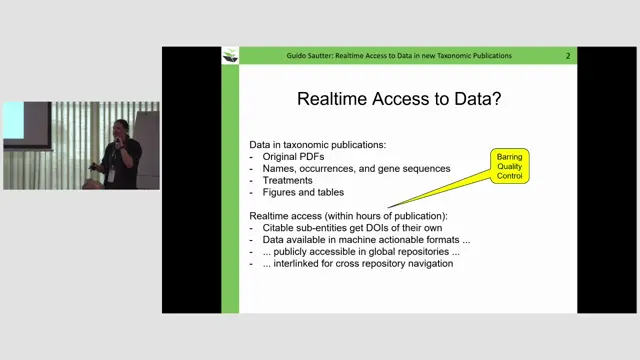
Realtime Access to Data in new Taxonomic Publications
Plazi can deliver interlinked, machine-actionable data from new taxonomic papers within hours, and XML-first publishing removes most of the costly effort.
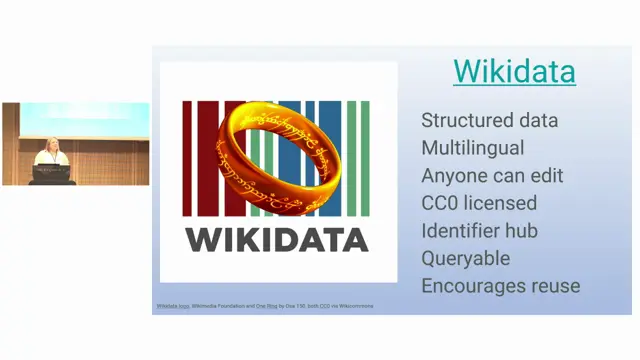
Bionomia, Scholia, Wikidata and Zenodo: broadcasting biodiversity data contributions
Linking people, specimens, publications, datasets and collections through Wikidata and associated tools (Bionomia, Scholia, Expeditia, Zenodo) makes biodiversity contributions findable and creditable.
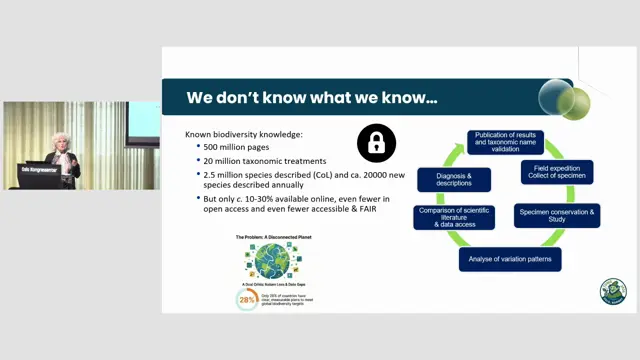
Building digital-native species: Transitioning from PDF liberation to semantic-by-design publishing
Keeping data linked and structured from specimen to publication yields FAIR, trusted data on the day of publication.