
Explore the conversation.
The Swedish experience on verification and how to improve quality on observations
Human verification remains essential, and the community needs a standard to exchange verification status between systems.
Mora Aronsson ↗
From 'Lost in Translation' to Fit-for-Purpose Data: Why Ecologists and Conservation Practice Still Need Groupings and Uncertainties
Biodiversity data systems must be able to record identification uncertainty and taxonomic groupings, or ecologists face a choice between false certainty and lost ecological information.
Bernhard Kløw Askedalen, Natalie ↗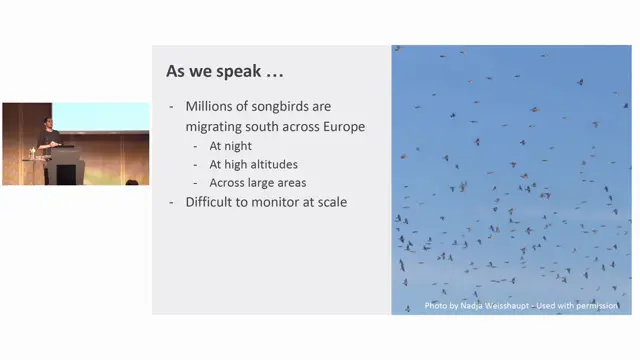
How to operationalize large-scale aerial biodiversity monitoring?
Existing weather radar networks already monitor bird migration continent-wide; with open standards and the Aloft archive, they could underpin a European migration-forecasting digital twin.
Peter Desmet ↗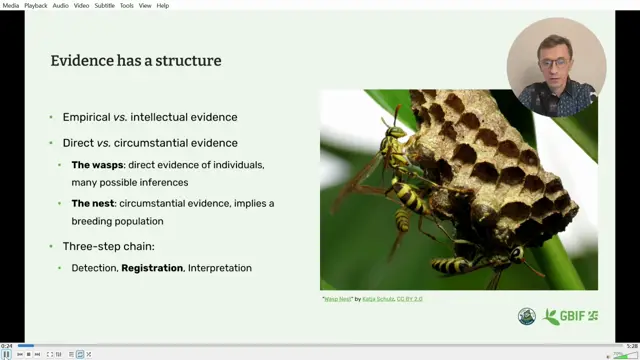
Handling evidence: a cross-disciplinary perspective
Biodiversity standards should stop treating what was recorded and what was concluded as the same kind of fact, borrowing evidence-handling practice from forensics, archaeology and medicine.
Dmitry Schigel ↗
Needs for data standards about sharing and analyzing identification tools usage
SDD should be extended so identification sessions (context, uncertain responses, backtracking and AI outputs) become open, shareable data, not just the keys.
Régine Vignes Lebbe ↗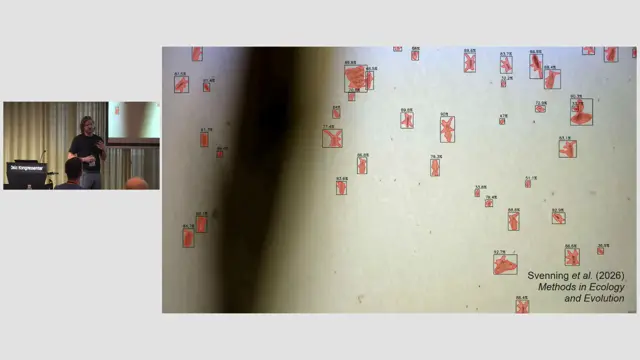
Standardizing Multimodal Insect Monitoring Data for AI-Ready Pipelines: Lessons from an InsectAI Community Datathon
Camtrap DP can largely accommodate automated insect monitoring data today, but the community needs agreed guidance and a few targeted extensions (track IDs, parent media and crop offsets, target taxonomic scope, identification provenance) to handle insect-specific challenges.
Jamie Alison ↗