
How does human impact change species diversity and composition in 50 types of inland water habitats?
Anne Lyche Solheim · A consensus taxonomic reference for improved freshwater biodiversity data and knowledge
The short versionHuman pressures erase the natural distinctness of freshwater habitat types, making their biological communities converge on degraded states with fewer characteristic species.
What this was about
Anne Lyche Solheim presented work for the European Environment Agency (European Topic Centre on Biodiversity and Ecosystems) revising EUNIS inland water habitat types to align with Water Framework Directive and Habitats Directive types: over 20 standing and over 20 running water types, described mainly by altitude, calcium/alkalinity, humic content and size. Using REBECCA and WISER project data (2004-2011) with expert-harmonised taxonomy, the team compared natural and impacted water bodies by NMDS and clustering and identified characteristic, common and dominant taxa. Natural waters showed distinct, textbook communities, while human impact made habitat types more similar, with fewer characteristic species (e.g. loss of chrysophytes and isoetids, more cyprinids and fewer salmonids).
Why it matters. The revised EUNIS types and their biological descriptions underpin European habitat reporting and show biotic homogenisation as a measurable outcome of pressure, relevant to stalled Water Framework Directive progress.
In the room
- EUNIS is the EEA's European Nature Information System for habitat classification; its freshwater part mixed very broad and very narrow types and needed revision.
- Revised types: over 20 standing and over 20 running water habitat types based on WFD broad types, plus rarer Habitats Directive types.
- Key type descriptors for biology are much the same for lakes and rivers: altitude, calcium (alkalinity), humic content and size.
- Data came from EU projects REBECCA and WISER (2004-2011) covering thousands of lakes and rivers with physicochemical data; taxonomy was harmonised in expert workshops and checked against AlgaeBase and freshwaterecology.info.
- Methods: split natural vs impacted water bodies, assess compositional similarity with NMDS and clustering, identify characteristic, common and dominant taxa per habitat.
- Natural lakes: richness increases with size and decreases with altitude; e.g. mixotrophic chrysophytes in siliceous, high-altitude and humic lakes; isoetids in siliceous lakes; salmonids in siliceous, high-altitude lakes.
- Impacted lakes: types become more similar, fewer characteristic taxa, fewer chrysophytes, fewer isoetids, no characteristic fish species, more cyprinids and fewer salmonids; species richness differences were unclear.
Notable moments
Transcript
Automatically generated captions can contain mistakes, especially in names and technical terms. Times are relative to the room recording.
Read the transcript ↓
Related talks.
Traits Thesaurus: toward semantic harmonization of FAIR trait-based data on aquatic organisms
A community-validated SKOS thesaurus of aquatic trait terms and units can make open trait data genuinely interoperable across taxa.
A collaborative perspective on a globally standardised river basin name database
Freshwater biodiversity data need a global, multilingual, collaboratively maintained river basin naming system, and TDWG, Wikidata and OpenStreetMap could build it together.
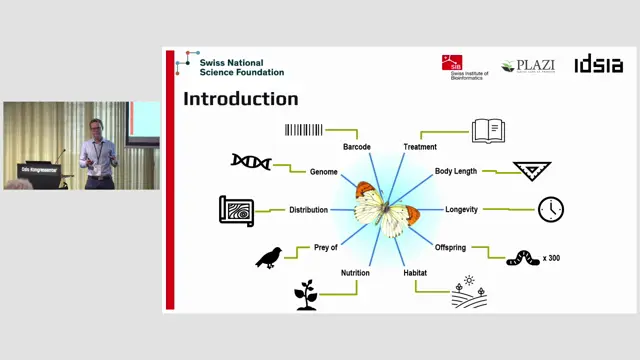
Species trait literature mining to support integrative biodiversity distribution modelling
Demonstrating research use cases like trait-informed distribution modelling is key to persuading funders to support literature mobilisation infrastructure.